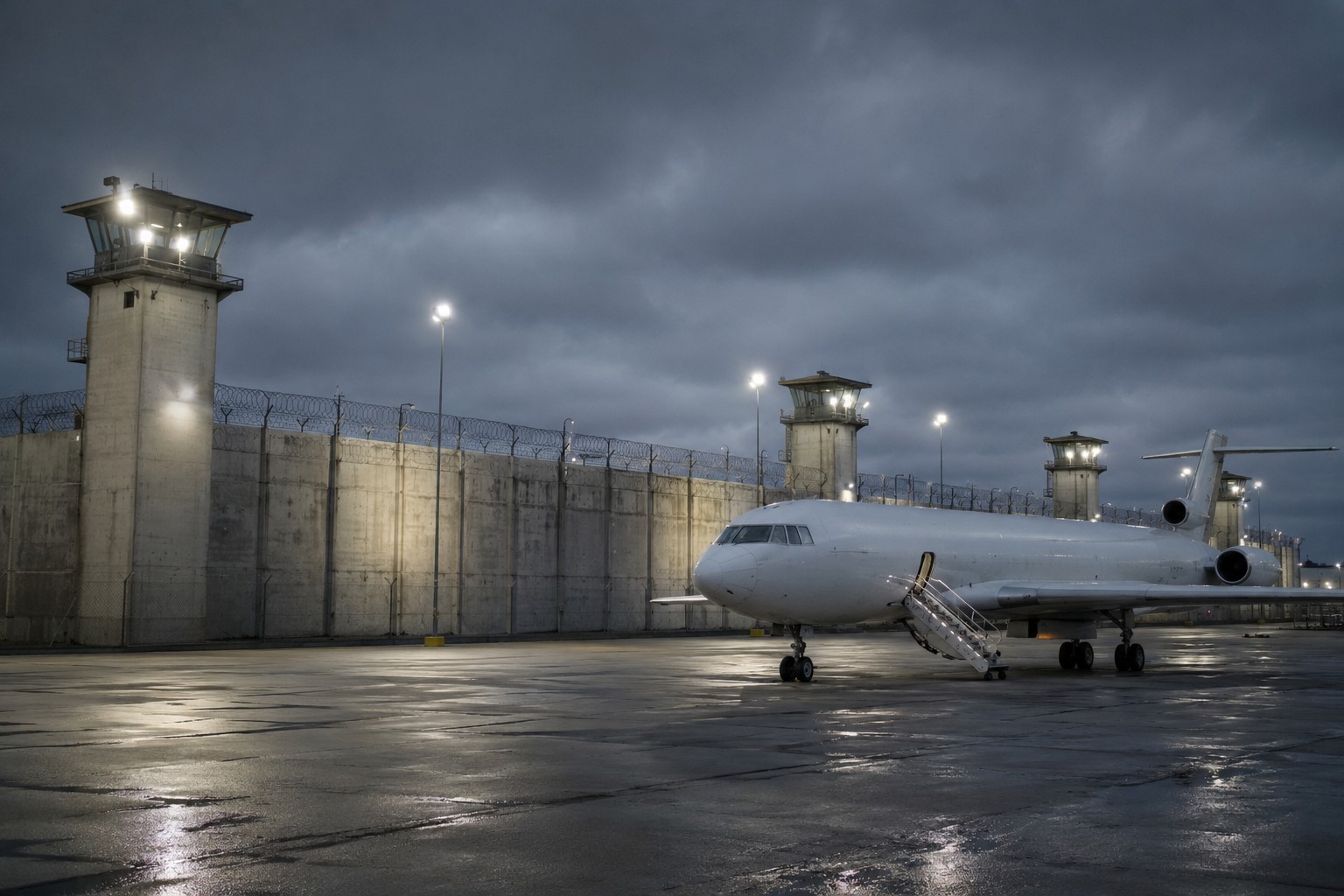
A group of Venezuelan men who were flown out of the United States and locked inside El Salvador’s most feared mega-prison have filed a lawsuit against the private aviation companies that operated their deportation flights. The legal action is one of the first attempts to hold charter contractors — not just the government — responsible for delivering deportees into a facility accused of holding people indefinitely and cut off from the outside world.
What Happened
The men were removed from the United States and handed over to Salvadoran custody at the Terrorism Confinement Center, known by its Spanish acronym CECOT. The sprawling complex was built to hold thousands of inmates and has become a symbol of El Salvador’s hardline security crackdown. Detainees there have described being kept in crowded cells with little contact with lawyers or family.
Rather than targeting a single government agency, the lawsuit takes aim at the aviation firms that physically carried out the transfers. The core argument is straightforward: the companies that operated the charter flights bear responsibility for delivering human beings into a prison where detainees have alleged abuse and where, the plaintiffs say, they were held without charges.
Why It Matters
Deportation flights have long been operated by a web of private contractors working on behalf of the federal government. Those companies handle the logistics — the aircraft, the crews, the routes — that turn a removal order into an actual flight. Until now, legal accountability for what happens on and after those flights has largely centered on the government itself.
This case tests a question the courts have never fully answered: when a private company is paid to fly someone into a foreign prison, how much of the legal responsibility lands on that company? A ruling in the plaintiffs’ favor could reshape how deportation flights are contracted and run, and could expose aviation firms to a new category of liability.
The Men Behind the Lawsuit
Several of the men say they had no criminal records and were never given a hearing before being sent thousands of miles from the United States. Some had pending immigration claims that they argue were ignored. In a separate but related case tied to the same wave of removals, one Venezuelan man is seeking $1.3 million in damages over his detention at CECOT.
Their accounts have drawn attention because they cut against the official framing of the removals as a targeted effort against dangerous individuals. The plaintiffs describe ordinary men caught up in a fast-moving deportation operation, then delivered to a prison designed for the country’s most hardened offenders.
What Comes Next
The aviation companies now face the prospect of defending their role in court. Legal observers will be watching closely to see whether judges allow the claims against private contractors to move forward, or whether the firms can argue they were simply following government instructions. Either outcome could set a precedent for the entire deportation-flight industry.
For everyday Americans, the case highlights how much of immigration enforcement is carried out by private businesses operating under federal contracts — and raises the question of who answers when something goes wrong. The debate over borders and deportation is often framed around policy, but this lawsuit puts a spotlight on the companies that make the policy physically happen.
Stay informed on the stories that matter most. Follow Palmedia News on Facebook and bookmark palmedianews.com for breaking news and analysis.