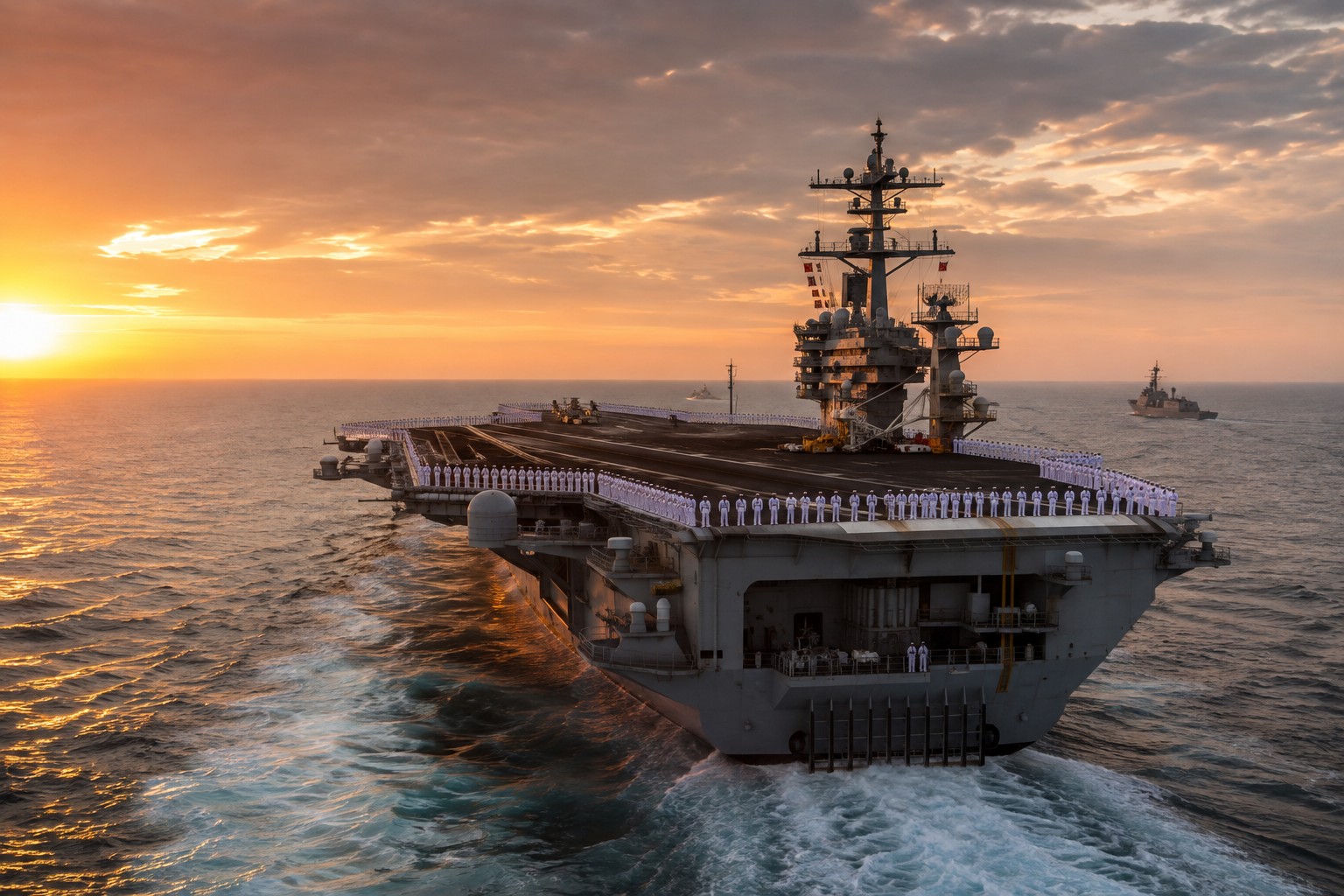
The USS Abraham Lincoln is finally pointed toward home. After nine months away, the aircraft carrier and roughly 5,000 sailors and Marines have left the Middle East and begun the long transit back to San Diego, ending one of the longest and most punishing carrier deployments the Navy has run in years.
A Routine Deployment That Stopped Being Routine
The Lincoln pulled out of San Diego on November 21 on what was planned as a standard rotation. Carrier deployments are typically built around a six to seven month clock, and crews plan their lives around that number. Families schedule births, weddings, graduations, and moves against a homecoming date they expect the Navy to keep.
Then the war with Iran began in February, and the plan collapsed. Instead of handing off and heading east across the Pacific, the Lincoln stayed. The carrier became a floating airfield parked inside a live conflict, and its return date kept sliding.
Nine Months of Flight Operations
For months the Lincoln served as a primary launch point for American air power in the region, putting thousands of aircraft sorties into the sky during the campaign. That tempo is relentless. Flight deck crews work in punishing heat beside jet exhaust and catapult steam, often on rotating shifts that blur day into night.
The strain runs below decks too. A carrier at sea is a small city that never stops. Sailors sleep in stacked bunks in compartments the size of a modest bedroom, share limited facilities with hundreds of others, and go months without stepping onto solid ground. Every extension to the deployment stretches supplies, maintenance schedules, and people.
The Japan-based USS George Washington has now arrived in the region to take over the mission, freeing the Lincoln to head home. The carrier is expected to reach San Diego in about three weeks.
Families Raise Alarms About Conditions Aboard
The homecoming arrives alongside uncomfortable questions. Family members of crew have told reporters they are alarmed by what they have heard about life aboard during the extended deployment, describing food running short, sanitation problems, and a mounting mental toll on a crew that kept being told the finish line had moved again.
The Navy has faced sustained scrutiny in recent years over crew welfare and mental health aboard ships on long deployments. An open-ended mission with no firm end date is widely understood to be among the hardest things to ask of a crew, because the uncertainty itself becomes the burden.
A Smaller Fleet Covering More Crises
The Lincoln is not an isolated case. Nine-month carrier deployments were once rare enough to be notable. They are becoming routine. The Navy is covering more simultaneous crises with fewer available carriers than it has in decades, and the math is unforgiving: when fewer ships are ready to sail, the ones that are get pushed harder and stay out longer.
Supporters of the extension argue the mission required it, and that a carrier is the single most useful asset the United States can put into a fast-moving conflict. Critics counter that repeatedly stretching deployments burns out crews, accelerates wear on aging ships, and quietly shrinks the fleet further as maintenance backs up.
What This Means for Americans
Behind the strategy is a straightforward human cost. Five thousand people missed nine months of ordinary life so a carrier could stay on station. Many of them will come home to children who have grown, milestones they missed, and a Navy that may ask them to do it again sooner than the old rotation schedule would have allowed. How long a country is willing to keep its crews at sea is not just a military question, it is a question about what is fair to ask of the people who volunteer.
Stay informed on the stories that matter most. Follow Palmedia News on Facebook and bookmark palmedianews.com for breaking news and analysis.