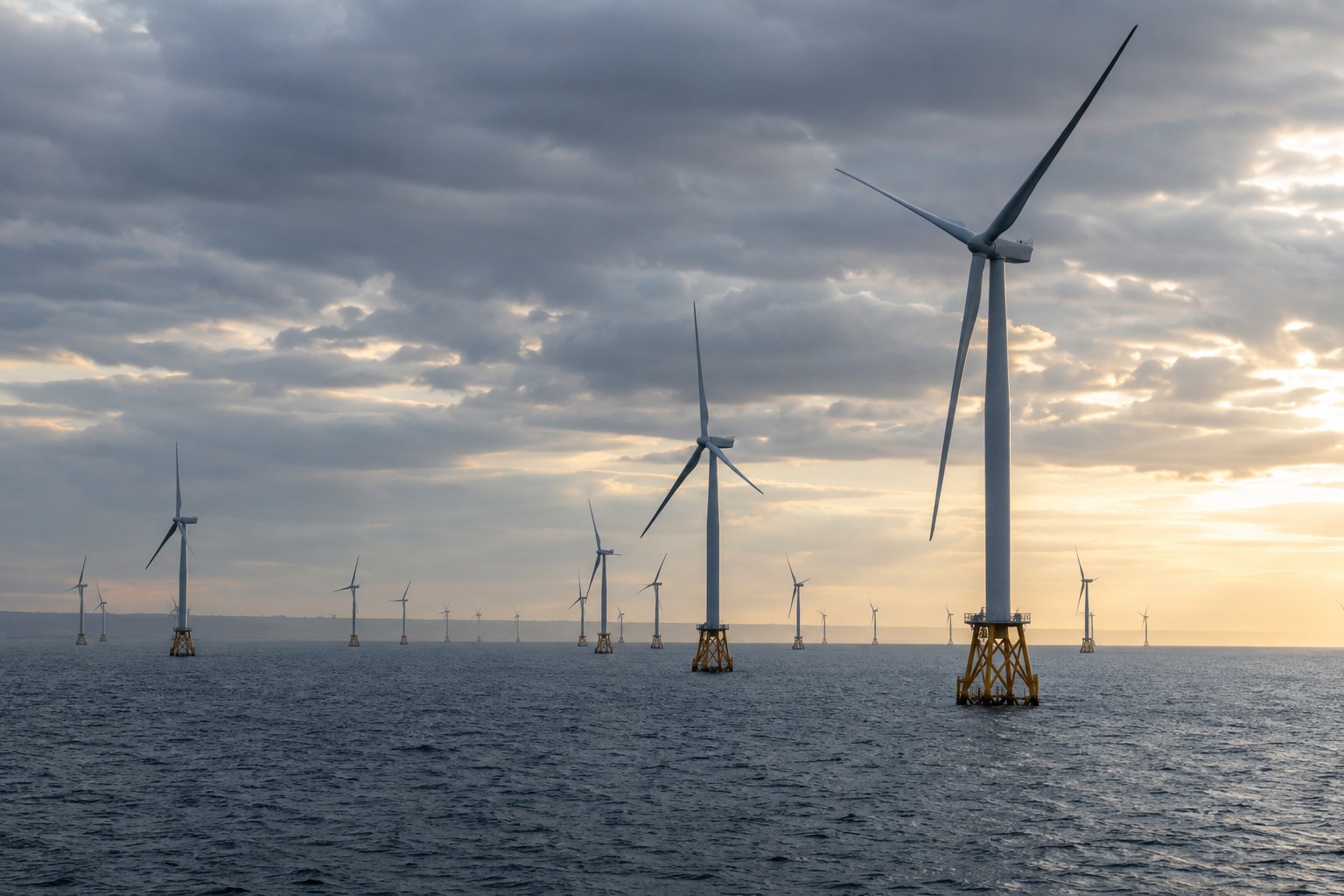
The federal government has agreed to pay German energy company RWE $1.22 billion to abandon a series of offshore wind projects it had already secured off the coasts of New York, California, and Louisiana. The deal, announced Thursday, marks the fifth time the Interior Department has paid a company to walk away from renewable energy plans it once held the rights to build.
What the Deal Involves
RWE is one of the largest power producers in Europe and had previously won leases to develop offshore wind farms in U.S. federal waters. Under the new agreement, the company will surrender those leases in exchange for the payment and redirect its investment toward fossil fuel infrastructure inside the United States.
In a statement, RWE said that “after careful consideration, it was determined that there was no path forward to permit these projects in the United States for the foreseeable future.” The company framed the decision as a practical response to a regulatory environment that no longer favored offshore wind development.
Where the Money Is Going
Rather than build turbines, RWE plans to pour its capital into natural gas. The company will invest $900 million for a 16 percent stake in a liquefied natural gas firm based in Louisiana, and spend an additional $300 million developing a pipeline of 15 natural gas “peaking” plants across the country. Peaker plants are designed to fire up quickly during periods of high electricity demand.
Interior Secretary Doug Burgum welcomed the arrangement. He described it as a voluntary investment that strengthens national energy security, provides “dependable baseload power,” and helps “keep electricity affordable” for consumers. Administration officials have characterized the broader effort to unwind offshore wind commitments as a matter of common sense and grid reliability.
A Growing Pattern
The RWE agreement is not an isolated case. It is the fifth payout of its kind from the Interior Department, part of a wider push to cancel offshore wind projects that were approved or leased in prior years. Taken together, roughly $4 billion in taxpayer money has now gone toward paying companies to drop renewable energy plans off American coastlines.
Each deal follows a similar structure: a developer that once held offshore wind rights agrees to step aside, often while committing to alternative energy investments elsewhere. Supporters of the approach argue it protects the electric grid and shields ratepayers from the higher costs they associate with large offshore projects.
The Debate
Critics see the spending very differently. They point out that the government is now paying billions of dollars to dismantle energy capacity it had already permitted, and they question whether taxpayers should foot the bill for reversing course. To them, the payouts represent money spent to undo work rather than to build anything new.
Supporters counter that the projects faced steep permitting hurdles and uncertain timelines, and that redirecting the investment into natural gas and LNG delivers more reliable power sooner. The disagreement reflects a deeper national split over how the United States should balance energy costs, reliability, and the future of renewables.
What This Means for Americans
For ordinary households, the outcome touches two things people care about most: the electricity bill and how tax dollars are spent. The administration says the shift toward natural gas will keep power dependable and prices in check. Opponents warn that billions in public money are being used to cancel projects rather than expand supply. Either way, decisions like this one will shape the country’s energy mix and the cost of keeping the lights on for years to come.
Stay informed on the stories that matter most. Follow Palmedia News on Facebook and bookmark palmedianews.com for breaking news and analysis.