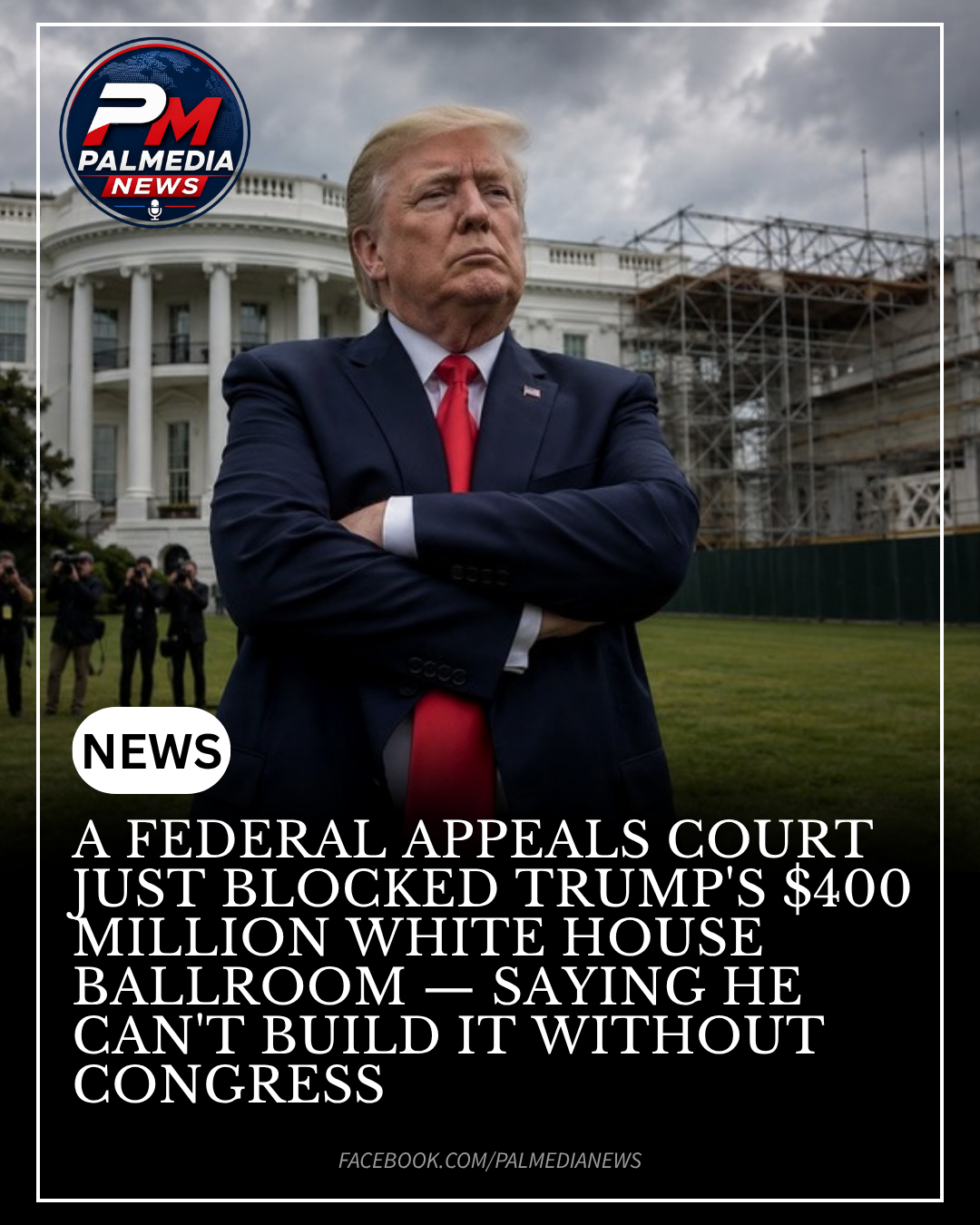
A federal appeals court has halted President Donald Trump’s plan to build a $400 million ballroom at the White House, ruling that he cannot move forward without the approval of Congress. The decision, handed down on August 7 by the U.S. Court of Appeals for the D.C. Circuit, is a major setback for one of the most ambitious construction projects ever attempted at the executive mansion.
In a 2-1 ruling, the court found that the president does not have the unilateral power to authorize a project of this scale. “Whether or not a massive ballroom should be constructed is for Congress to decide,” the majority wrote, adding that it is “not a matter for Executive self-help.”
How the Project Got Here
The dispute traces back to the fall of 2025, when the East Wing of the White House was demolished to clear space for the new structure. The planned ballroom is enormous by any standard: roughly 90,000 square feet, designed to hold as many as 999 people. Construction had already begun rising above ground on the east side of the complex before the courts intervened.
The tearing down of the East Wing — a part of the White House with more than a century of history — drew immediate criticism and set the stage for the legal fight now heading toward the nation’s highest court.
The Fight Over the Money
Funding sits at the center of the case. Earlier this year, the administration asked Congress for $1 billion to support the project. Lawmakers declined in May. Trump has said he raised hundreds of millions of dollars from corporations and wealthy donors instead, arguing that no taxpayer money is required to complete the ballroom.
Critics were not persuaded. Democrats warned that roughly $350 million in funds tied to tax-cut measures appeared to have been redirected toward the construction — a claim that intensified scrutiny of how the project is being financed. The appeals court’s ruling zeroed in on the constitutional principle that federal spending and major projects fall under the authority of the legislative branch.
Trump Vows to Fight On
Trump wasted no time responding. He blasted the decision as “unjust” and “politically motivated,” and announced that he would take the case directly to the Supreme Court. He also framed the ballroom complex as a national security asset, saying it would include bomb shelters, medical facilities, and other secure infrastructure.
The appeals court paused its own ruling for two weeks, giving the administration a window to appeal before the decision takes full effect. That sets up a high-stakes showdown at the Supreme Court over the limits of presidential authority.
What This Means for Americans
Beyond the marble and the price tag, the case raises a fundamental question: how much power does a president have to reshape the People’s House on his own? The answer could set a precedent that reaches far beyond one building. If the Supreme Court sides with the appeals court, it would reaffirm Congress’s control over federal spending and major projects. If it sides with Trump, it could expand the reach of executive authority in ways that outlast this administration.
For now, construction on the East Wing site is on hold, and the future of the $400 million ballroom rests with the nine justices of the Supreme Court.
Stay informed on the stories that matter most. Follow Palmedia News on Facebook and bookmark palmedianews.com for breaking news and analysis.