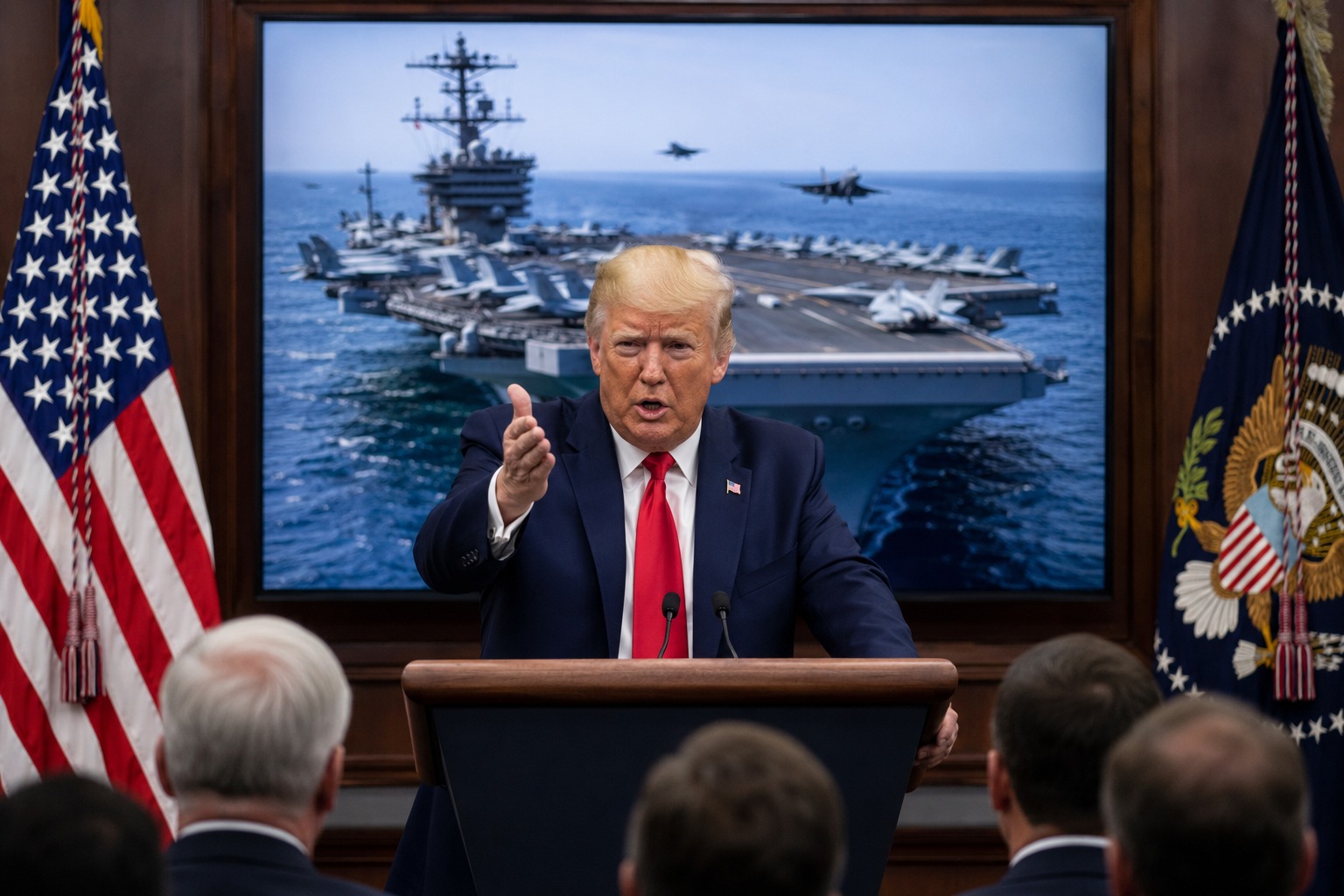
President Donald Trump has dismissed mounting concerns over the USS Abraham Lincoln’s record-breaking deployment, telling reporters the aircraft carrier’s more than 250 days at sea were “not nearly long enough.” The comment lands as families of the roughly 5,000 sailors and Marines aboard the ship warn about deteriorating conditions and mounting mental strain.
The Lincoln has now spent more consecutive days at sea than any modern U.S. aircraft carrier, and it has not made a single port call in more than 200 days. What was expected to be a routine tour has turned into one of the most grueling deployments in recent Navy history.
A Record Nobody Set Out to Break
The carrier left its home port of San Diego last November on what was supposed to be a standard rotation. Instead, it was redirected to the Middle East to support U.S. operations in the ongoing war with Iran. That shift extended the mission far beyond its original timeline and kept the crew forward-deployed with no relief in sight.
Aircraft carriers are built to project power anywhere in the world on short notice, and long deployments are part of the job. But 200-plus days without a port call is well outside the norm. Sailors typically get periodic stops to resupply, rest, and briefly reconnect with life off the ship. On this deployment, those breaks never came.
What Trump Said
Asked directly about the concerns surrounding the deployment’s length, Trump waved them off. He called the record-setting run “not nearly long enough,” framing the extended time at sea as a demonstration of American strength rather than a burden on the crew.
The remark drew immediate attention because it came as the human cost of the deployment was moving into public view. Rather than signaling that relief was on the way, the president suggested the mission could and should stretch even further.
Families Sound the Alarm
Behind the strategic language are thousands of service members and the people waiting for them at home. Relatives of sailors aboard the Lincoln have described worsening living conditions on the ship and growing concern about the mental health of a crew that has been at sea for the better part of a year.
Those concerns have reached Capitol Hill. Several lawmakers are now pressing the Pentagon for answers about how long the crew can reasonably be pushed and what plan, if any, exists to bring the carrier home. The questions cut to a core issue for any military: readiness depends not just on ships and weapons, but on the endurance of the people who operate them.
Two Sides of the Debate
Supporters of keeping the Lincoln forward-deployed argue that in the middle of a shooting war, pulling a carrier off station would send the wrong signal and weaken U.S. leverage. They say the crew is doing exactly what the mission demands, and that projecting strength requires firepower staying where it can be used.
Critics counter that no record is worth grinding down the sailors and Marines who make it possible. They warn that pushing a crew past its limits risks morale, safety, and long-term retention — and that treating an exhausting deployment as a point of pride ignores the real toll on service members and their families.
What This Means for Americans
For the families of the 5,000 people aboard the Lincoln, this is not an abstract policy debate — it is a question of when their loved ones come home. For the broader public, it raises a larger issue about how the country uses its military and how much strain it is willing to place on the men and women who serve. The answer will shape not just this deployment, but how future ones are managed.
Stay informed on the stories that matter most. Follow Palmedia News on Facebook and bookmark palmedianews.com for breaking news and analysis.