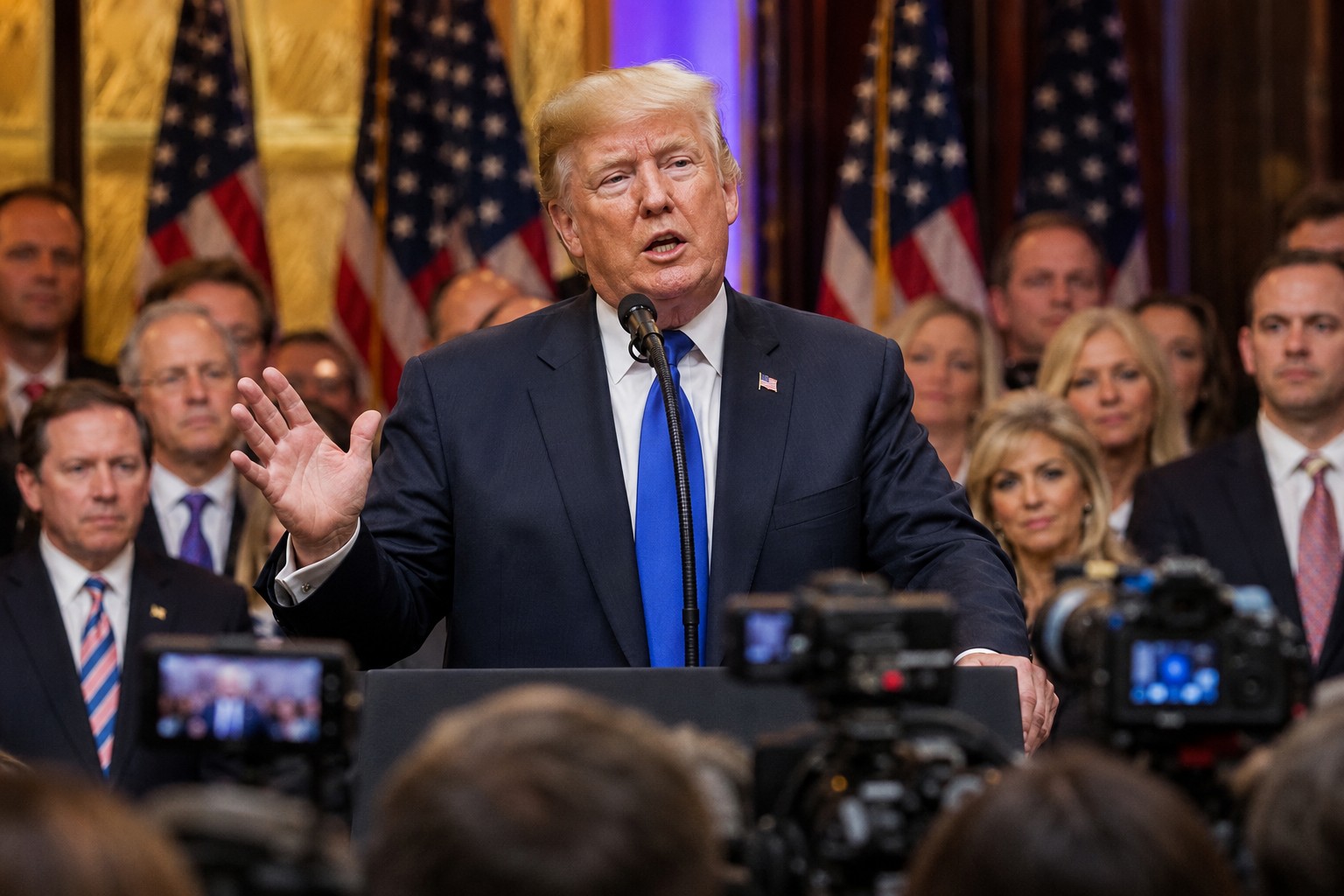
President Donald Trump says he plans to declare the Strait of Hormuz — one of the most strategically important waterways on the planet — a territory of the United States once the war with Iran comes to an end. Speaking to supporters in New York on Friday, Trump signaled that Washington intends to formalize control over the narrow passage that funnels a massive share of the world’s oil and gas.
“Pretty soon I’ll be declaring the Hormuz Strait a territory of the United States,” Trump said, adding, “We have the blockade. No ships get through unless we want them to.”
Why the Strait of Hormuz Matters
The Strait of Hormuz is a narrow chokepoint between Iran and the Arabian Peninsula, connecting the Persian Gulf to the open ocean. At its tightest, the shipping lanes are only a couple of miles wide. Despite its size, it is one of the most consequential stretches of water on Earth: a large portion of the world’s seaborne crude oil, along with enormous volumes of natural gas and fertilizer, passes through it every single day.
Any disruption to traffic through the strait ripples across the global economy almost immediately, affecting fuel prices, shipping costs, and energy supplies far beyond the Middle East. That is precisely why control of the waterway has become such a central issue in the current conflict.
A Declaration in the Middle of a War
Trump’s comments come against the backdrop of an ongoing war. The United States and Israel have been engaged in open conflict with Iran since late February, and the flow of traffic through the Strait of Hormuz has emerged as one of the central bargaining chips in negotiations between Washington and Tehran.
By framing the strait as effectively already under American control — “we have the blockade,” as he put it — Trump is signaling that the United States intends to keep a firm grip on the passage regardless of how peace talks unfold. No formal declaration has been issued, and Trump did not specify a timeline beyond saying it would come “pretty soon.”
Iran Pushes Back
The reaction from Tehran was swift and defiant. Iran’s deputy foreign minister rejected the idea outright, arguing that the strait “cannot be taken over by a tweet, nor by an aircraft carrier, nor by issuing a decree, nor by an election speech.”
Beyond Iran’s objections, the legal path for any single nation to unilaterally claim an international waterway is far from clear. Straits used for international navigation are generally governed by long-standing principles of maritime law that guarantee passage to all nations. A unilateral American claim would be unprecedented and would almost certainly face fierce challenges from other countries that depend on the route.
What This Means for Americans
For everyday Americans, the stakes are tied directly to the gas pump and the grocery aisle. The Strait of Hormuz helps set the price of energy worldwide, and energy prices feed into the cost of nearly everything else. Supporters of Trump’s stance see the move as a bold step to secure global energy routes and protect American interests. Critics warn it could be an overreach that inflames an already volatile conflict and invites retaliation. Where the standoff goes next could shape both the war and the world economy in the months ahead.
Stay informed on the stories that matter most. Follow Palmedia News on Facebook and bookmark palmedianews.com for breaking news and analysis.