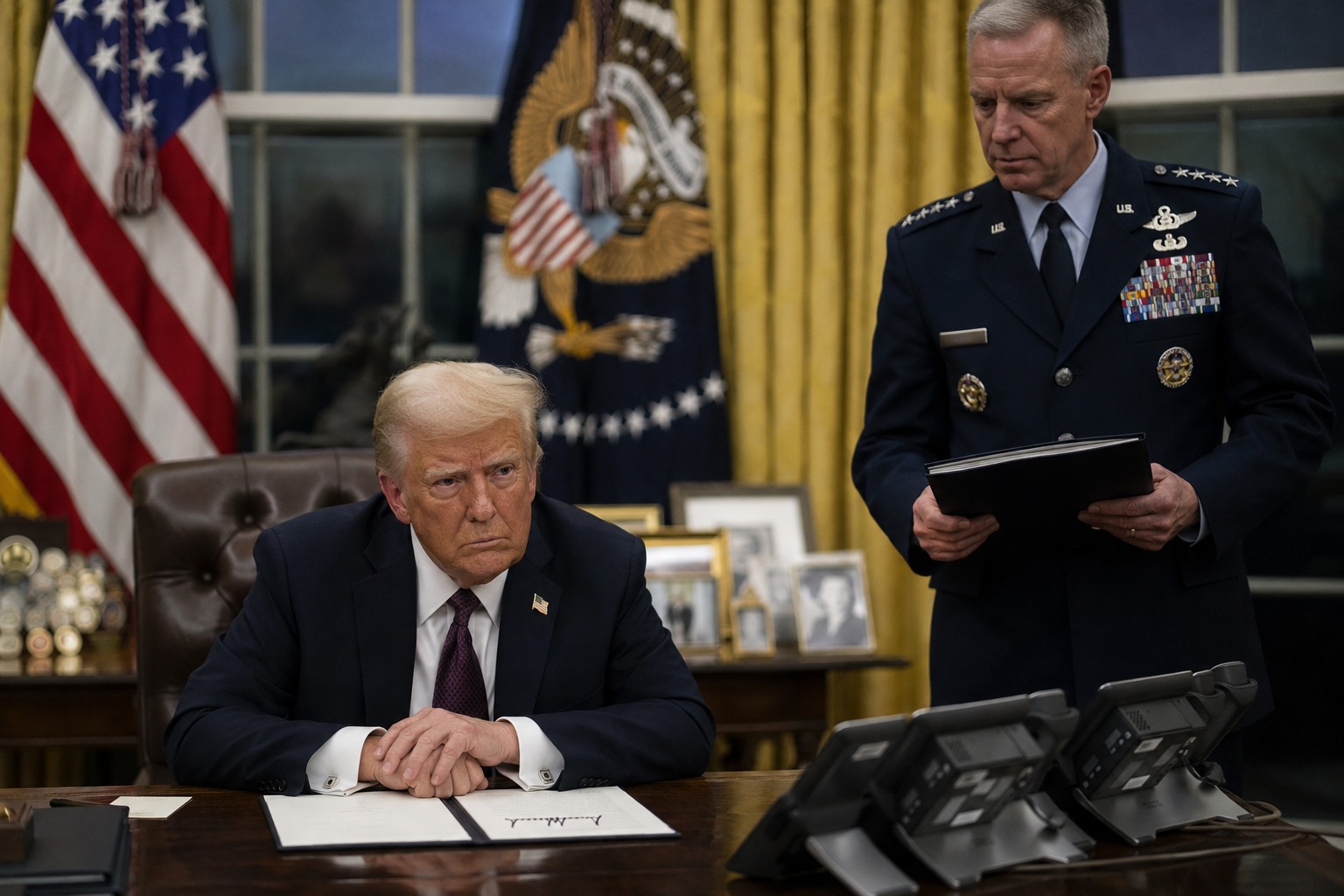
President Donald Trump has ordered the Pentagon to substantially scale back the joint military exercises the United States conducts with South Korea, targeting drills that were scheduled to begin this week. The directive went to Secretary of War Pete Hegseth, and it lands at one of the most sensitive moments on the Korean Peninsula in years.
Trump announced the decision in a social media post on Sunday, saying the exercises are not only costly but that they “send a signal that is totally inappropriate and hostile” toward North Korea. He described North Korea as having been “unthreatening and respectful” during his time in the White House.
Why Trump Says He Ordered the Cut
Two reasons came through in Trump’s announcement. The first was cost. The second was diplomacy: he pointed to his relationship with North Korean leader Kim Jong Un as a reason to lower the temperature rather than run large-scale drills on Pyongyang’s doorstep.
Then came the detail that drew the most attention. Trump said he had recently asked South Korea’s president whether Seoul would join the United States in the “denuclearization” of Iran. The answer, he said, was “No thanks!” That refusal appears directly tied to his decision to shrink the joint training program.
What the Exercises Actually Are
The drills in question are the summertime exercises known as Ulchi Freedom Shield, an annual event that has anchored the U.S.-South Korea military relationship for decades. They are largely command-post and computer-simulation based, designed to test how the two militaries would coordinate under pressure, alongside field training components.
The U.S. military has described these exercises as reinforcing the alliance’s role as “the linchpin for regional peace and security,” and as reaffirming what it calls an “ironclad commitment” between the United States and the Republic of Korea to defend their homelands. South Korea is a treaty ally, and these exercises are the mechanism through which the two forces practice operating as one.
The Timing Is the Story
What has drawn the sharpest scrutiny is when this order arrived. The scale-back comes just days after North Korea resumed ballistic missile testing activity that is prohibited under United Nations Security Council resolutions.
That sequence is what turns a scheduling decision into a strategic question. Supporters of the move argue that large joint exercises are provocative by design, and that pulling them back creates space for diplomacy with a nuclear-armed neighbor. Critics counter that reducing combined training immediately after Pyongyang restarts banned launches rewards exactly the behavior the international community is trying to deter.
What Happens to the Alliance
Scaling back the exercises does not formally alter the U.S.-South Korea treaty, but it does change how that alliance functions day to day. Joint readiness is built through repetition. When two militaries train together less often, the practical ability to operate as a single force degrades even if the paperwork stays identical.
There is also a signaling dimension. Allies across the region watch how Washington treats its treaty commitments, and a public reduction framed partly around a disagreement over Iran policy introduces a new variable into how that commitment is read.
What This Means for Americans
Roughly speaking, this is a decision about risk and cost. Joint exercises consume real money and real personnel time, and any president has authority to adjust them. But they also exist to prevent miscalculation in one of the most heavily militarized places on earth, where American service members are stationed. A quieter peninsula lowers the chance of an incident. A less-practiced alliance raises the chance that an incident, if it happens, is handled badly. Both of those outcomes affect American families directly.
Stay informed on the stories that matter most. Follow Palmedia News on Facebook and bookmark palmedianews.com for breaking news and analysis.