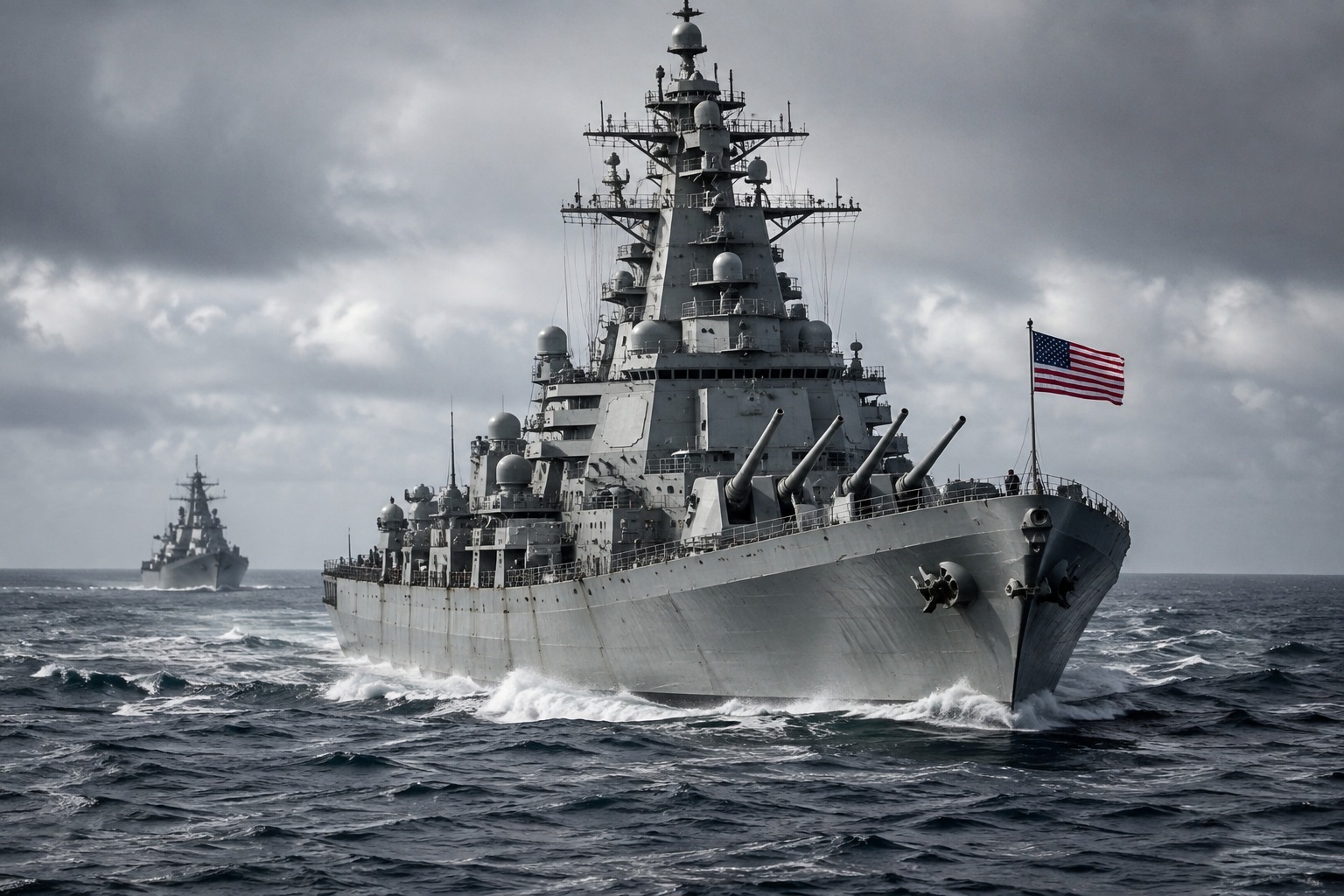
The cost of President Donald Trump’s namesake fleet of battleships is on track to balloon far beyond what the U.S. Navy has publicly projected. A new report from the nonpartisan Congressional Budget Office estimates that the planned fleet of 15 nuclear-powered “Trump-class” battleships — informally dubbed the “Golden Fleet” — could cost roughly $275 billion to build. That figure is about 50% higher than the Navy’s own estimates, and it could still climb before the first ship is finished.
A Price Tag Unlike Anything the Navy Has Built
The numbers are staggering even when broken down to a single vessel. According to the CBO, the first Trump-class battleship alone could cost more than $23 billion. That would make it one of the most expensive warships ever put to sea — rivaling, and in some estimates surpassing, the Navy’s Ford-class aircraft carriers, which have long held the title of the priciest ships in the fleet.
Battleships — heavily armored surface warships built around massive gun batteries — largely disappeared from the world’s navies after World War II, replaced by aircraft carriers, submarines, and guided-missile destroyers. The revival of the battleship as a class, this time nuclear-powered and bearing the president’s name, marks one of the most ambitious and unusual shipbuilding efforts the Navy has attempted in generations.
Why the Estimate Jumped 50%
Large defense programs frequently run over budget, but the scale of this overrun is drawing attention. The CBO’s independent analysts routinely produce cost estimates that run higher than the military’s own projections, in part because they factor in historical cost growth, inflation, and the tendency of complex first-in-class ships to encounter expensive engineering surprises.
With the lead ship not yet under construction, there is significant uncertainty baked into every figure. First-in-class warships are notoriously difficult to price because they require new designs, new tooling, and new production lines. History suggests the final bill for the Golden Fleet could rise even further as the program matures.
Supporters and Critics Square Off
Supporters of the program argue that the heavily armed vessels would project American power on the world stage and modernize a surface fleet that has not fielded a true battleship in decades. They see the ships as a symbol of renewed naval dominance at a time of rising tension with rival powers.
Critics counter that battleships are a Cold War relic in an era defined by drones, precision missiles, and submarines — weapons that can threaten even the largest surface ship from hundreds of miles away. They argue that $275 billion could buy a far larger and more survivable force of smaller, cheaper, harder-to-sink vessels, and that concentrating a quarter-trillion dollars into 15 ships packs enormous cost and risk into a handful of targets.
A Fight Brewing on Capitol Hill
The debate is now moving to Congress, where lawmakers who control the defense budget will ultimately decide the fleet’s fate. Cost overruns on major Navy programs have historically drawn bipartisan scrutiny, and a $275 billion estimate is likely to intensify questions about whether the Golden Fleet is a worthy investment or a monument that sails wildly over budget.
What This Means for Americans
For taxpayers, the stakes are simple: every dollar spent on the Golden Fleet is a dollar that cannot be spent elsewhere, whether on other military priorities or domestic programs. A $275 billion shipbuilding effort would rank among the largest defense expenditures in American history, and the final cost — along with whether the ships deliver the capabilities promised — will shape defense spending debates for years to come.
Stay informed on the stories that matter most. Follow Palmedia News on Facebook and bookmark palmedianews.com for breaking news and analysis.