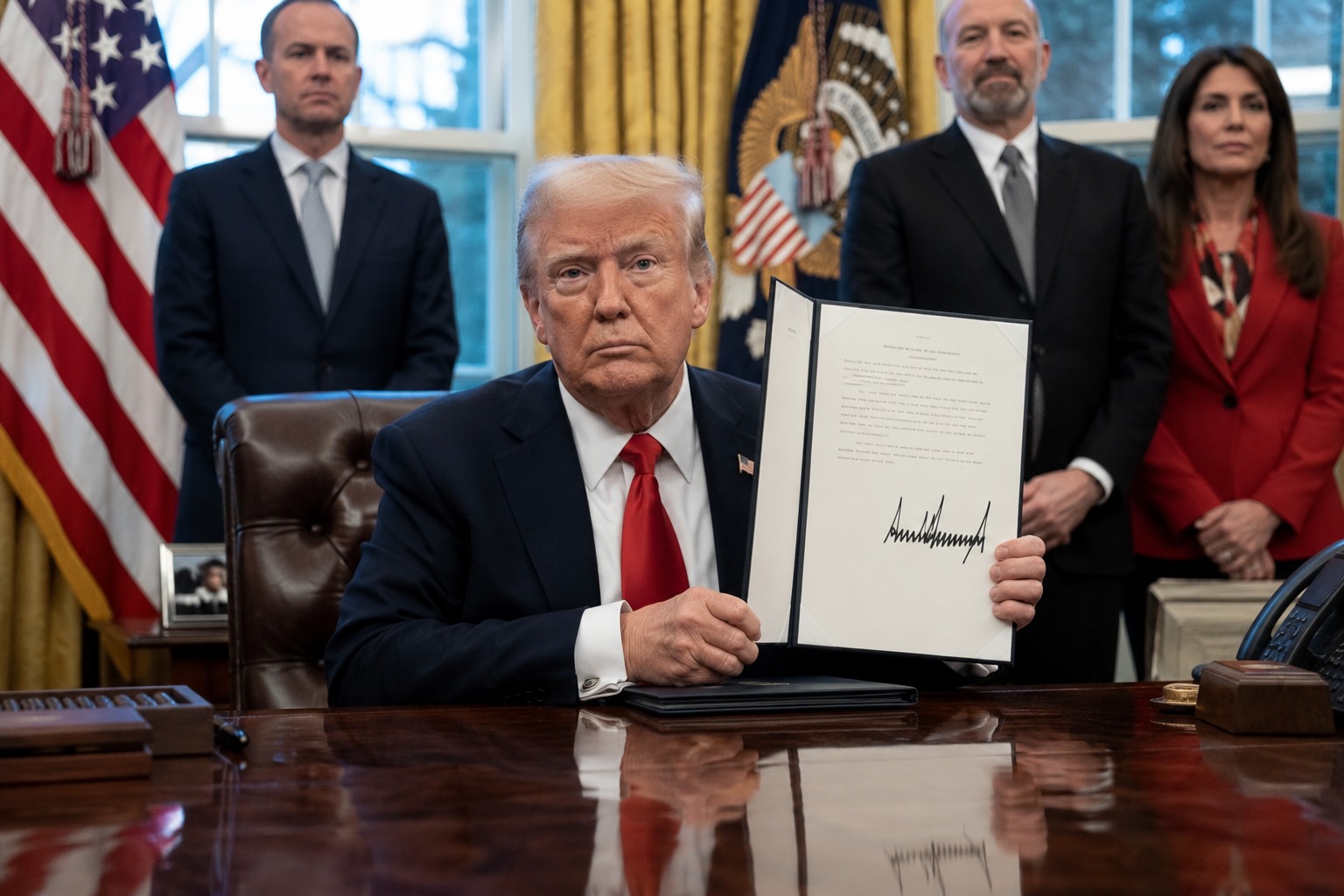
President Donald Trump has removed all three remaining members of the U.S. Election Assistance Commission, abruptly leaving the small federal agency that helps states run their elections without a single sitting commissioner. The four-seat panel is now empty, and it cannot take any official action until new members are installed.
The move lands just months before the 2026 midterm elections and only days after the Supreme Court ruled that the president has the authority to fire the leaders of independent federal agencies. Together, the two developments mark one of the most significant shake-ups of federal election administration in years.
What the Election Assistance Commission Does
Congress created the Election Assistance Commission in 2002, in the wake of the disputed 2000 presidential election and the recount fight in Florida. The agency was designed to be deliberately bipartisan, with no more than two of its four commissioners allowed to come from the same political party at any one time.
Though small, the EAC plays an outsized role behind the scenes. It certifies voting equipment used across the country, maintains the national mail voter registration form, and has distributed hundreds of millions of dollars in federal funding to help states modernize and secure their election systems. Election officials in both parties have long relied on it as a neutral clearinghouse for standards and guidance.
How the Firings Unfolded
According to reporting on the shake-up, Democratic commissioners Thomas Hicks and Benjamin Hovland were notified by email that they were being removed from their posts. The commission’s Republican member, Christy McCormick, was allowed to resign rather than be terminated outright.
The result is a commission with zero seated members. Because the EAC requires a quorum of commissioners to take official action, an empty panel effectively freezes the agency’s ability to certify equipment, issue guidance, or sign off on new decisions until replacements are named and take office.
The Supreme Court Connection
The timing is what has drawn the sharpest attention. The firings came just days after the Supreme Court ruled that a president may remove the leaders of independent federal agencies, a decision that weakened protections that for decades had shielded bipartisan commissions from direct White House control.
For much of modern history, agencies like the EAC operated with a degree of insulation from the executive branch, on the theory that certain functions, including refereeing elections, should sit above day-to-day politics. The recent ruling gives the president far more direct say over who runs those agencies, and the EAC firings are among the first high-profile uses of that expanded authority.
Reactions and Implications
Supporters of the move argue the president is simply exercising authority the Supreme Court has now affirmed, and that a president is entitled to install leadership he trusts across the executive branch. Critics counter that clearing out the leadership of a bipartisan election agency, months before a national vote, risks disrupting the very administration and oversight functions the EAC was built to provide.
The central open question is what happens next: how quickly the White House moves to nominate and seat replacements, whether those picks preserve the panel’s bipartisan balance, and what an empty commission means for the states that lean on it heading into November.
What This Means for Americans
For most voters, the EAC operates far from the spotlight, but its work touches the machinery that counts their ballots. If the commission remains vacant heading into the midterms, states may face uncertainty over equipment certification and federal guidance at the exact moment they are preparing for a high-stakes election. How the vacancy is filled, and how fast, will shape the answer.
Stay informed on the stories that matter most. Follow Palmedia News on Facebook and bookmark palmedianews.com for breaking news and analysis.