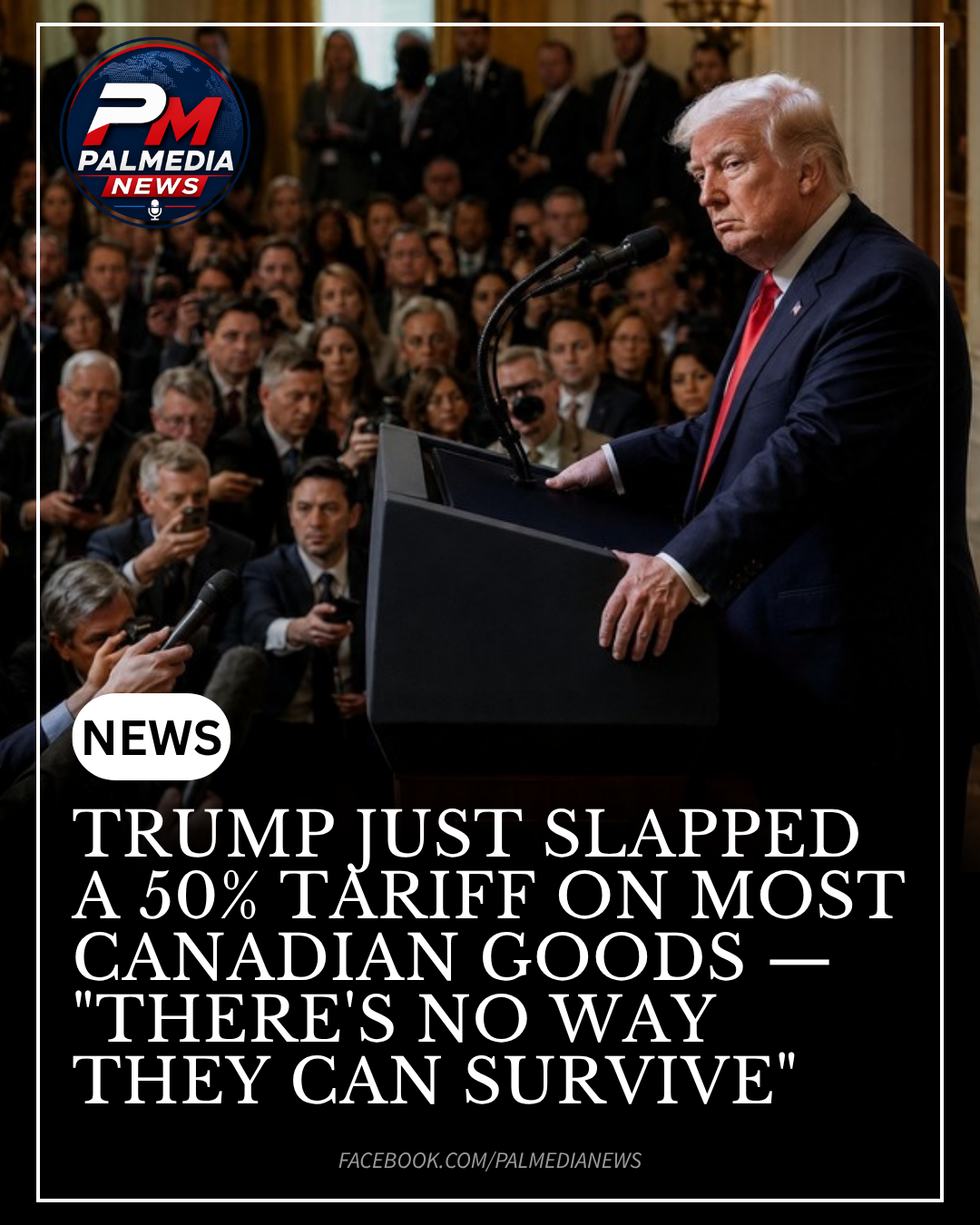
President Donald Trump has imposed a sweeping 50% tariff on most goods imported from Canada, doubling a rate he had floated only days earlier and dramatically escalating a trade dispute between two of the world’s closest economic partners. The president defended the move without hesitation, insisting the United States holds all the leverage.
How the Standoff Escalated
The jump to 50% did not come out of nowhere. It followed a decision by the Canadian province of Ontario to place a surcharge on the electricity it exports to several U.S. states — a pressure tactic aimed squarely at Washington during an already tense stretch of trade relations. Trump answered by doubling the tariff he had planned, casting it as a necessary countermove rather than an opening shot.
The United States and Canada share one of the largest trading relationships in the world, moving hundreds of billions of dollars in goods across the border every year. That deep connection is exactly what makes a clash like this so consequential: the same integration that keeps supply chains humming also means a sudden tariff can ripple through factories, farms and store shelves on both sides of the border almost immediately.
What the Tariffs Cover
The 50% rate applies to most Canadian goods entering the United States, a category broad enough to touch steel and aluminum, automobiles and auto parts, lumber, and a wide range of agricultural products. For industries that rely on cross-border materials, a tariff of that size is not a rounding error — it can reshape where companies buy, build and hire.
Trump made clear he sees the pressure working in America’s favor. “Without us, there’s no way they can survive,” he said of Canada, portraying the U.S. market as the lifeline propping up its northern neighbor’s economy. He has argued repeatedly that Canada depends far more on American trade than the other way around, and that Washington should use that imbalance to force a better deal.
Reactions and Implications
Canadian officials pushed back quickly, warning that the tariffs would drive up costs on both sides of the border and hit industries ranging from steel and aluminum to autos and agriculture. They cautioned that retaliation could follow, raising the risk of a tit-for-tat spiral that neither economy can easily absorb.
The debate at home splits along familiar lines. Supporters argue Trump is finally using America’s economic weight to win concessions that years of quieter negotiation never delivered. Opponents counter that a full-blown trade war could rattle markets, stoke inflation and strain one of the closest alliances the United States has. With both governments digging in, the open question is who blinks first.
What This Means for Americans
For everyday households, the stakes are practical. Tariffs of this scale can filter down into the price of new cars, groceries, building materials and energy — the kinds of costs families feel at the dealership, the checkout line and the hardware store. Whether the tariffs deliver the leverage the White House is betting on, or simply add to what Americans pay, will become clearer in the weeks ahead as businesses adjust and Canada decides how far it is willing to go in response.
Stay informed on the stories that matter most. Follow Palmedia News on Facebook and bookmark palmedianews.com for breaking news and analysis.