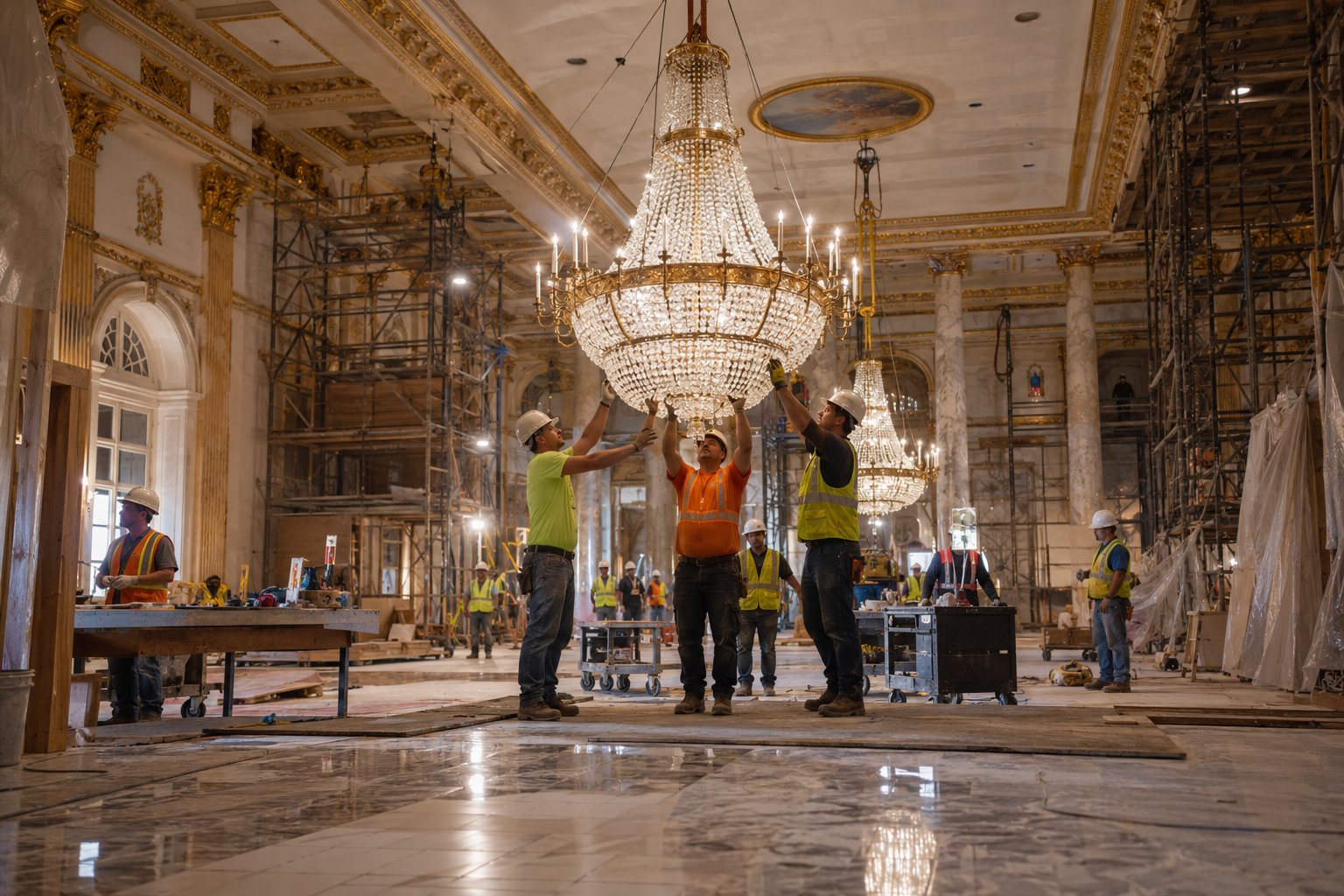
Donald Trump’s push to build a lavish new ballroom at the White House has run into a wall he didn’t see coming: his own party. Senate Republicans this week stripped up to $1 billion in security funding tied to the project out of a major spending package, blocking the request before it could reach a floor vote.
How the Ballroom Became a Billion-Dollar Ask
The White House had pitched the money as a security necessity rather than a vanity expense. Officials initially said the ballroom would be financed with private dollars — roughly $200 million from Trump himself and what the administration described as “patriot donors.” That figure soon doubled to $400 million, then ballooned into a $1 billion line item folded into a broader White House security request.
The escalating price tag drew scrutiny on Capitol Hill, where lawmakers in both parties questioned why taxpayers should underwrite an ornate event space attached to the executive mansion. For a number of Republicans, the optics of approving a billion-dollar ceremonial hall while preaching fiscal restraint proved impossible to defend.
Four Republicans Break Ranks
Four GOP senators publicly came out against the funding: Bill Cassidy of Louisiana, Susan Collins of Maine, Lisa Murkowski of Alaska, and Thom Tillis of North Carolina. According to multiple reports, the open dissent reflected a much larger group of Republicans who privately opposed the project but were reluctant to cross the president on the record.
The decisive blow came from the Senate parliamentarian, who ruled that the ballroom security funding could not move through the budget reconciliation process. The provision ran afoul of the Byrd Rule, the longstanding Senate guardrail that bars items deemed extraneous to federal spending or outside the jurisdiction of the committees drafting the bill.
A Deal to Move the Bigger Bill
With the ballroom money removed, Republican holdouts agreed to lift their blockade on a $70 billion immigration enforcement package the administration had been pushing. In exchange, they extracted a pledge from the White House to scrap a separate $1.8 billion fund the president had planned, clearing the path for the larger spending measure to advance.
Trump did not take the rebuke quietly. The president publicly criticized members of his own party over the decision, framing the ballroom as essential and the opposition as shortsighted. Republican leaders, for their part, signaled they were eager to move past the fight and focus on the enforcement package they had fought to unlock.
What This Means for Americans
For taxpayers, the episode is a rare example of a spending request being killed before it ever became law — and a reminder that even a president’s priorities can be checked by the rules of the chamber and the will of his own party. The central question now lingers: when should public money go toward projects at the White House, and when should a president cover the cost privately?
Stay informed on the stories that matter most. Follow Palmedia News on Facebook and bookmark palmedianews.com for breaking news and analysis.