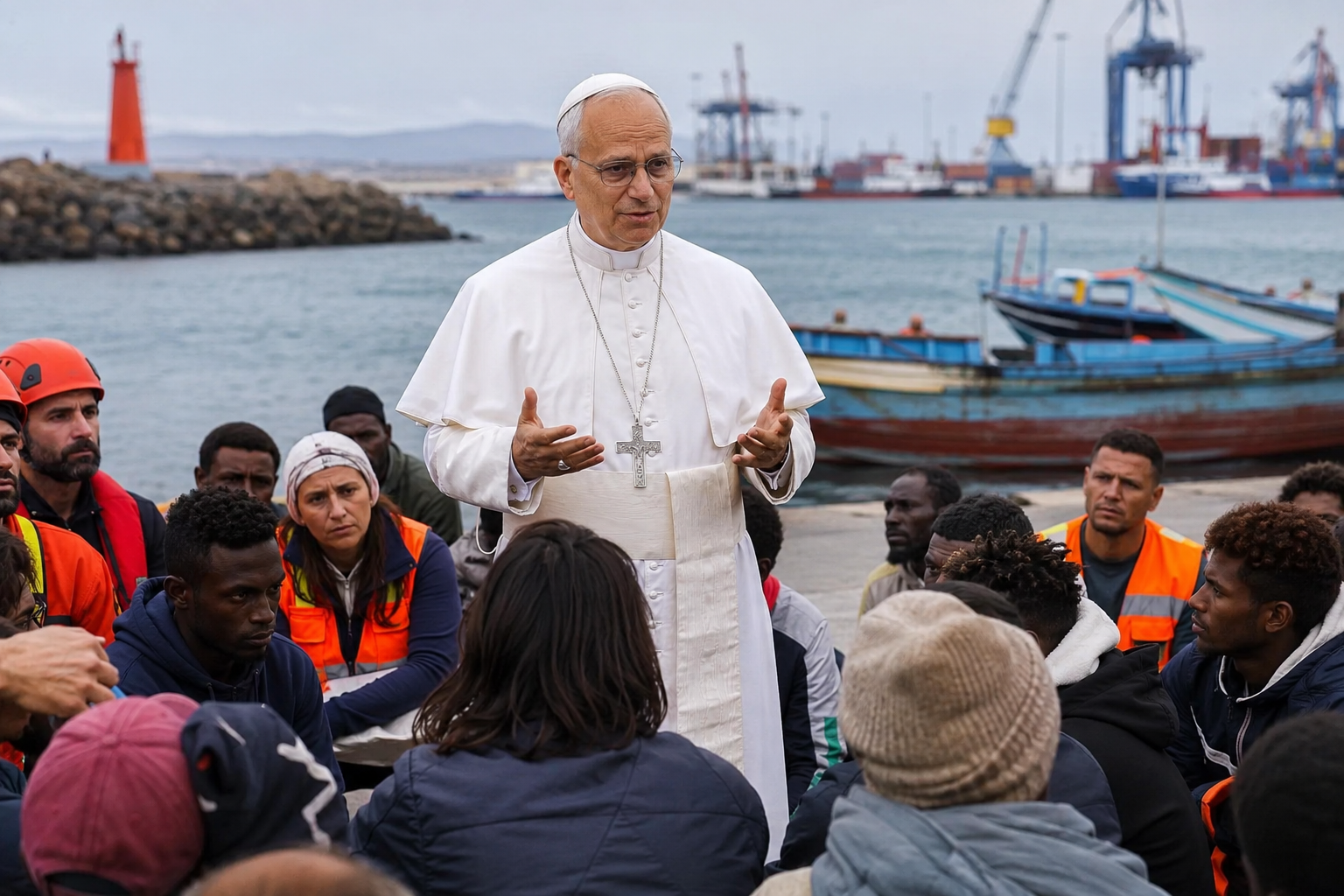
Pope Leo XIV stood on the docks of Arguineguin, a port on the southern coast of Gran Canaria, and delivered one of the most direct migration appeals of his young papacy. “Human dignity has no passport and does not lose its value when crossing a border,” he said. The remark came on the sixth day of his Apostolic Journey to Spain, at a quay so marked by loss that locals call it the “Port of Shame.”
A Port at the Edge of Europe
The Canary Islands sit off the coast of West Africa, and for people fleeing poverty and conflict they represent the nearest gateway to Europe. The journey is one of the world’s deadliest: small wooden boats cross the open Atlantic, often overcrowded, in conditions that have turned the surrounding waters into a graveyard. Arguineguin became a symbol of that crisis in 2020, when thousands of migrants arrived within days during the height of the COVID-19 pandemic.
Pope Leo XIV — the first American-born pope — chose that backdrop deliberately. Against the harbor and the ocean, he met with migrants and the organizations that rescue, welcome, and accompany them, framing the gathering not as a photo opportunity but as a moral reckoning for the continent.
Faces, Not Statistics
The Pope listened to testimony from those who live the crisis firsthand. A maritime rescue captain who has helped save more than 20,000 people at sea described pulling families from the water. A survivor of human trafficking recounted being coerced from her homeland and forced into exploitation. A Caritas volunteer spoke of the small, daily acts — a pair of shoes, a coat, a cup of coffee — that make up the work of accompaniment.
“You are not just numbers or files,” the Pope told the migrants directly. “You are people who have left behind families and homes. You have dreams that no one has the right to despise.” He also warned them about the criminal networks that prey on desperation, calling their false promises “siren songs” and “industries of death.”
An Appeal to Governments
The Pope did not direct his message at one side of the debate. He argued that responsibility for migration must be shared across every link in the chain: countries of origin should create conditions for peace and development, transit countries should protect vulnerable people from criminal networks, and Europe should not grow accustomed to “the Mediterranean and the Atlantic becoming unmarked graves.”
“It is not enough to manage arrivals, distribute statistics, reinforce borders, or lament deaths after they have occurred,” he said. He called for legal and safe migration pathways, effective protection for trafficking victims, international cooperation against smugglers, and genuine processes of reception and integration.
The Right Not to Migrate
In a notable turn, Pope Leo also defended a principle that is often left out of the conversation: the right to stay home. While reaffirming the right to seek refuge, he spoke of “the right not to have to migrate” — the right to remain in one’s own country free from hunger, war, persecution, corruption, and environmental degradation. The framing acknowledged that migration is frequently not a free choice but a last resort.
The meeting closed with a floral tribute and a minute of silence for those who have died attempting the crossing. The Pope then blessed a cross fashioned from the wood of a migrant boat at a nearby seaside shrine.
Why It Matters
Migration is one of the most contested issues on both sides of the Atlantic, and a sitting pope traveling to a frontline port to address it directly carries weight well beyond the Catholic Church. The questions he raised — about border policy, trafficking, and shared responsibility — are the same ones lawmakers, voters, and communities are wrestling with worldwide. His parting words framed the stakes plainly: “Sooner or later, it will be known whether we protected life or whether we yielded to indifference.”
Stay informed on the stories that matter most. Follow Palmedia News on Facebook and bookmark palmedianews.com for breaking news and analysis.