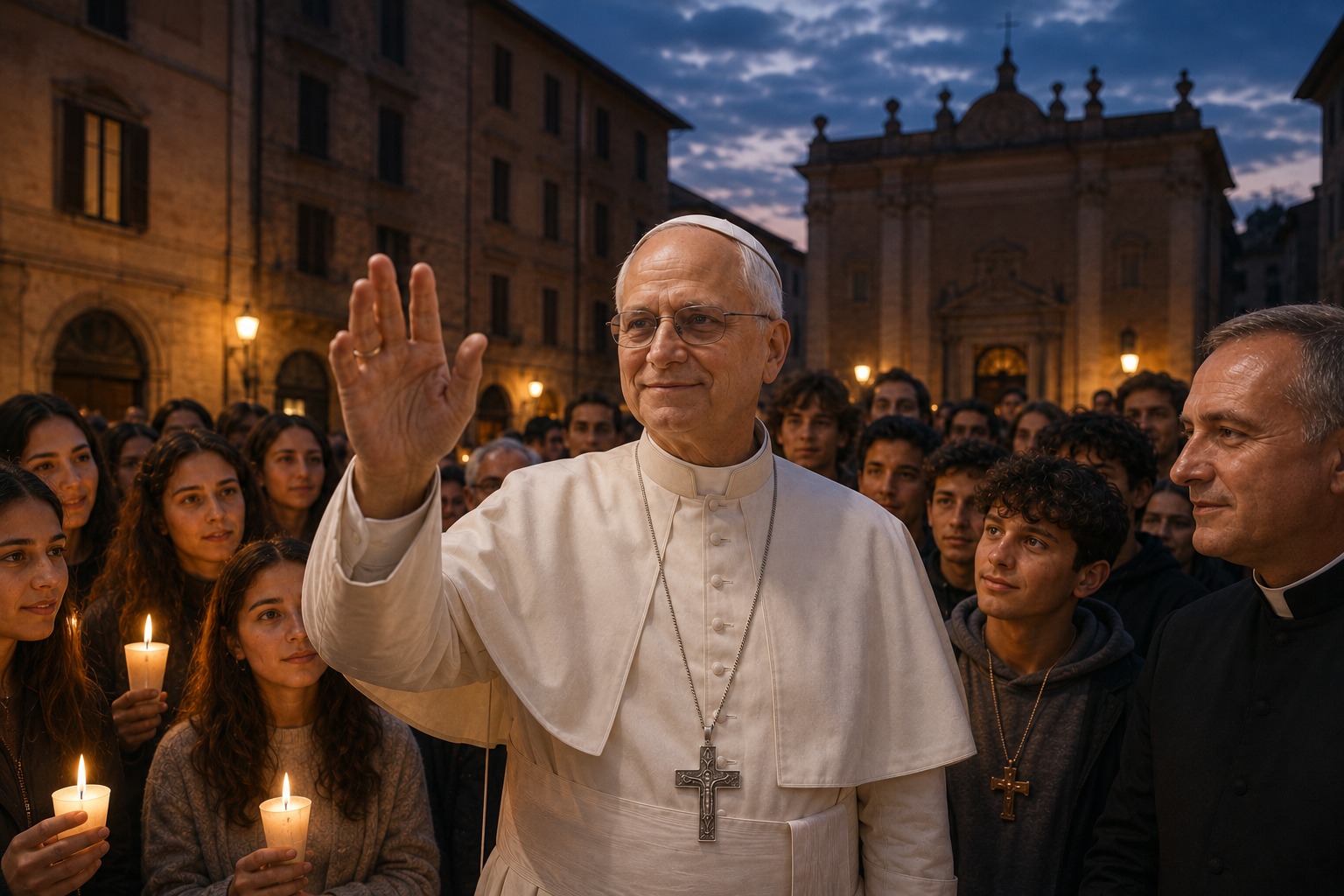
Pope Leo XIV has delivered his clearest message yet on immigration, and he chose to do it not at a podium but at a shrine. The first American-born pope traveled to Sant’Angelo Lodigiano, a small town in northern Italy, to honor St. Frances Xavier Cabrini — the first American saint and the patron saint of migrants — in a move widely read as a pointed response to the immigration policies of President Donald Trump.
A Saint Chosen for a Reason
St. Frances Xavier Cabrini was born in Sant’Angelo Lodigiano in 1850 and went on to spend her life serving Italian immigrants who had left their homeland in search of something better, eventually becoming a naturalized U.S. citizen. She was canonized as the first American saint and is recognized by the Catholic Church as the patron saint of immigrants. For Pope Leo XIV — himself the first pope born in the United States, formerly known as Cardinal Robert Prevost — the choice of Cabrini was anything but accidental.
By kneeling at her tomb and lifting up her legacy, Leo connected his own American roots to a centuries-old Catholic tradition of welcoming the stranger. The symbolism was unmistakable to the crowd that gathered, and to observers far beyond Italy.
What the Pope Said
During an evening prayer service in Cabrini’s hometown, Pope Leo prayed at her tomb and posed a direct question to those gathered: “What could be more relevant today than a missionary charism dedicated to serving migrants?” He urged young Catholics to follow her example and to care for those on the move — people who, like the immigrants Cabrini served, have left their homes seeking safety and opportunity.
The appeal fits a pattern. Since taking office, Leo has repeatedly returned to the theme of human dignity and the treatment of migrants, framing it as a core matter of Catholic teaching rather than a partisan political stance.
A Growing Rift With Trump
The timing of the tribute is hard to ignore. Leo’s repeated appeals on immigration have drawn sharp pushback from President Trump, who has accused the pontiff of wading into politics and has openly disagreed with his comments on migrants and foreign policy. The two have also clashed over questions of war and other global issues, deepening a tension between the White House and the Vatican that has become one of the more closely watched relationships in international affairs.
Supporters of the pope see a religious leader staying true to long-standing Catholic teaching on welcoming the stranger — a position the Church has held for generations. Critics argue that Leo is stepping into a political fight that is not his to wage, and that a pope should remain above the policy debates of any single nation.
What Comes Next
Leo shows no sign of slowing down. On July 4 — a date heavy with American symbolism — he is set to visit Lampedusa, the small Sicilian island that has become one of Europe’s main arrival points for migrants crossing the Mediterranean from North Africa. The visit echoes one of the most memorable trips of Pope Francis, who traveled to Lampedusa early in his papacy to draw attention to the plight of those making the dangerous sea crossing.
For Leo, the trip will offer another high-profile platform to press his message — and another moment that is likely to be read through the lens of his differences with Washington.
What This Means for Americans
For millions of American Catholics, the pope’s words land in a moment when immigration remains one of the most divisive issues in the country. A pope born in the United States invoking an American saint to talk about migrants puts the debate squarely in front of U.S. parishioners, who may find themselves weighing their faith’s teaching against the politics of the day. Whether seen as moral leadership or political overreach, Leo’s message ensures the conversation over how nations treat newcomers will not fade quietly.
Stay informed on the stories that matter most. Follow Palmedia News on Facebook and bookmark palmedianews.com for breaking news and analysis.