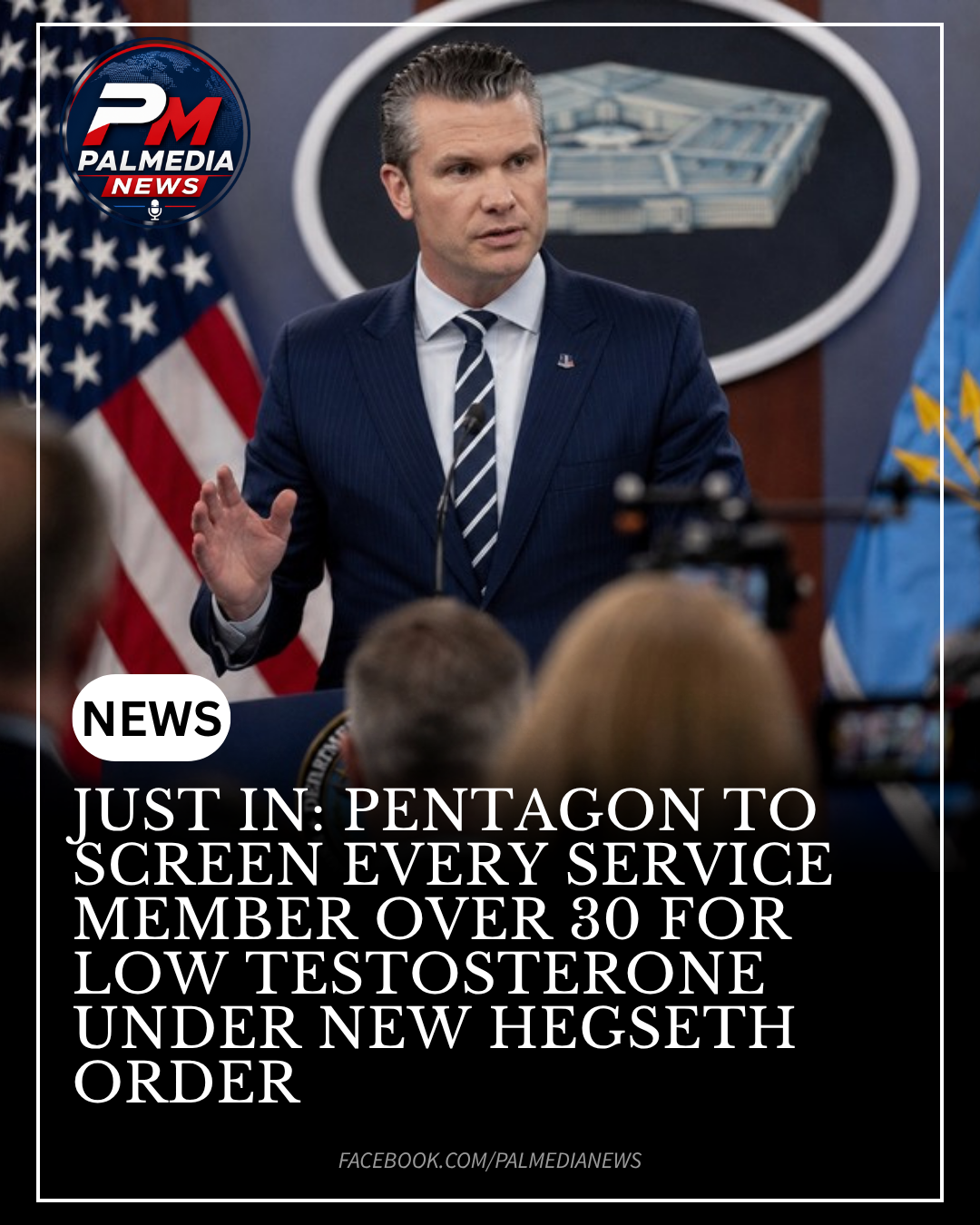
The Pentagon is about to start tracking something it has never systematically measured before: the testosterone levels of its troops. Defense Secretary Pete Hegseth announced a new policy that will require every U.S. service member over the age of 30 to be screened for testosterone deficiency as part of their annual health assessment.
What the New Policy Does
Under the directive, the screening becomes a standard part of the periodic health assessment that active-duty members already complete each year. Service members younger than 30 will be able to participate voluntarily. Anyone found to have clinically low testosterone will have the option to receive testosterone replacement therapy, commonly known as TRT.
Hegseth framed the move as both a readiness measure and a matter of proper medical care. “I’m authorizing a new screening program for testosterone deficiency for our service members, ensuring you have the right testosterone levels to operate at your absolute best,” he said. He added that the military owes its personnel “the absolute best medical care in the world,” calling the program a way to deliver on that obligation.
Why the Military Is Looking at Hormones
Military physicians have long noted that the demands of service can take a measurable toll on hormone levels. The chronic stress, physical strain, disrupted sleep, and — in combat roles — blast exposure that come with military life can all suppress testosterone production. Researchers studying elite units have even coined a term, “Operator Syndrome,” to describe the cluster of physical and hormonal problems seen in special operations personnel after years of high-intensity deployments.
Testosterone plays a central role in muscle mass, bone density, energy, mood, and recovery — all things that matter enormously for people whose work is physically demanding and mentally punishing. Left unaddressed, low testosterone can contribute to fatigue, low mood, reduced strength, and slower recovery from injury. Supporters of the program argue that catching a deficiency early is no different from screening for high blood pressure or cholesterol.
Support and Skepticism
Backers of the policy say it addresses a real but frequently overlooked medical issue, and that routine screening could improve both the health and the performance of the force. They see it as a straightforward upgrade to the care troops already receive.
Critics raise a different set of questions. Some ask whether hormone screening and optional TRT should rank among the Pentagon’s priorities, and whether the program could lead to broader, more expensive treatment costs over time. Others want to see the medical thresholds and long-term data before judging how many troops will actually qualify. Estimates of how common low testosterone is vary widely — studies place the figure anywhere from a low single-digit percentage to much higher depending on how it is measured, with roughly 5 to 6 percent of men aged 30 to 79 showing clinically low levels along with symptoms.
What It Means Going Forward
For the more than one million active-duty troops, the change means a new element on their yearly checkup and, for some, access to treatment they might not have pursued on their own. For the public, it is another sign of how the current Pentagon leadership is reshaping military health policy — and it opens a debate that touches on cost, readiness, and how far the armed forces should go in optimizing the people who serve.
Stay informed on the stories that matter most. Follow Palmedia News on Facebook and bookmark palmedianews.com for breaking news and analysis.