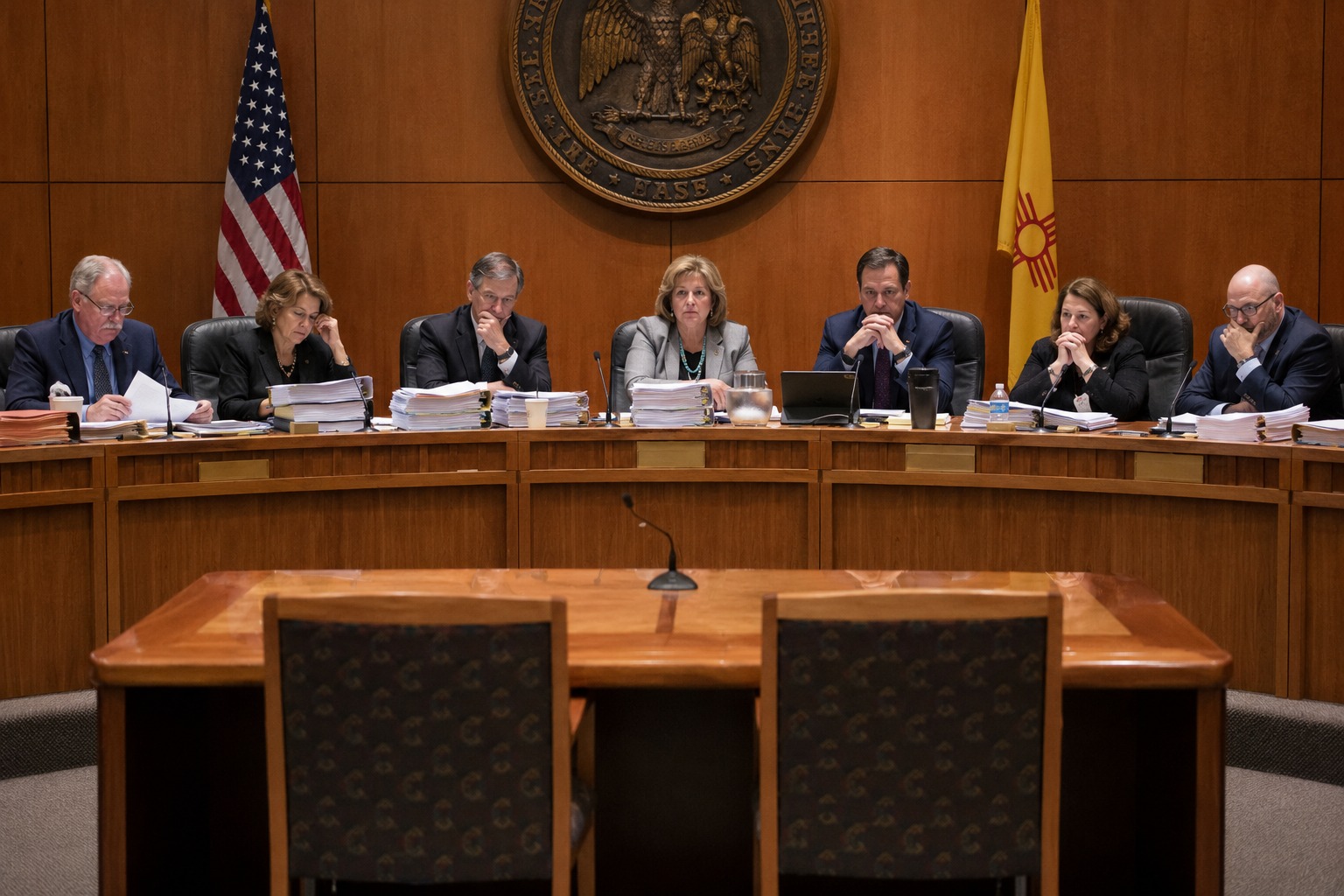
New Mexico has become the first state in the country to stand up its own investigative body dedicated entirely to Jeffrey Epstein — and it is not waiting around for cooperation. At its very first meeting, the newly created “Epstein Truth Commission” issued 14 subpoenas, using the power of the courts to compel testimony and force the release of documents tied to Epstein’s years inside the state.
The move signals that state lawmakers intend to treat the investigation as more than a symbolic gesture. With actual subpoena authority behind it, the commission can legally require institutions to hand over records and answer questions under oath — a far cry from the strongly worded letters and press conferences that have characterized much of the public conversation around Epstein for years.
Why New Mexico
Epstein owned a sprawling ranch in New Mexico, a property that has long sat at the center of unanswered questions. For years, residents and watchdogs have asked who knew what, who looked the other way, and what records were never fully examined. The ranch made the state a key chapter in the broader Epstein story, yet much of what happened there has remained out of public view.
State lawmakers say that is exactly the gap the commission is meant to close. By creating a formal investigative panel with legal teeth, the legislature is attempting to pry loose information that earlier inquiries either could not or did not pursue. The commission’s existence is itself a statement: that the state believes there is more to learn, and that it is willing to use its own authority to find it.
The Subpoenas
The 14 subpoenas issued at the inaugural meeting are not aimed at individuals. Instead, they target institutions — the entities most likely to hold paper trails, financial records, and internal communications. Among those named are the Epstein estate, several banks, federal agencies, and a nonprofit organization. The reach extends deep into state and county government as well, with subpoenas directed at offices ranging from the governor to the land commissioner to the Santa Fe County Sheriff’s Office.
That breadth matters. By casting a wide net across financial institutions, government offices, and the estate itself, the commission appears focused on building a complete picture — following the money, the property, and the official decisions that surrounded Epstein’s presence in the state. The inclusion of banks in particular suggests investigators want to trace transactions that may have gone unexamined.
Survivors and the Giuffre Family
The opening session was not only about paperwork. The panel also heard directly from survivors, as well as from the family of the late Virginia Giuffre — one of the most prominent voices to ever come forward in connection with Epstein. Their participation gave the proceedings a human weight that subpoenas alone could not, grounding the legal process in the experiences of those most affected.
A Tight Timeline
The commission is operating under a firm deadline. It must produce an interim report by July 31, with a full and final report due later in the year. That compressed timeline puts pressure on the panel to move quickly through the documents and testimony it compels, and it ensures the public will not have to wait long to see at least preliminary findings.
The Debate
Supporters are calling the commission long-overdue accountability — a chance to finally surface answers that federal investigations left incomplete. Critics question whether a state-level body can realistically extract information that national investigations could not, and whether it has the resources and jurisdiction to match its ambitions. The honest answer is that no one will know until the subpoenas are answered and the records come in.
What This Means for Americans
For everyday Americans, the New Mexico effort is a test of whether transparency can be forced when other avenues stall. If a single state can use its courts to compel banks, agencies, and officials to open their files, it could become a model other states study — and a reminder that government accountability does not always have to start at the federal level.
Stay informed on the stories that matter most. Follow Palmedia News on Facebook and bookmark palmedianews.com for breaking news and analysis.