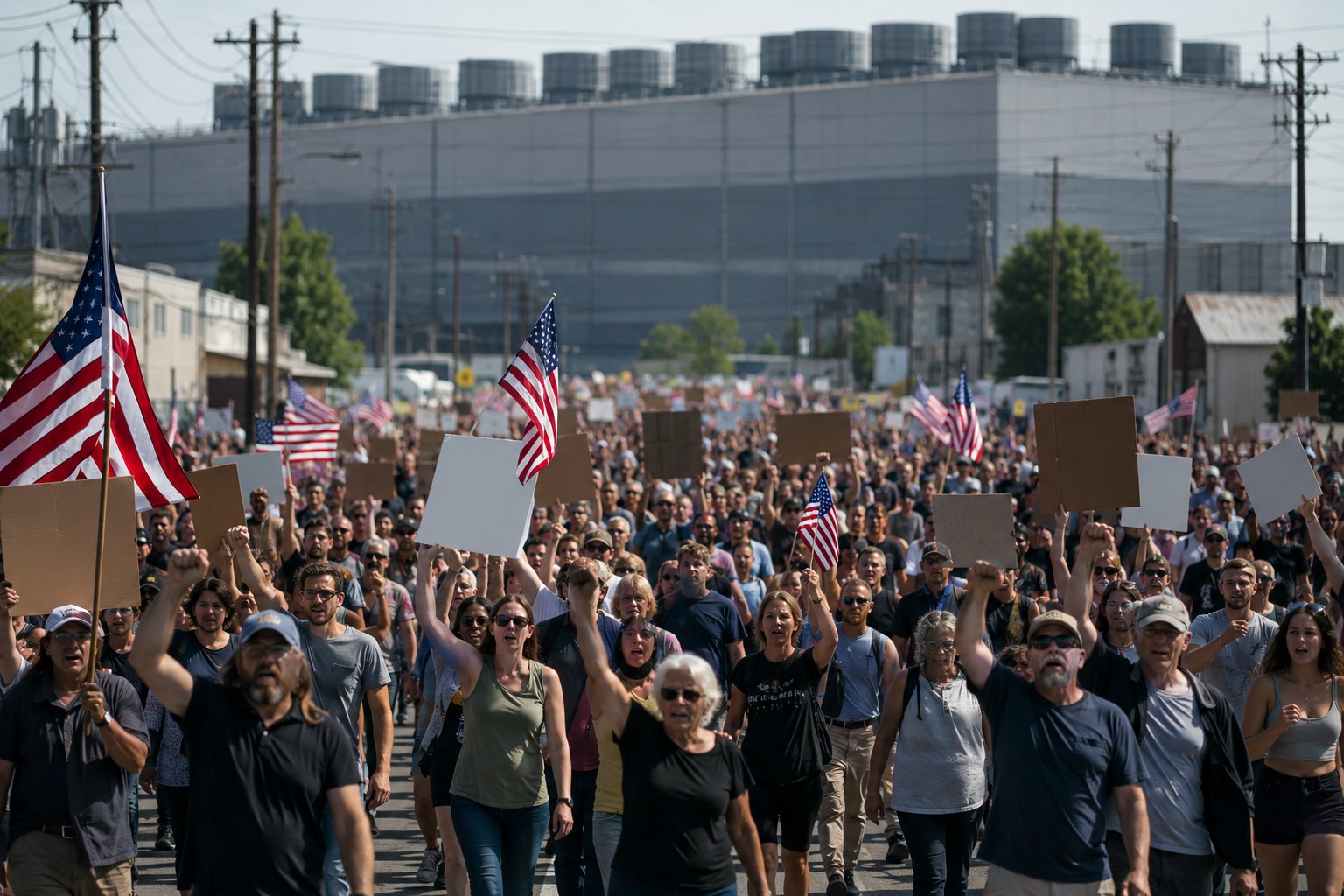
On Saturday, July 18, more than 50 demonstrations will unfold across 22 states in what organizers are calling the first nationwide day of protest against AI data centers. The coordinated effort, organized by the group Humans First, stretches from California to Florida and marks one of the most visible public pushbacks yet against the infrastructure powering the artificial intelligence boom.
A Protest Movement With an Unusual Origin
What makes this movement stand out is where it is coming from. Humans First is led by Amy Kremer, a longtime conservative activist and former Tea Party organizer. Movements targeting Big Tech have historically drawn most of their energy from the political left. This one is being organized in the spirit of grassroots conservative activism, and it is drawing supporters from across the political spectrum.
Data centers are the physical backbone of artificial intelligence. Every chatbot answer, every AI-generated image, and every model training run happens inside these massive warehouse-style buildings packed with servers. As tech companies race to expand AI capacity, construction has exploded across the country, often landing next to farmland, small towns, and suburban neighborhoods.
Where the Protests Are Happening
The July 18 demonstrations span 22 states, with the heaviest concentration in Texas, which now leads the nation in data center development. Texas alone will see 11 separate protests. Other events are planned in communities from the West Coast to the Southeast, many in places where data center projects have already sparked local zoning battles.
Organizers say the day of protest is meant to give ordinary residents a voice in decisions that have largely been made behind closed doors between tech companies, utilities, and local officials. Many communities learn about a data center project only after land has been purchased and agreements have been signed.
Why Communities Are Pushing Back
The complaints go far beyond politics. Residents point to the enormous amounts of water and electricity the centers consume, rising utility bills for nearby families, lost farmland, constant mechanical noise, and falling property values. In surveys of communities facing data center development, resource strain consistently ranks as the top concern, followed by quality-of-life issues like traffic and public health.
The numbers help explain the frustration. Recent polling shows 71 percent of Americans oppose data centers being built near their communities, a figure that includes a majority of Republicans. Opposition to data center construction has become one of the rare issues that unites voters across party lines.
The Other Side of the Argument
Tech companies and their supporters argue the centers are essential to keeping America ahead in the global AI race, particularly against China. They also point to the construction jobs, permanent positions, and tax revenue the facilities bring to host communities. Some towns have welcomed data centers as economic lifelines, using the new tax base to fund schools and services.
Supporters also note that many operators are investing in renewable energy and water recycling to reduce their footprint, and that the industry is responding to community pressure with better siting decisions.
What This Means for Americans
For millions of Americans, this debate is no longer abstract. If a data center is proposed near your town, it could affect your electric bill, your water supply, your commute, and your home value. It could also bring jobs and tax money your community needs. July 18 will test whether local frustration has grown into a genuine national movement, and whether elected officials start treating data center siting as a kitchen-table issue heading into the midterms.
Stay informed on the stories that matter most. Follow Palmedia News on Facebook and bookmark palmedianews.com for breaking news and analysis.