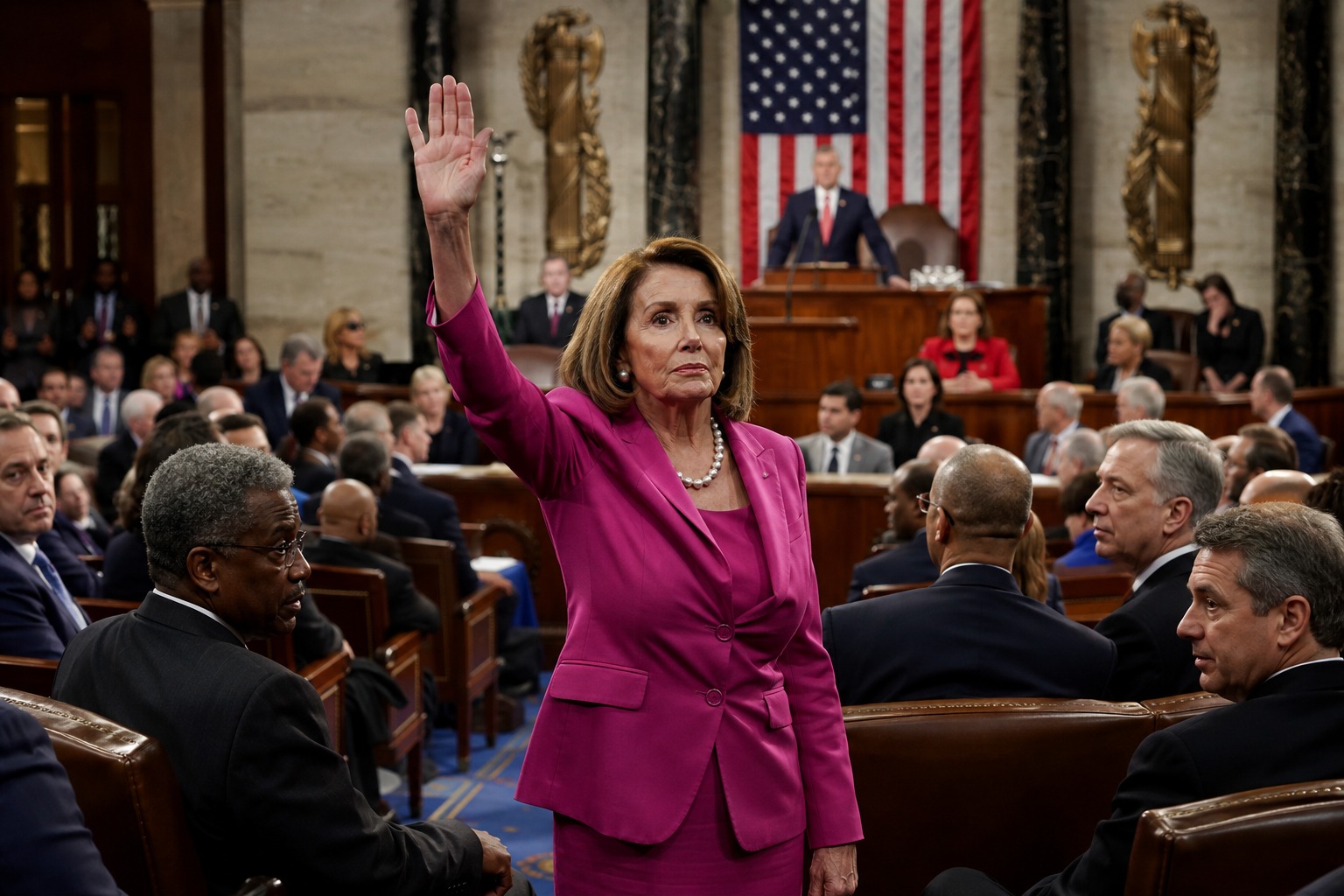
Nancy Pelosi has broken with one of the longest-held positions of her political career. The former House Speaker voted in favor of an amendment that would have eliminated all $3.3 billion in annual U.S. military aid to Israel, telling colleagues that after decades of unwavering support, it is now clear that American “policy must change.”
The vote, held on the House floor on July 15, marked a stunning moment for a lawmaker who has spent much of her time in Washington as one of Israel’s most dependable allies. And while the measure ultimately failed, the list of names who backed it — Pelosi’s among them — signaled a shift inside the Democratic Party that would have been almost unimaginable just a few years ago.
What the Amendment Would Have Done
The amendment was introduced by Republican Rep. Thomas Massie of Kentucky, a longtime critic of foreign aid spending. It sought to strip out the roughly $3.3 billion the United States sends to Israel each year in military assistance — a figure rooted in a 10-year memorandum of understanding between the two governments that has anchored the relationship for a generation.
Massie’s proposal never had the votes to pass. House Democratic Leader Hakeem Jeffries opposed it, and nearly the entire Republican caucus lined up against it as well. But the amendment was never really expected to become law. For many of the more than 100 Democrats who supported it, the vote was a message — a way to register growing unease with the current course of U.S. policy in the region.
Pelosi’s Explanation
Pelosi did not pretend the amendment was perfect. She called it “ill-conceived” as written, acknowledging concerns about how it was drafted. But she said she voted for it anyway to make a point that she felt could no longer wait.
“For the good of the Israeli people and the Palestinian people, it is clear U.S. policy must change,” Pelosi said. She went further, warning that “the American people are demanding an end to a perpetual cycle of war” and that the Netanyahu government “cannot maintain its current course.”
At the same time, Pelosi was careful to note the limits of her position. She said she continues to support a two-state solution and remains aligned with Democratic leadership’s broader strategy for pursuing peace. Her vote, in other words, was less a full rupture than a warning shot — a signal that even Israel’s staunchest defenders in Congress are running out of patience.
A Party in Transition
The significance of the vote lies less in its outcome than in who cast it. Pelosi is not a backbencher or a first-term progressive. She is one of the most powerful figures in modern Democratic politics, a former Speaker who spent decades defending the U.S.-Israel alliance. When someone with that record votes to cut off military aid, even symbolically, it reflects a broader realignment underway within her party.
More than 100 House Democrats joined her — a bloc large enough that leaders in both parties are now taking notice. Supporters of the measure argue that continued military assistance ties the United States to policies it cannot fully control. Critics counter that abandoning a longtime ally would weaken American influence and embolden adversaries in an already volatile region.
What This Means for Americans
For everyday Americans, the debate is about more than one failed amendment. It touches on how billions of taxpayer dollars are spent abroad, what conditions — if any — should come attached, and how much say voters have over decades-old foreign commitments. As frustration with foreign conflicts grows, votes like this one offer an early look at how that pressure is beginning to reshape Washington.
Stay informed on the stories that matter most. Follow Palmedia News on Facebook and bookmark palmedianews.com for breaking news and analysis.