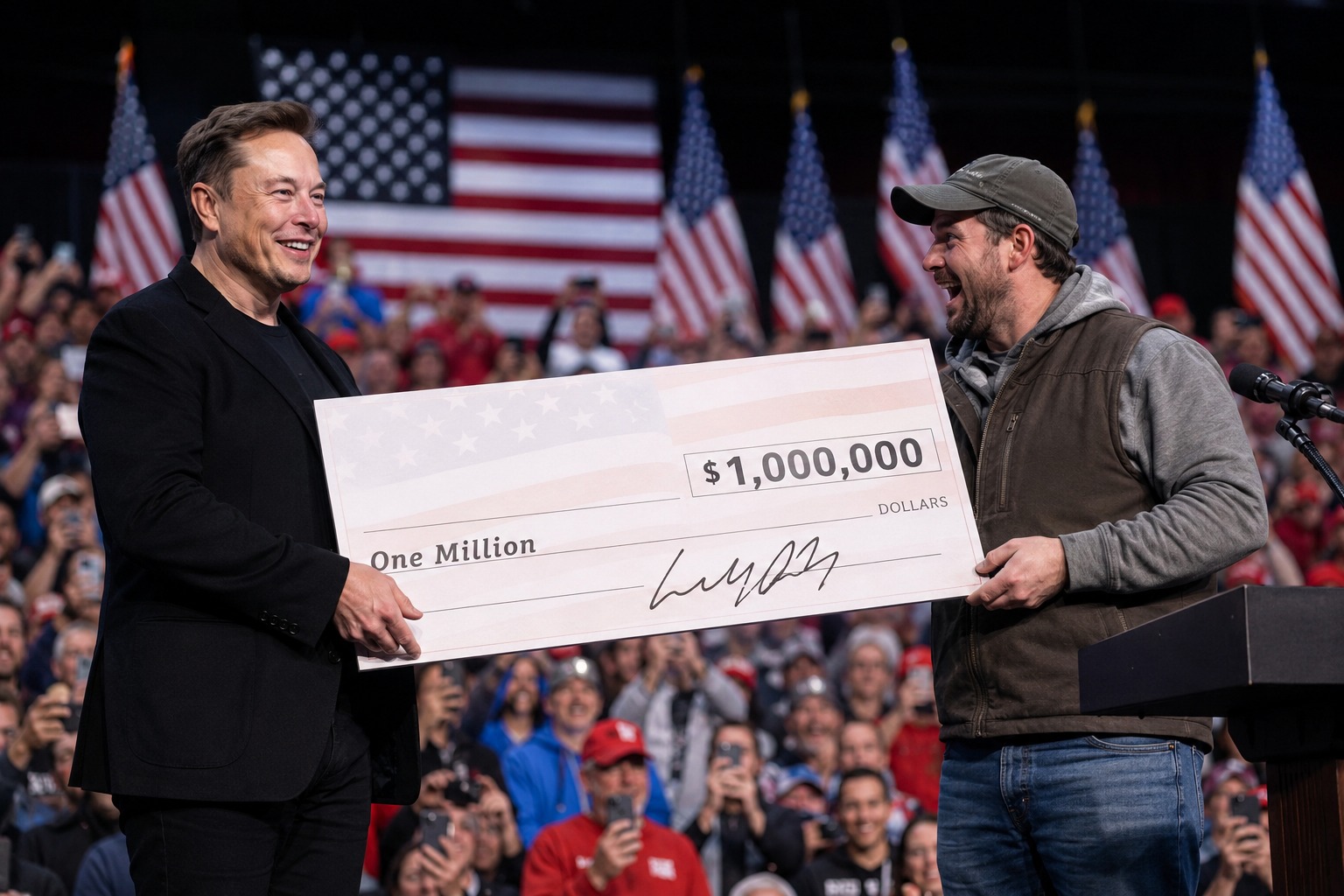
Wisconsin’s election regulators have found probable cause that billionaire Elon Musk violated state law when he handed out $1 million payments to voters ahead of a closely watched election — a decision that thrusts one of the world’s richest men into a fight over where political spending ends and buying votes begins.
The Wisconsin Elections Commission determined that Musk’s cash giveaways likely ran afoul of the state’s election bribery statute, which bars offering anything of value to induce someone to vote or to refrain from voting. The finding does not mean Musk has been charged, but it moves the matter into a more serious phase.
How the $1 Million Checks Started It All
The controversy traces back to the spring of 2025, when Wisconsin held a high-stakes race for a seat on its state Supreme Court. The contest was widely seen as a battle that could tip the ideological balance of the court, and it drew record-breaking spending from across the country.
Musk, who poured money and attention into the race, personally presented oversized checks for $1 million to voters at a rally. Recipients had signed a petition opposing what Musk described as “activist judges.” Images of the giant novelty checks spread quickly online and immediately raised questions about whether the payments crossed a legal line.
What the Commission Actually Found
A probable cause finding is an early legal threshold. It means investigators believe there is a reasonable basis to conclude a law may have been broken — not that guilt has been established. In practice, the ruling can open the door to further action, including a referral to prosecutors who would ultimately decide whether to pursue charges.
The commission’s decision centered on whether the payments were designed to influence how people voted. Under Wisconsin law, offering money or valuable items tied to voting is prohibited, and the size and public nature of Musk’s giveaways put them squarely in the spotlight.
Musk’s Defense and the Pushback
Musk and his team have argued the money was not a reward for voting at all. In their telling, the payments were compensation for spokespeople and for people who signed a petition — activities they say are protected forms of political expression, not vote-buying.
Critics see it differently. They argue the checks were a thinly veiled attempt to boost turnout among favorable voters, and that allowing wealthy individuals to hand out cash around an election erodes public trust in the fairness of the vote. The dispute has become a flashpoint in a broader national argument about the role of money in politics.
What This Means for Americans
Beyond the headlines, the case touches a question that affects every voter: what are the rules when enormous sums of money collide with an election? If regulators conclude that direct payments to voters are off-limits no matter how they are labeled, it could shape how future campaigns and outside spenders operate. If the payments are ultimately deemed lawful, it may signal that the boundaries around political giving are wider than many assumed.
For now, the decision moves to the next stage, and the country will be watching closely to see whether one of the richest men on Earth faces real consequences — or whether the case fades as the legal process plays out.
Stay informed on the stories that matter most. Follow Palmedia News on Facebook and bookmark palmedianews.com for breaking news and analysis.