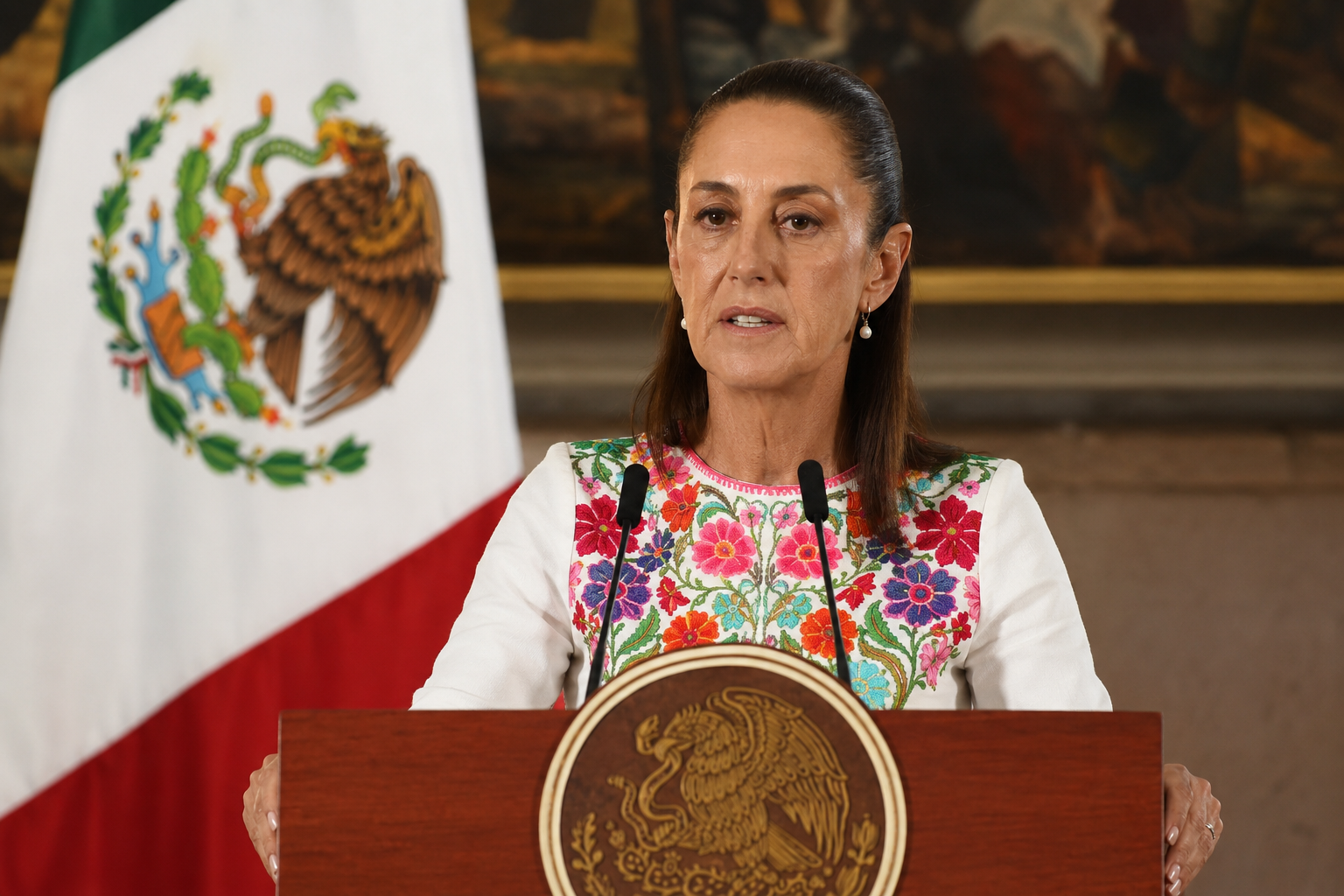
Mexico has formally committed to something the United States has debated for generations. President Claudia Sheinbaum signed a decree creating the Servicio Universal de Salud, or Universal Health Service, a single national system designed so that any Mexican can walk into any public hospital or clinic in the country and be treated at no cost.
Sheinbaum called the decree a historic step. It is the largest restructuring of Mexican healthcare in decades, and it rewrites a rule that has governed access to care in the country since the middle of the twentieth century.
Why This Is A Big Deal
For generations, Mexican healthcare has been split into separate systems that did not talk to each other. IMSS covered private-sector workers. ISSSTE covered government employees. IMSS-Bienestar covered everyone without a formal job, a group that includes a very large share of the workforce in a country where informal employment is widespread.
The practical effect was that your employer determined which hospital doors were open to you. A patient could live next to a well-equipped hospital and still be sent across the city because that facility belonged to a system they were not affiliated with. The decree is designed to erase that wall and let a patient be treated wherever they are.
How The Rollout Works
The change is phased rather than immediate. A Universal Health Credential began going out in April 2026, starting with adults aged 85 and older. Registration then opens to the rest of the population across the remainder of the year, with the goal of broad coverage by the end of 2026.
The substantive shift arrives in January 2027. That is when care begins crossing institutional lines for a defined list of critical services: emergencies, heart attacks, strokes, high-risk pregnancies, and breast cancer diagnosis and ongoing treatment. Specialized services follow later that year, including radiotherapy, laboratory testing, and imaging studies.
The final stage is set for 2028, when universal prescription fulfillment and hospitalization at any public facility are scheduled to be added. Full universal coverage is targeted for 2027 and beyond, depending on the service.
The scale of the undertaking is what makes it notable. Mexico has a population of roughly 130 million people, and a large share of them have historically moved in and out of formal employment, which meant moving in and out of health coverage tiers along with it. Unifying the three institutions means merging separate payrolls, separate hospital networks, separate medical records systems, and separate procurement pipelines into one framework. Health officials have described the credential rollout as the mechanism that ties those pieces together, giving every resident a single identifier that any public facility can read regardless of which institution originally covered them.
The Argument Against It
Skeptics are not disputing the goal so much as the arithmetic. Mexico spends a smaller share of its economy on health than most countries at a comparable income level, and its public hospitals already contend with doctor and nurse shortages, medicine stockouts, and long waits for specialist appointments.
The concern is straightforward: giving every citizen the right to walk into any facility does not by itself create additional doctors, hospital beds, or medication supply. Critics argue that without a significant funding increase and an aggressive hiring push, the decree risks moving existing bottlenecks around rather than removing them. Supporters counter that unifying three fragmented bureaucracies eliminates enormous duplication and finally ends a two-tier arrangement in which a person’s job determined the quality of their care.
What This Means For Americans
Mexico is now running a real-world experiment on a question that dominates American health policy debates. It is attempting universal access without the private insurance layer that sits at the center of the United States system, and it is doing so as an immediate neighbor with deep cross-border family, labor, and medical ties.
Whether Mexico hits its 2027 and 2028 deadlines will be watched closely on both sides of the border, and by anyone who argues that universal coverage is either straightforward or impossible.
Stay informed on the stories that matter most. Follow Palmedia News on Facebook and bookmark palmedianews.com for breaking news and analysis.