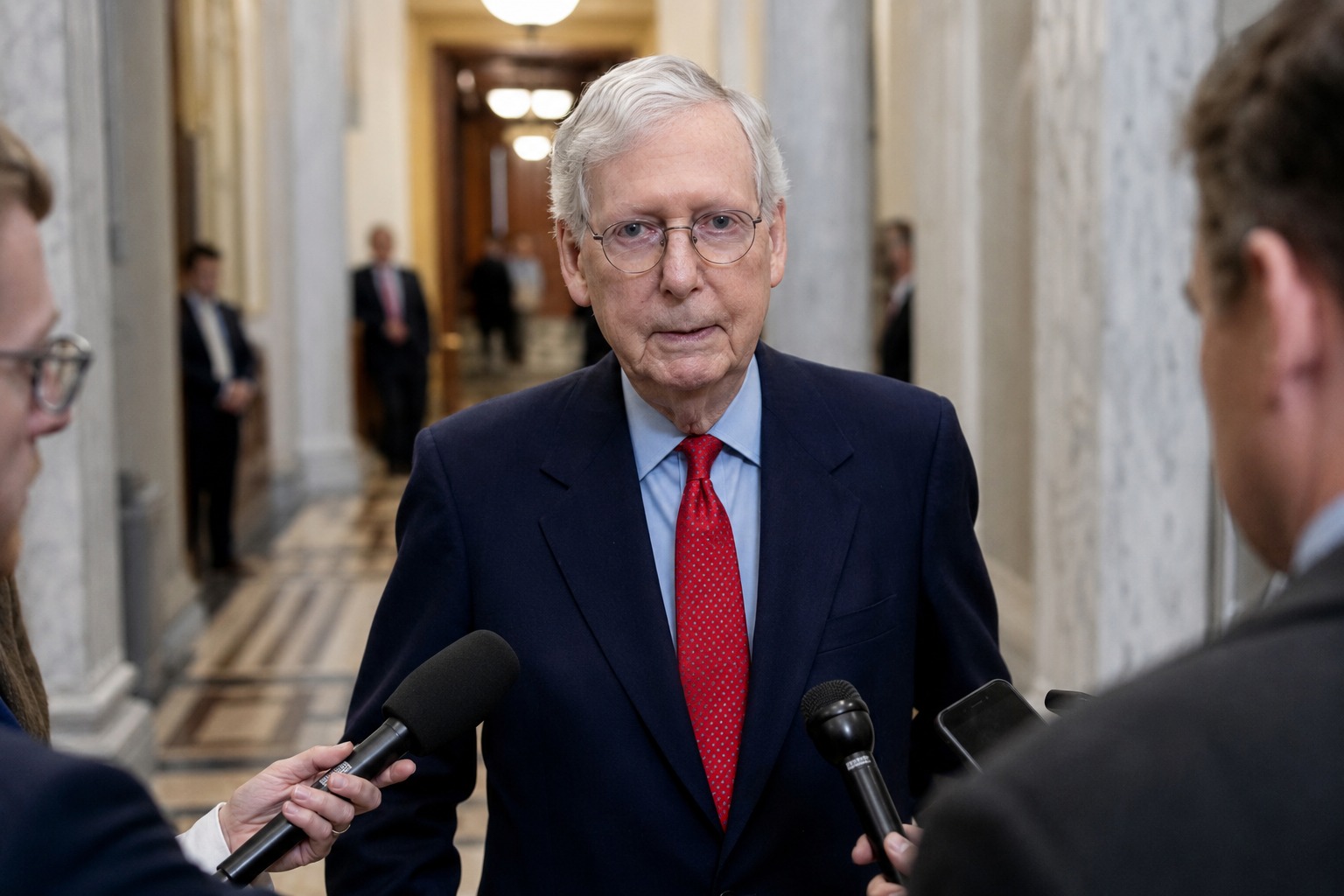
Senator Mitch McConnell says he was briefly unconscious after a fall, the disclosure that finally explains a hospitalization that had gone largely unexplained for nearly a month. The 84-year-old Kentucky Republican, who was admitted on June 14, broke his silence with a statement detailing what happened and what his doctors found.
What McConnell Said Happened
According to McConnell, he fell and lost consciousness for a short period around the time he was first taken to the hospital. He then underwent a battery of tests as physicians worked to determine what caused it.
The results, he said, ruled out the most serious possibilities. He did not break any bones. He did not suffer a concussion. There was no heart attack and no stroke. Doctors found no tumors and no hemorrhages. He did contract a mild case of pneumonia while admitted, and he has since moved from the hospital to a rehabilitation center to continue regaining his strength.
The Post-Polio Explanation
The cause of the fall itself traces back more than eight decades. The Office of the Attending Physician for Congress said McConnell has experienced several falls over the course of the year connected to his post-polio condition.
McConnell contracted polio as a small child in the early 1940s, before a vaccine existed. He has spoken publicly for years about the lasting effects, including difficulty walking and climbing stairs. Post-polio syndrome, which can emerge decades after the original infection, is known to cause muscle weakness and fatigue that raise the risk of falls. It is a condition that thousands of Americans of his generation continue to live with quietly.
Weeks of Silence, Then an Unusual Admission
What made the episode so conspicuous was not just the hospitalization but the quiet that followed it. For weeks, McConnell offered little detail, and the vacuum was filled by speculation across Washington about the health of one of the most consequential legislators of the modern era.
In his statement, McConnell addressed the silence head-on, saying that people of his generation often hesitate to share the vulnerability that comes with growing older. For a politician long defined by discipline and message control, it was a strikingly personal admission.
The Debate It Reopens
The disclosure lands squarely in an argument the country keeps having without ever settling it: how much are voters entitled to know about the health of the people who hold power, and how quickly are they entitled to know it?
Supporters of broader disclosure argue that when a sitting senator is hospitalized, constituents have a legitimate interest in a timely and accurate account. Others counter that public officials retain a basic right to medical privacy, and that a health event does not automatically become public property. Congress has no uniform standard requiring disclosure, which is precisely why these episodes tend to play out as they did here, in fragments and speculation.
What This Means for Americans
For most people, the practical takeaway is simpler than the political one. Falls are among the leading causes of injury for older adults in the United States, and conditions like post-polio syndrome can make them far more likely. McConnell is a reminder that a fall is rarely just a fall. It is often a symptom of something underlying, and it is worth taking seriously long before it puts someone in a hospital bed.
For voters, the story is a reminder of a structural reality: a significant share of the people writing the nation’s laws are in their eighties, and the rules governing what the public learns about their health remain largely a matter of personal choice.
Stay informed on the stories that matter most. Follow Palmedia News on Facebook and bookmark palmedianews.com for breaking news and analysis.