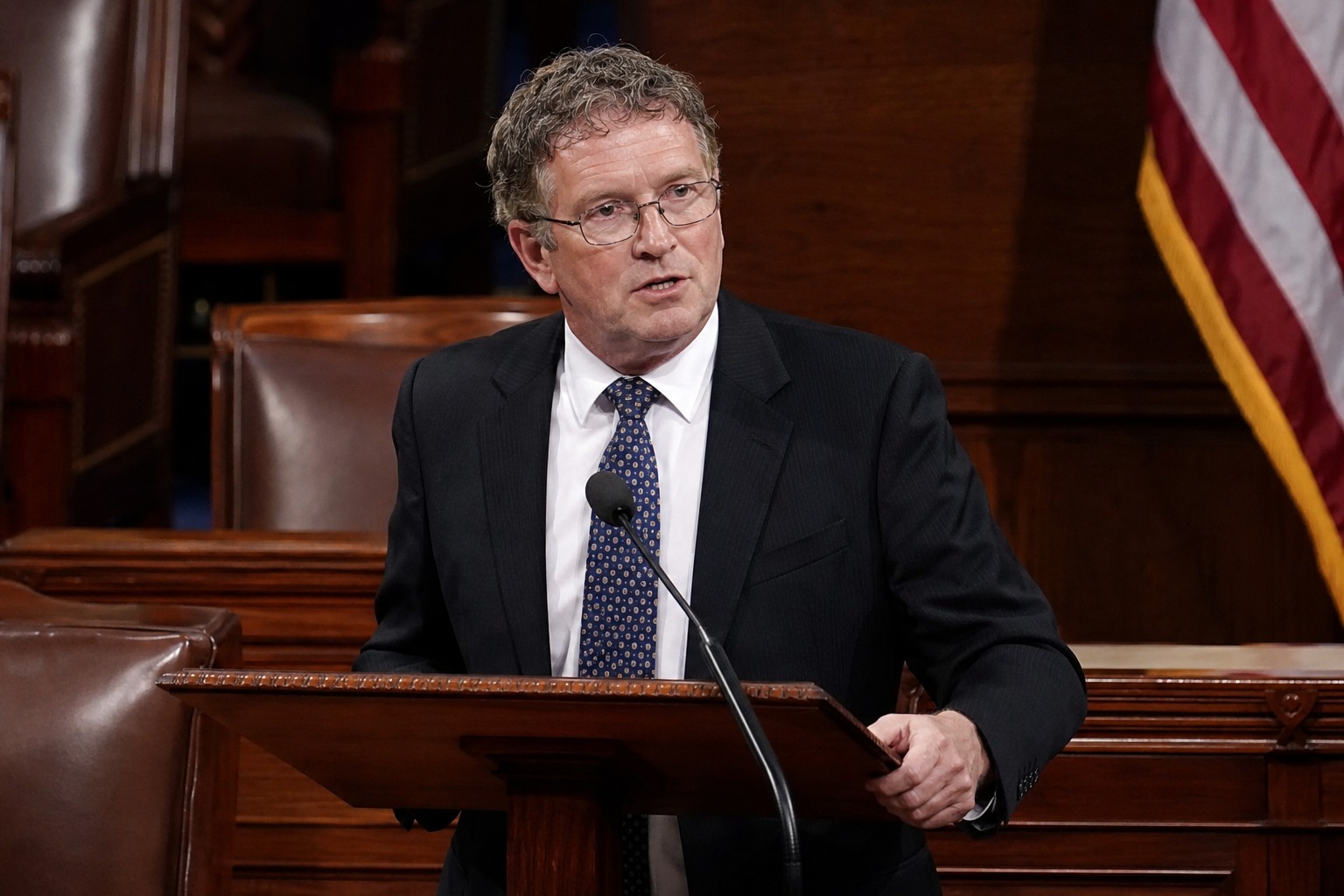
On February 24, 2026, Rep. Thomas Massie (R-KY) walked onto the floor of the United States House of Representatives and did something federal prosecutors had deliberately avoided for years — he said their names out loud.
What Massie and Khanna Found at the DOJ
The Epstein files have been at the center of a years-long fight over government transparency. Jeffrey Epstein, the financier convicted of sex crimes in 2008 and found dead in federal custody in 2019, maintained a secretive network of powerful associates across politics, finance, and entertainment for decades. When Congress forced the release of a portion of those files, the public quickly noticed that key names had been blacked out with no explanation provided.
In early 2026, members of Congress were granted access to review the unredacted version of the Epstein files at the Department of Justice. Massie made the trip alongside Rep. Ro Khanna (D-CA) — a Democrat — making it a bipartisan review. What they found was alarming. At least six men were identified as “likely incriminated” by the evidence. Federal prosecutors had deliberately removed their names from publicly released documents and offered no public justification for doing so.
Massie Names Three Men on the House Floor
Using the constitutional protections of the House floor — where members cannot be sued for statements made in the course of legislative activity — Massie walked to the microphone and named three of the six men publicly.
The first was Leon Black, the billionaire founder and former CEO of Apollo Global Management, one of the largest private equity firms in the world. The second was Jes Staley, the former chief executive of Barclays bank. The third was Leslie Wexner, the billionaire founder of L Brands and the Victoria’s Secret empire — a man whose decades-long financial relationship with Epstein has long been a subject of intense scrutiny.
As of this writing, not one of the three men has been charged with any crime in connection with the Epstein case.
The DOJ’s Role — and the Growing Demand for Answers
Massie was direct in his assessment of the Department of Justice. He stated that federal prosecutors had “no legitimate justification” for shielding these names from the public, and that their redaction was not standard legal procedure — it was a deliberate effort to protect powerful individuals from accountability. He pledged to continue naming names in the months remaining of his congressional term.
Rep. Khanna echoed the call for transparency, underscoring that accountability in the Epstein case is not a partisan issue. Across both parties, a growing number of lawmakers believe the full story of Epstein’s network has never been told — and that the government has played an active role in keeping it buried.
What This Means for Americans
For millions of Americans, the Epstein case has always been about one thing: whether the wealthy and powerful play by the same rules as everyone else. The fact that the Department of Justice deliberately redacted names of individuals a congressman now describes as “likely incriminated” — without explanation — suggests those rules may not apply equally. Massie’s decision to speak those names on the House floor is a rare act of public accountability in a system that has worked very hard to avoid it. Whether it produces consequences remains to be seen.
Stay informed on the stories that matter most. Follow Palmedia News on Facebook and bookmark palmedianews.com for breaking news and analysis.