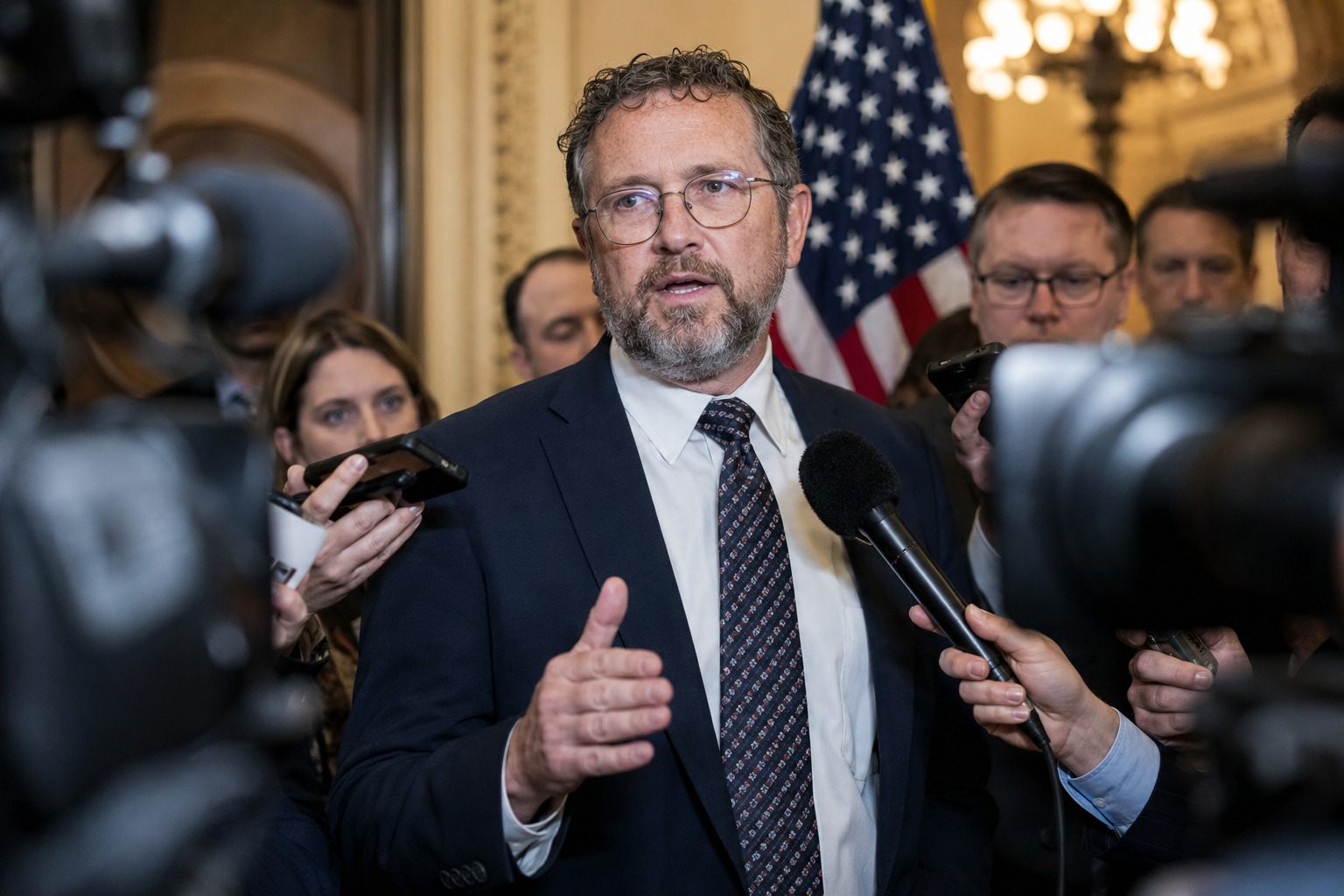
Nearly three million Epstein-related documents remain sealed inside the U.S. Justice Department, and a bipartisan group of lawmakers now says the agency is breaking federal law to keep them hidden. On July 15, 2026, Rep. Thomas Massie (R-KY) and Rep. Ro Khanna (D-CA) introduced the Epstein Files Transparency Act II, a follow-up to a law President Donald Trump signed only months earlier that was supposed to force those very records into public view.
A Second Law to Enforce the First
The original Epstein Files Transparency Act was signed into law on November 19, 2025, with rare bipartisan support. It ordered the Justice Department to hand over its trove of records tied to Jeffrey Epstein and his associates. Supporters framed it as a long-overdue win for transparency and for the victims who have spent years demanding answers.
But according to the lawmakers behind the new bill, the DOJ has, in their words, “flagrantly and consistently ignored” that mandate. They say the department is still withholding roughly three million documents and has slapped heavy redactions on the limited material it has released. The result, they argue, is that a law meant to open the files has been quietly nullified by the agency it targeted.
What the New Bill Would Do
The Epstein Files Transparency Act II, filed in the House as H.R. 9694, is built to add teeth the first law lacked. Its central feature is enforcement: it would allow stakeholders to take the Justice Department to court when it refuses to comply.
Under the measure, state attorneys general, district attorneys, members of Congress, and Epstein’s victims would be granted full access to the unredacted records. Victims would be able to obtain complete files concerning themselves, including FBI reports. State and local prosecutors would gain secure access to classified materials they say they need for ongoing investigations. And critically, the bill would bar the department from invoking common-law privileges as a shield against disclosure.
The legislation is genuinely bipartisan. In the House it is led by Massie, Khanna, and Rep. Teresa Leger Fernández (D-NM). In the Senate, the companion effort is carried by Sens. Jeff Merkley (D-OR) and Ben Ray Luján (D-NM). That coalition spanning both parties is unusual in a deeply divided Congress, and it underscores how much frustration has built up over the stalled release.
The Question Hanging Over Washington
The bill still faces the steepest hurdle of all: a signature. President Trump signed the original Epstein Files Transparency Act into law in November 2025. Whether he would sign a second measure — one written specifically to force his own Justice Department to surrender everything it has been holding back — is the question now hanging over Capitol Hill.
Supporters call the follow-up a necessary reckoning, arguing that victims and the public were promised transparency and have instead been met with silence and black ink. Critics question the timing and the political motives behind the renewed push. Either way, the fight over what is actually contained in those millions of pages is far from settled.
What This Means for Americans
At its core, the standoff is about whether a law passed by Congress and signed by the president can simply be ignored by the agency charged with carrying it out. For ordinary Americans, the case is a test of accountability: when lawmakers order documents released and the government keeps them locked away, who has the power to force the issue? The new bill’s answer is the courts — and the outcome could shape how transparency laws are enforced long after the Epstein files themselves fade from the headlines.
Stay informed on the stories that matter most. Follow Palmedia News on Facebook and bookmark palmedianews.com for breaking news and analysis.