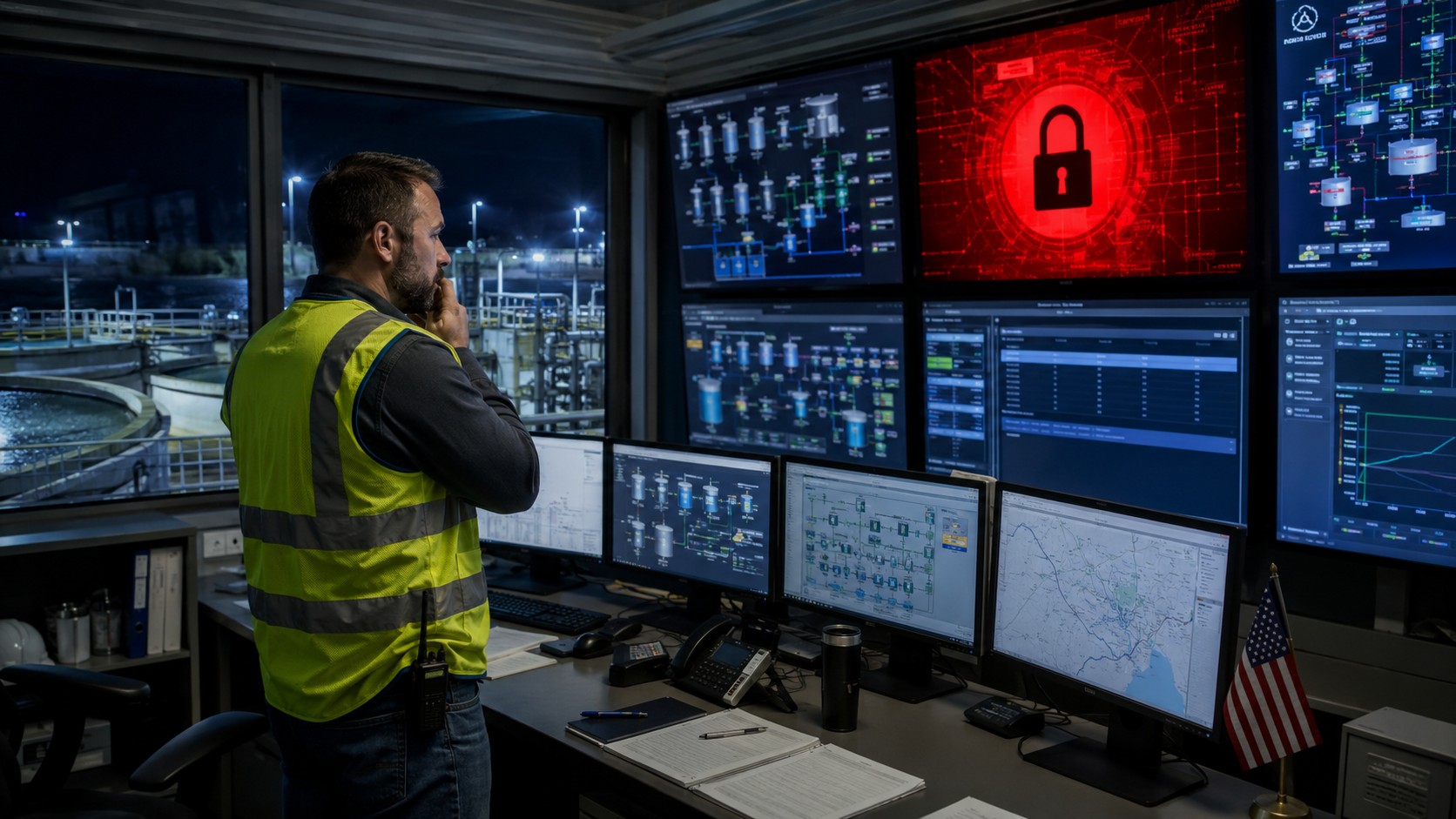
Federal investigators are working to determine whether Iran was behind a coordinated cyberattack that struck municipal water systems in at least seven U.S. states this week. The FBI and federal cybersecurity officials confirmed the intrusions, and Iran has emerged as the prime suspect in what could be one of the boldest digital assaults ever aimed at America’s water infrastructure.
The scope is what has officials most alarmed. In Minnesota alone, more than 30 separate water systems were targeted. Investigators are still piecing together exactly what the intruders were able to access and whether any of the control systems that treat or distribute drinking water were manipulated.
Why This Attack Has Officials on Edge
Water utilities have long been considered among the softest targets in American critical infrastructure. Many of the nation’s roughly 150,000 public water systems are small, locally run, and operate on aging equipment with limited cybersecurity budgets. A single successful breach can ripple across an entire community’s tap water, affecting everything from water pressure to the chemical balance used in treatment.
The systems that control physical equipment at these facilities — known as SCADA and industrial control systems — were never designed with hostile nation-state hackers in mind. Once an attacker gains access, they can potentially alter pump operations, tamper with chemical dosing, or simply lurk quietly, mapping the network for a future strike.
What Investigators Know So Far
According to officials, the attacks appear to have been carried out in the same narrow window across multiple states — a pattern that points to a single, coordinated operation rather than isolated criminal hacking. That timing is a major reason Iran has become the leading suspect. Iranian-linked groups have been tied to previous intrusions targeting U.S. water and industrial facilities, often by exploiting internet-connected control devices that were left exposed with weak or default passwords.
So far, there is no confirmed contamination of any water supply and no public health emergency has been declared. Officials have stressed that drinking water in the affected areas remains safe as far as they can tell. But the investigation is ongoing, and authorities have not ruled out that the hackers reached deeper into some systems than initially believed.
Federal agencies including the FBI and the Cybersecurity and Infrastructure Security Agency are now working with state officials and local utilities to lock down affected networks, preserve forensic evidence, and determine the full extent of the breach. Utilities across the country have been urged to review their defenses, change default credentials, and disconnect control systems from the open internet where possible.
A Test of America’s Defenses
Security analysts have warned for years that adversaries may probe U.S. infrastructure not to cause immediate damage, but to test how far they can get — and to hold that access in reserve. The central question investigators are now confronting is whether this was Iran quietly measuring how deep it can reach inside America’s critical systems, and what a follow-up attack could look like if the next one is not merely a test.
For everyday Americans, the incident is a stark reminder that the water flowing from the tap depends on a sprawling, often-outdated digital backbone. While there is no immediate danger to public health, the breach underscores how vulnerable essential services can be — and how a conflict playing out in cyberspace can land uncomfortably close to home.
Stay informed on the stories that matter most. Follow Palmedia News on Facebook and bookmark palmedianews.com for breaking news and analysis.