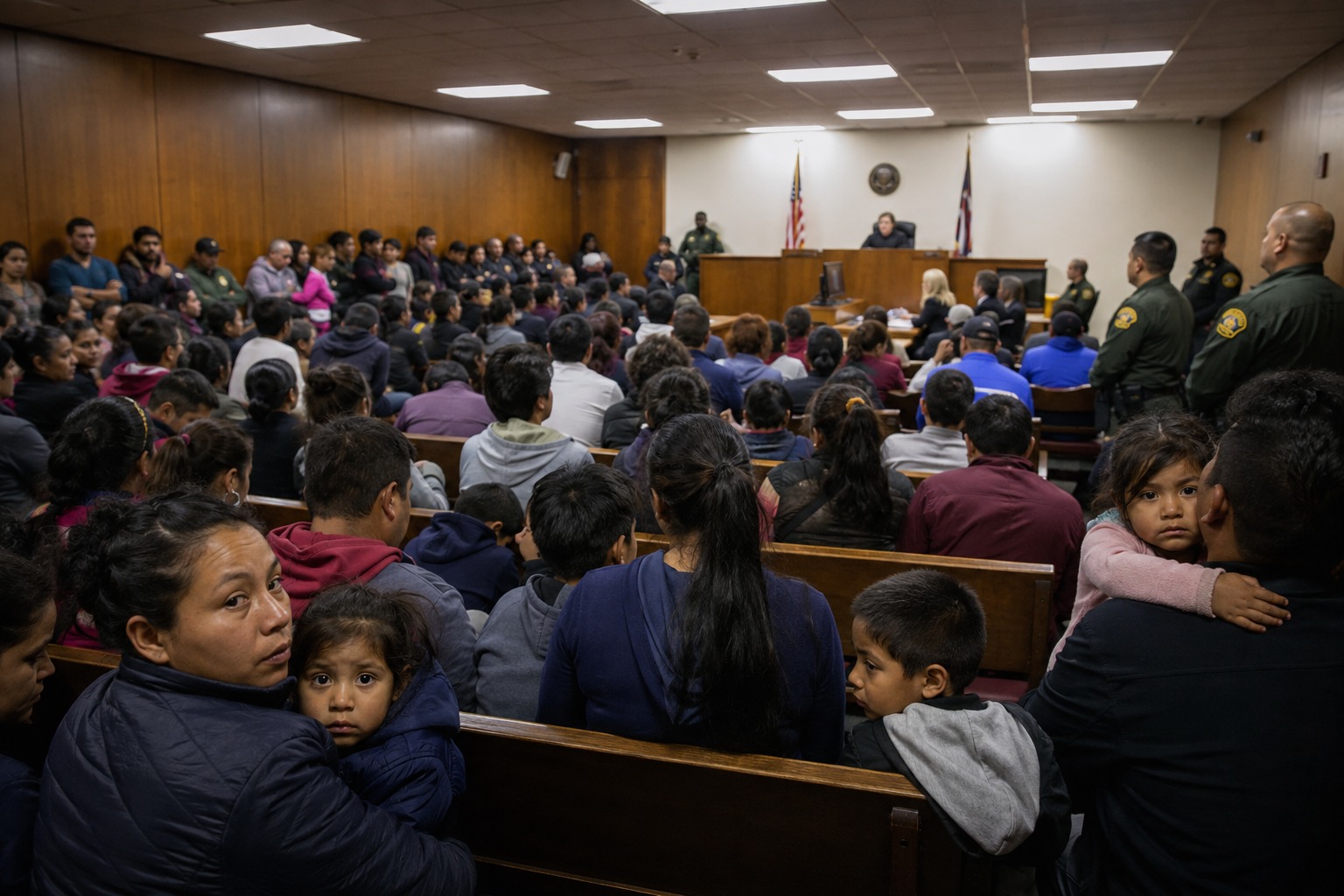
Immigration courts across the country have begun scheduling more than 100 people into a single hearing, a practice attorneys have started calling the “mega master.” Before this year, a first appearance in immigration court typically brought together two or three dozen people at most. The change has compressed what used to be a manageable morning docket into something closer to a stadium call.
The shift began in mid-May, and lawyers in New York, Oregon, Texas and elsewhere reported the same pattern almost immediately: far more people, far less notice, and far more removal orders issued to people who were never in the room.
What a “Mega Master” Hearing Actually Is
Every immigration case starts with a master calendar hearing. It is the procedural front door — the judge confirms identity, confirms the charges, asks whether the person has an attorney, and sets the schedule for everything that follows. It is short by design, usually a few minutes per person, which is why courts have always grouped them.
The grouping is not new. The scale is. Packing 100 or more respondents into one session means a judge who once handled a few dozen brief exchanges is now working through a list several times longer, often in a single sitting. Attorneys describe hallways and galleries filled beyond capacity, with people standing along the walls waiting for a name to be called.
The Notice Problem
The bigger issue is not the size of the room. It is how little warning people get before they are expected to be in it.
Notice for an immigration hearing has traditionally arrived weeks or months in advance, giving people time to arrange travel, take time off work, secure childcare and — critically — find a lawyer. Under the new scheduling, attorneys report clients being told to appear with only a few days of lead time. In some cases, no notice went out at all: not by mail, not electronically, not to the immigrant and not to the attorney of record.
Because much of the system has moved to electronic notification, a change that is posted to an online account but never mailed can go completely unseen by someone who does not check that account daily — or who does not know the account exists.
Why Missing One Hearing Ends the Case
The consequence of not appearing is immediate and severe. A judge can issue what is known as an “in absentia” removal order — a deportation order entered against someone who never walked into the courtroom. It is not a delay or a warning. It is a final order, and reopening one requires a separate motion, a lawyer, and a persuasive explanation for the absence.
The numbers show what that has meant in practice. At the start of 2025, roughly 20 percent of people missed their scheduled immigration court dates nationwide. By June of this year, as notice windows shrank, that figure had roughly doubled to about 40 percent. Deportation orders have risen along with it.
The Argument on Both Sides
Supporters of the faster schedule point to the backlog. The immigration court system is carrying millions of pending cases, and some people have waited years for a first hearing that lasts five minutes. Moving more cases through the front door, they argue, is the only realistic way to shorten a queue that has grown beyond what the current bench can absorb.
Critics counter that the speed is being purchased with due process. Their argument is simple: a hearing you were never told about is not a hearing. If the mechanism for clearing the backlog is a rising share of people receiving final orders without ever being heard, then the docket is not being resolved so much as emptied.
What This Means for Americans
Immigration court is not a criminal court, and there is no right to a government-appointed lawyer in it. That places nearly all of the burden of showing up on the individual — and makes the reliability of a mailed or emailed notice the single most important safeguard in the process. Employers, school districts, hospitals and neighbors in communities with large immigrant populations are already feeling the effect of cases resolving with no one present. The broader question it raises applies well beyond immigration: how much notice does the government owe someone before a decision becomes permanent?
Stay informed on the stories that matter most. Follow Palmedia News on Facebook and bookmark palmedianews.com for breaking news and analysis.