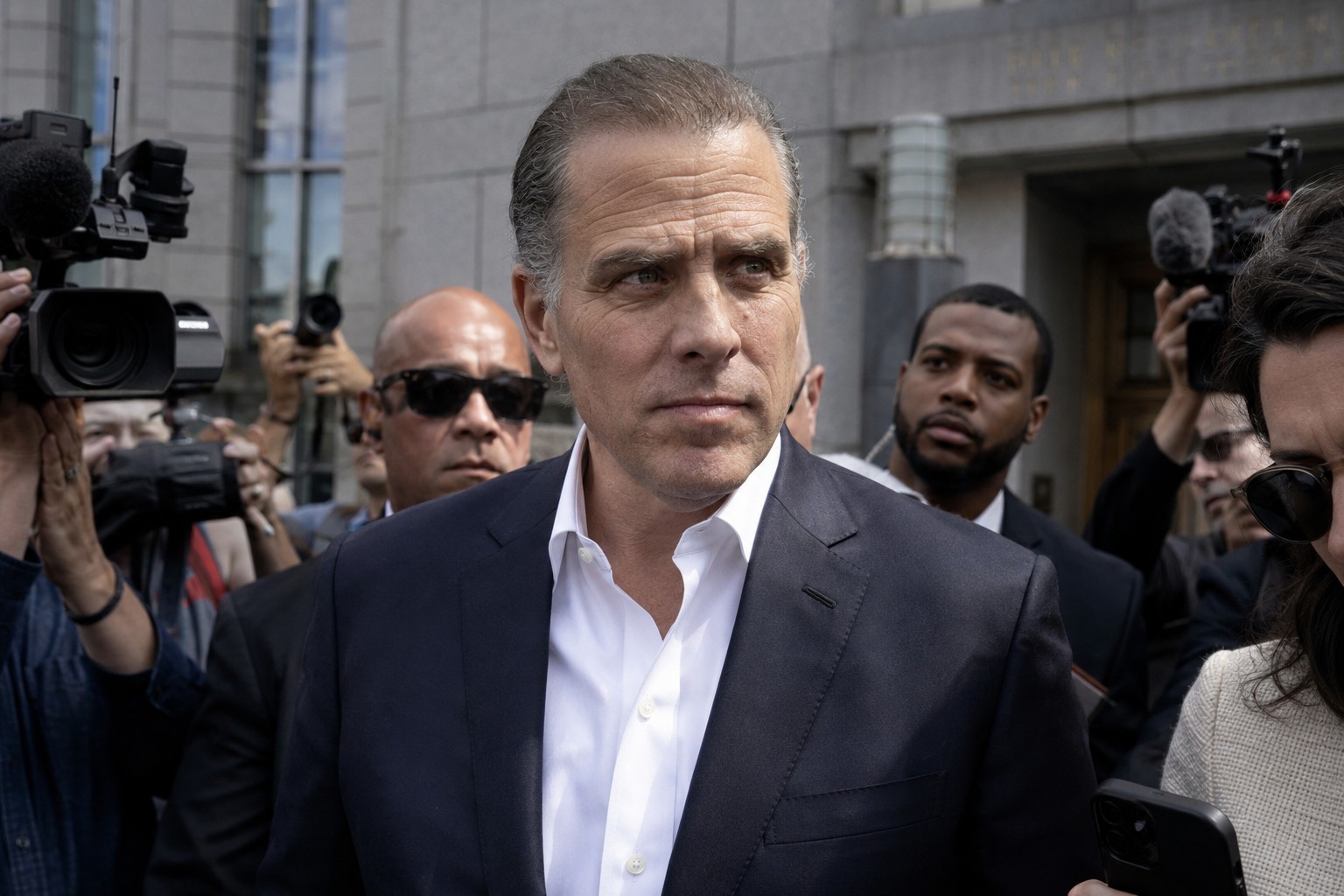
A federal judge has ordered former Overstock.com CEO Patrick Byrne to pay Hunter Biden $1.7 million over Byrne’s claim that Biden sought an $800 million bribe from Iran. The award, handed down in the Central District of California, closes out a defamation case that Byrne ultimately did not defend on the merits.
The damages break down into two parts: $1 in nominal damages and $1.7 million in punitive damages. The $1 figure was what Hunter Biden asked for. The punitive award is what the court added on top.
The Claim That Started It
Byrne publicly asserted that in 2021, Hunter Biden sought an $800 million payoff from Iranian officials. According to the account Byrne promoted, the money was to be exchanged for Biden persuading his father, then the sitting president, to release roughly $8 billion in frozen Iranian assets and to ease pressure on Tehran during nuclear negotiations.
It was a serious allegation. It described a sitting president’s son brokering foreign money in exchange for a shift in American foreign policy. And it circulated widely online for a long stretch before it was ever tested anywhere that required proof.
Hunter Biden sued for defamation. That moved the claim out of comment sections and podcasts and into a federal courtroom, where a different standard applies: you have to show the court something.
What the Judge Found
U.S. District Judge Stephen Wilson entered a default judgment against Byrne and then held a hearing on damages. In his ruling, the judge wrote that the evidence was clear and convincing that Byrne engaged in intentional misrepresentation with conscious disregard for Hunter Biden’s rights.
The core of the finding was an absence. The judge noted that Byrne failed to provide the court, at any point across the litigation, with any documentary evidence that would allow a reasonable person to believe the story was true. Not a document. Not a record. Nothing that would let the claim stand up.
That distinction matters. The court did not rule that Byrne was merely careless or that he got a detail wrong. It found he pushed a claim with conscious disregard for the harm it would cause and never produced anything to back it.
The Sanctions on Top
The $1.7 million is not the only money Byrne owes. He was separately ordered to pay nearly $35,000 in court sanctions that had already been imposed against him during the case. He has two weeks to pay it.
If he misses that deadline, the meter starts running: an additional $1,000 penalty for every single day the payment is late. That is the kind of provision courts attach when they have concluded a party is not taking the process seriously.
The Argument That Follows
Supporters of Byrne are likely to point out that this was a default judgment rather than a jury verdict reached after a full trial with both sides presenting evidence. That is a real distinction and it will be made.
The counterargument is just as direct: Byrne had the full run of the litigation to produce something supporting a claim he had already broadcast to a very large audience, and the court’s finding is that he produced nothing. A defamation defendant who believes the statement is true generally wants the trial.
What This Means for Americans
Most Americans now get political information from feeds where a claim’s reach has nothing to do with whether it is true. A viral allegation about a public figure can be seen by millions of people in a day and never face a single moment of verification.
Defamation court is one of the very few places left where that changes. It is slow, expensive, and available mostly to people who can afford lawyers, which is a real limit on it. But when a claim gets there, the question stops being how many people shared it and becomes whether you can prove it. In this case, the answer the court reached was no, and it attached a $1.7 million price to that answer.
Stay informed on the stories that matter most. Follow Palmedia News on Facebook and bookmark palmedianews.com for breaking news and analysis.