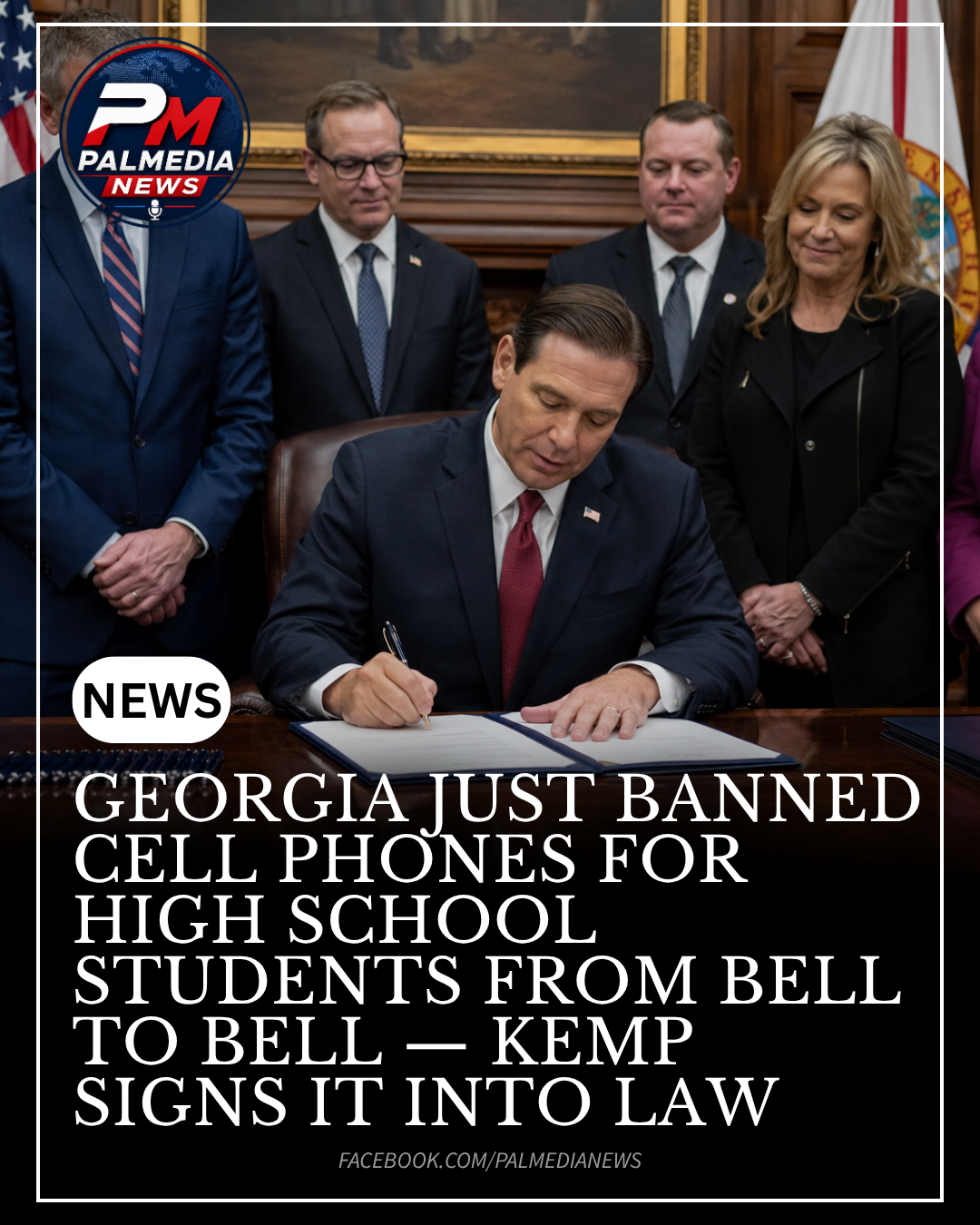
Georgia high school students are about to have a very different school day — and it’s now the law.
Governor Brian Kemp signed House Bill 1009 into law on May 5th, establishing a bell-to-bell ban on cell phones, tablets, smartwatches, and headphones for high school students. From the moment students walk through the school door until the final bell rings, devices go in the bag and stay there. No exceptions during class, no exceptions at lunch, no exceptions in the hallways between periods. The law takes effect for the 2027-28 school year, giving districts time to prepare enforcement policies.
This isn’t Georgia’s first move on the issue. In 2024, the state passed a similar bell-to-bell ban covering kindergarten through 8th grade. HB 1009 extends that same prohibition all the way through 12th grade, making Georgia one of the most aggressive states in the country when it comes to restricting student device use during school hours. The Georgia Senate passed the bill 52-0 — unanimous, with zero dissent from either party.
The law does include targeted exemptions. Students with Individualized Education Programs (IEPs), Section 504 plans, or documented medical conditions that require device access are exempt. A student who relies on a health monitoring app or uses assistive technology under a disability accommodation will not be affected. Everyone else puts the phone away for the duration of the school day.
Supporters of the ban point to a growing body of research linking smartphone use among teenagers to declining academic performance, increased anxiety, and shortened attention spans. Studies have found that even the presence of a phone on a desk — even when face-down and silent — measurably reduces a student’s ability to focus on tasks. The classroom, advocates argue, has become a losing competition against TikTok, Instagram, and iMessage, and a legislative fix was necessary because voluntary policies have proven ineffective.
Critics are less convinced. Some education policy experts argue the ban treats a symptom rather than the disease — that students who are disengaged from school have underlying reasons for that disengagement, and removing their phone won’t address those causes. Others raise practical questions about enforcement: teachers are already stretched thin, and now they’re expected to become phone police on top of everything else. There are also concerns that enforcement could fall unevenly, with some students receiving more scrutiny than others.
The debate over phones in schools has accelerated across the country over the last two years. More than a dozen states have passed restrictions of varying degrees, from mandatory storage pouches to outright bans. Yondr pouches — magnetic locking cases that hold phones during the school day — have become increasingly common in districts ahead of legislation. France implemented a nationwide school phone ban back in 2018, and several European countries have since followed. Georgia is now among the most aggressive adopters of the policy in the United States.
Starting in the fall of 2027, Georgia high schoolers will have to navigate the school day the way their parents did — without a screen in their pocket. Whether that leads to better grades, stronger social connections, and improved mental health, or simply more creative ways to sneak devices past the front door, remains to be seen. The data will come eventually. In the meantime, the law is signed, the countdown has started, and Georgia is betting on disconnection.