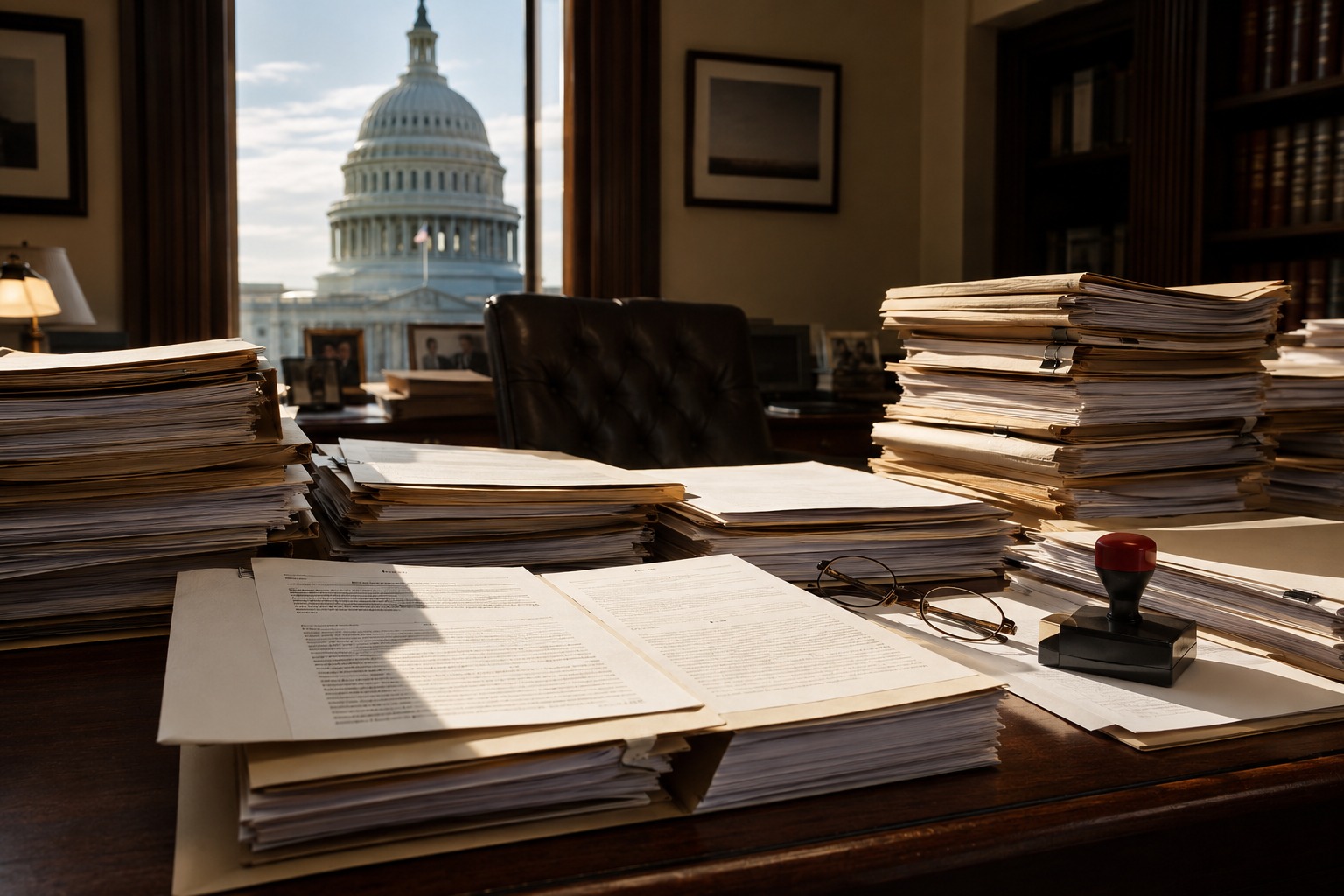
Congress has voted to force the entire Jeffrey Epstein case file into public view. After years of sealed records, redactions, and mounting public pressure, the House and Senate approved legislation ordering the Justice Department to release nearly everything it holds on one of the most notorious criminal cases in modern American history.
The measure, known as the Epstein Files Transparency Act, cleared the House in a lopsided 427-1 vote before passing the Senate by unanimous consent. That kind of bipartisan agreement is rare in today’s Congress, and it underscores just how much political momentum built up behind the demand for full disclosure.
Why This Case Has Gripped the Country
Jeffrey Epstein’s case has loomed over American politics for years. The financier’s connections reached into some of the most powerful circles in business, entertainment, and government. When he died in federal custody in 2019 while awaiting trial, the questions did not stop — they multiplied. Who else was involved? What did investigators know? And why had so much of the record stayed hidden?
The conviction of Epstein’s longtime associate Ghislaine Maxwell kept the story in the headlines, but large portions of the underlying files remained sealed. For a public hungry for answers, that secrecy became its own scandal. Lawmakers from both parties eventually concluded that transparency, not more redaction, was the only way to restore trust.
What the Law Actually Requires
The Transparency Act directs the Justice Department to publish, in a searchable and downloadable format, nearly every unclassified record tied to the Epstein and Maxwell investigations. That includes flight logs, travel records, internal communications, and the names of individuals referenced in connection with the case — including government officials.
There are guardrails. The DOJ is permitted to withhold the personal information of victims and to hold back material that would jeopardize an active federal investigation. But the central mandate is sweeping: within 30 days of the law taking effect, the public is supposed to see what has been locked away for years.
Supporters and Skeptics
Supporters call the vote the ultimate accountability moment. For them, releasing the files is the only way to finally understand who was connected to Epstein and to close a chapter that has fueled years of speculation. They argue that sunlight is the best remedy for a case that has bred distrust in institutions.
Critics urge caution. They warn that unredacted files could expose innocent people whose names appear without any wrongdoing, simply because they crossed paths with Epstein or were mentioned in passing. Others worry that a rushed release could tip off targets of investigations that are still ongoing. The debate is not about whether transparency matters — it is about how far it should go, and who might be harmed along the way.
What This Means for Americans
For ordinary people, the vote is a test of a simple principle: should the government’s most sensitive records be opened to the public when powerful names are involved? The answer will shape how much Americans trust their institutions to police themselves. It also raises a question everyone can weigh in on — where the line falls between the public’s right to know and an individual’s right not to be smeared by association.
Stay informed on the stories that matter most. Follow Palmedia News on Facebook and bookmark palmedianews.com for breaking news and analysis.