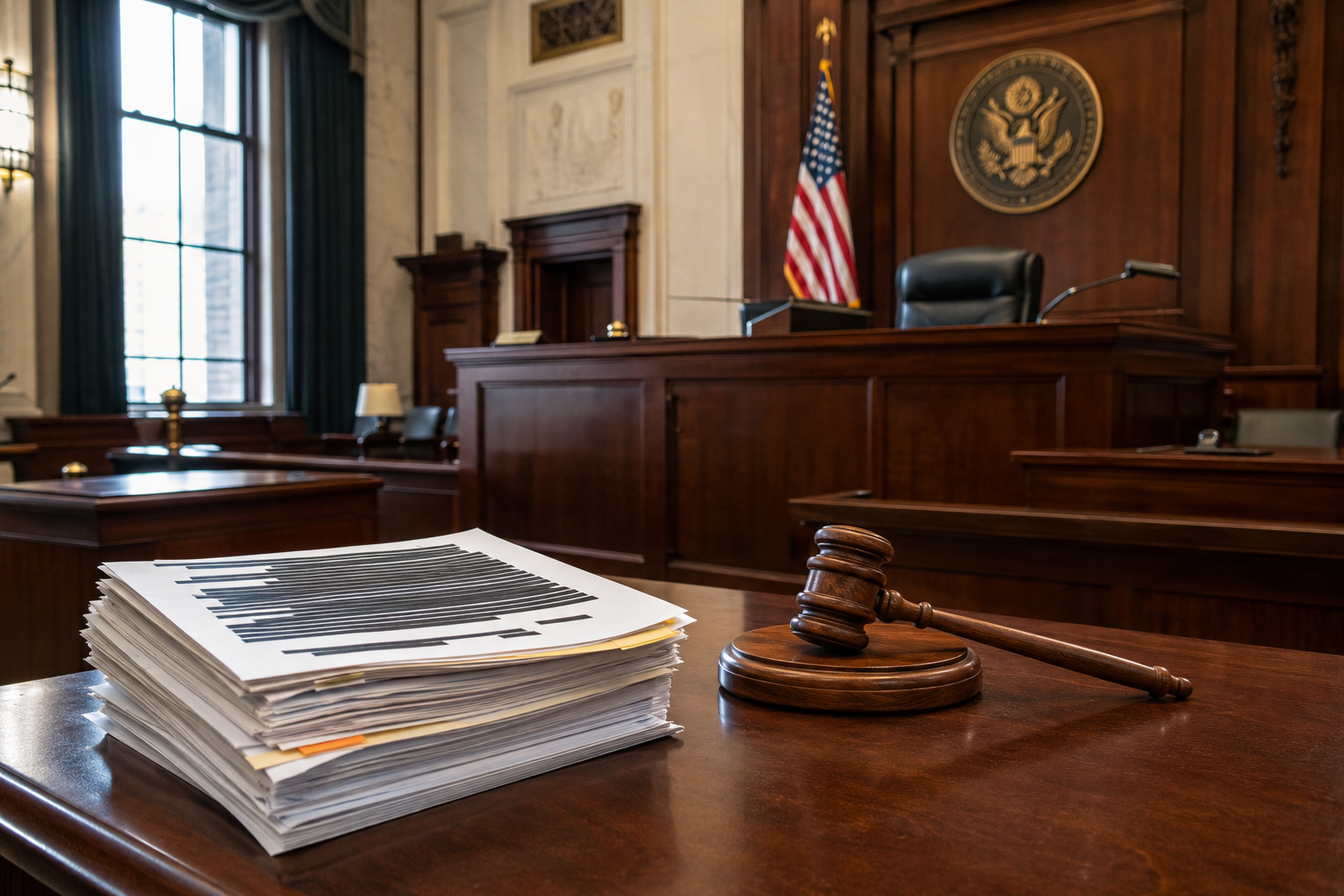
A federal judge has given the Justice Department a firm deadline of July 2 to turn over additional unredacted records related to Jeffrey Epstein, or to explain to the court, in writing, why the blacked-out material must stay hidden.
U.S. District Judge Emmet Sullivan in Washington issued the order on Thursday, granting a preliminary injunction in a lawsuit that accused the department of failing to comply with the Epstein Files Transparency Act passed last year. Sullivan concluded that the government likely fell short of what that law required.
Why This Case Matters
The Epstein case has been one of the most closely watched legal sagas in recent memory, and public demand for full transparency around the government’s files has only grown over time. Lawmakers passed the Epstein Files Transparency Act specifically to force the release of records tied to the case, on the theory that the public has a right to understand how investigators and prosecutors handled it.
Redactions are a routine part of releasing sensitive government documents. Agencies black out material to protect personal privacy, ongoing investigations, and certain law-enforcement methods. But critics argue that in this instance the redactions went further than the law allowed, effectively keeping key information out of public view even after Congress demanded disclosure.
What the Judge Ordered
Sullivan’s order does two things. First, it requires the Justice Department to either produce unredacted versions of certain disputed records by July 2 or file a detailed justification with the court explaining why each redaction must remain. The days of quietly blacking out passages without accounting for them are, under this ruling, over.
Second, the judge directed the department to publish a comprehensive log cataloging every redaction it has applied to the files released so far. That log must spell out what was withheld and the legal basis for withholding it, giving the court and the public a way to scrutinize each decision rather than accepting them on faith.
The ruling came in a lawsuit brought by an independent journalist and legal commentator who argued the department’s handling of the files violated the transparency law. Sullivan found that the plaintiff had standing to sue and was likely to succeed on the merits, the legal threshold required to grant a preliminary injunction.
Reactions and What Comes Next
Supporters of the ruling describe it as a long-overdue victory for transparency, arguing that a case of this magnitude should not be shielded from public view by sweeping redactions. They see the redaction log, in particular, as a meaningful check that will make it far harder for the government to withhold material without explanation.
The Justice Department has maintained that some material must remain sealed to protect privacy and other legitimate interests. With the July 2 deadline now set, the department faces a clear choice: comply by releasing the unredacted records, or go before the judge and make a documented case for keeping them sealed.
What This Means for Americans
For ordinary readers, the ruling is less about any single document and more about the principle behind it: when Congress passes a law requiring disclosure, the executive branch is expected to follow it, and courts can step in when it does not. The outcome will shape how much the public ultimately learns about a case that has commanded national attention for years.
Stay informed on the stories that matter most. Follow Palmedia News on Facebook and bookmark palmedianews.com for breaking news and analysis.