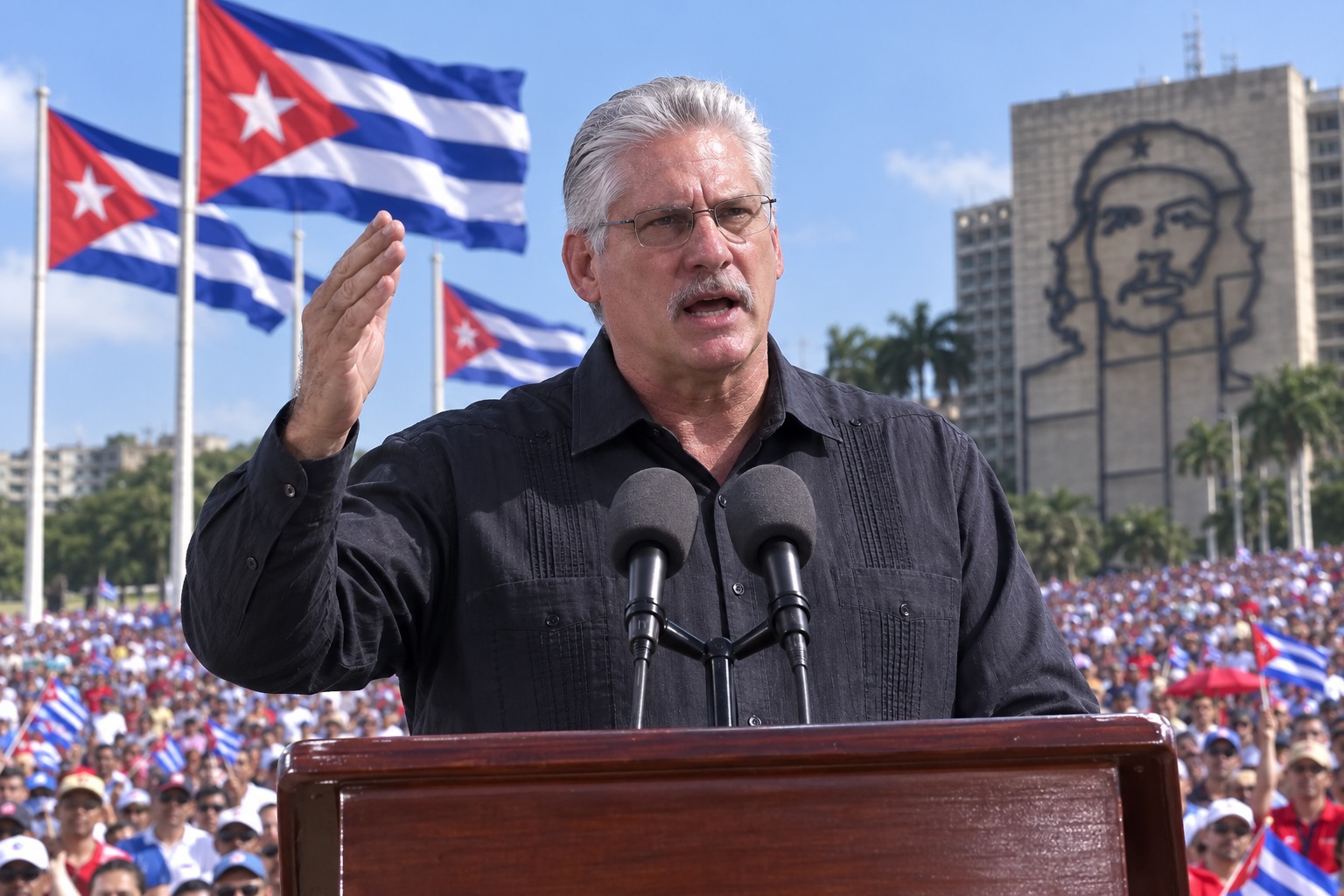
Cuba’s president has accused the United States of committing “political genocide” against his country, using a major revolution-anniversary rally to deliver one of his sharpest attacks on Washington in years. Miguel Diaz-Canel told a crowd gathered in Pinar del Rio on Sunday that Cuba was “the victim of a coldly calculated genocide,” and warned that President Donald Trump is trying to “take over” the island.
A Speech on a Symbolic Day
The remarks came during the commemoration of the 73rd anniversary of the July 26, 1953 assault on the Moncada barracks — the failed attack led by Fidel Castro that is widely regarded as the spark of the Cuban Revolution. The date is the most important political anniversary on the island’s calendar, and Cuban leaders have used it for decades to rally supporters and frame the country’s confrontation with the United States.
This year’s event carried an unmistakable weight. Diaz-Canel characterized current US policy toward Havana as “maximum pressure” and “economic strangulation,” language meant to cast Washington’s long-running sanctions and trade embargo as a deliberate campaign against ordinary Cubans rather than the government alone.
The Accusations Against Washington
Diaz-Canel went further than economic criticism. He accused the Trump administration of seeking to seize control of Cuba outright, linking that claim to a January US strike on Venezuela — one of Havana’s closest regional allies. In the president’s telling, the pressure on Cuba is part of a broader push to reshape the hemisphere.
He also pushed back on accusations from the US State Department that Cuba operates espionage networks abroad, rejecting them outright. “Every day they issue a threat against the revolution, and every week they announce a new punishment for Cuban companies and officials,” he told the crowd, framing the sanctions as relentless and personal.
A Backdrop of Hardship
The defiant tone landed against a grim economic reality. Many Cubans are enduring daily blackouts that stretch beyond 20 hours, leaving homes and businesses in the dark for most of the day. Factories have gone idle, workweeks have been cut, and shortages of medicine and clean water have become part of everyday life.
The island’s isolation has deepened as hotel chains, international airlines, and payment processors have pulled out, cutting off tourism revenue and making it harder for families to receive money from relatives overseas. For millions of Cubans, the political rhetoric of the rally is inseparable from the struggle to keep the lights on and the refrigerator stocked.
A Notable Absence
One figure was conspicuously missing from the anniversary events. Raul Castro, the 94-year-old former president and brother of Fidel, did not attend — reportedly his first absence from the commemoration in at least three decades. Diaz-Canel read a congratulatory message from Castro to the crowd in his place, a reminder that the generation that led the 1959 revolution is fading from public life.
The Debate Over the Embargo
Washington has long defended its sanctions as a response to human rights abuses and the Cuban government’s crackdown on protesters, particularly after the mass demonstrations of recent years. Supporters of the embargo argue it targets the regime and its security apparatus, not the Cuban people. Critics counter that decades of restrictions have failed to change the government while deepening the misery of ordinary citizens.
What This Means for Americans
US policy toward Cuba has been a live political question for generations, shaping debates over immigration, trade, and America’s role in Latin America. As tensions rise again — now tied to events in Venezuela and a new round of sanctions — the standoff 90 miles off the Florida coast is likely to stay in the headlines and on the ballot, with Americans divided over whether pressure or engagement is the better path.
Stay informed on the stories that matter most. Follow Palmedia News on Facebook and bookmark palmedianews.com for breaking news and analysis.