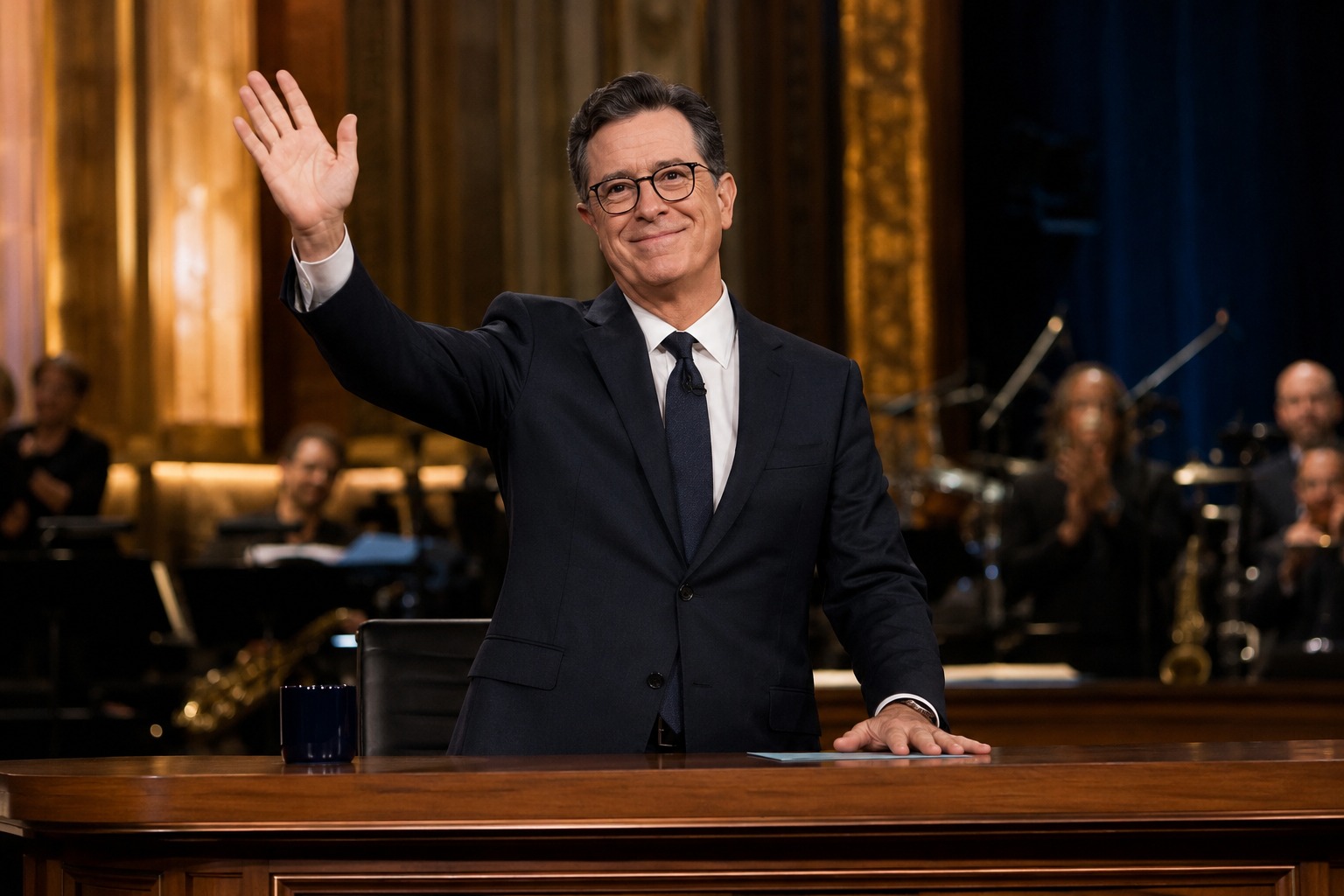
Stephen Colbert’s final episode of “The Late Show” drew 6.74 million viewers — the largest weeknight audience the program has ever recorded. The send-off didn’t just close out a chapter of late-night television; it shattered the show’s own records on the way out the door.
A Record-Breaking Goodbye
CBS confirmed last year that it was ending “The Late Show” altogether — not simply replacing its host, but retiring the franchise title entirely. That decision turned the finale into a cultural moment, and audiences responded by tuning in at a scale the program rarely saw during its regular run.
The result was the most-watched regular weeknight episode of Colbert’s entire decade-long tenure behind the desk. For a show that had been told its time was up, the finale delivered a striking final word: the audience was still there.
The Numbers Behind the Finale
The 6.74 million figure towers over the show’s 2026 average of roughly 2.69 million viewers — more than double its typical night. It even edged past the 6.55 million who tuned in for Colbert’s very first episode as host back in September 2015, making the goodbye bigger than the hello.
One caveat keeps the milestone in perspective: the most-watched episode in the show’s history remains its post-Super Bowl broadcast in February 2016, which pulled in 20.55 million viewers. But that was a special slot handed a massive lead-in audience. Among ordinary weeknight episodes, nothing in the show’s history comes close to the finale.
Why the Cancellation Still Stings
Supporters called the finale a fitting tribute to a host who helped redefine late-night television over the past decade. To them, the surge of viewers was proof of loyalty — a community showing up one last time for a program that had become part of their nightly routine.
Critics of the cancellation saw something else in the ratings: evidence that the decision to end the show was about more than viewership. If a “struggling” program could still command nearly seven million people on a single night, they argued, then the math behind pulling the plug deserves a closer look. Others pointed to the broader economics of late-night television, where production costs stay high while live audiences shrink.
What It Means for Late-Night TV
The finale lands at a moment of real uncertainty for the entire genre. Younger audiences increasingly skip the live broadcast altogether, catching monologues and interviews as next-morning clips on YouTube, TikTok and Instagram instead. That shift has scrambled the advertising model that funded big-budget late-night shows for generations.
For viewers at home, the takeaway is simple: the late-night landscape they grew up with is changing fast, and even a record-setting send-off couldn’t hold back that tide. Colbert didn’t fade out quietly — he signed off at the very top of his weeknight game, and the debate over why the show ended is likely to outlast the applause.
Stay informed on the stories that matter most. Follow Palmedia News on Facebook and bookmark palmedianews.com for breaking news and analysis.