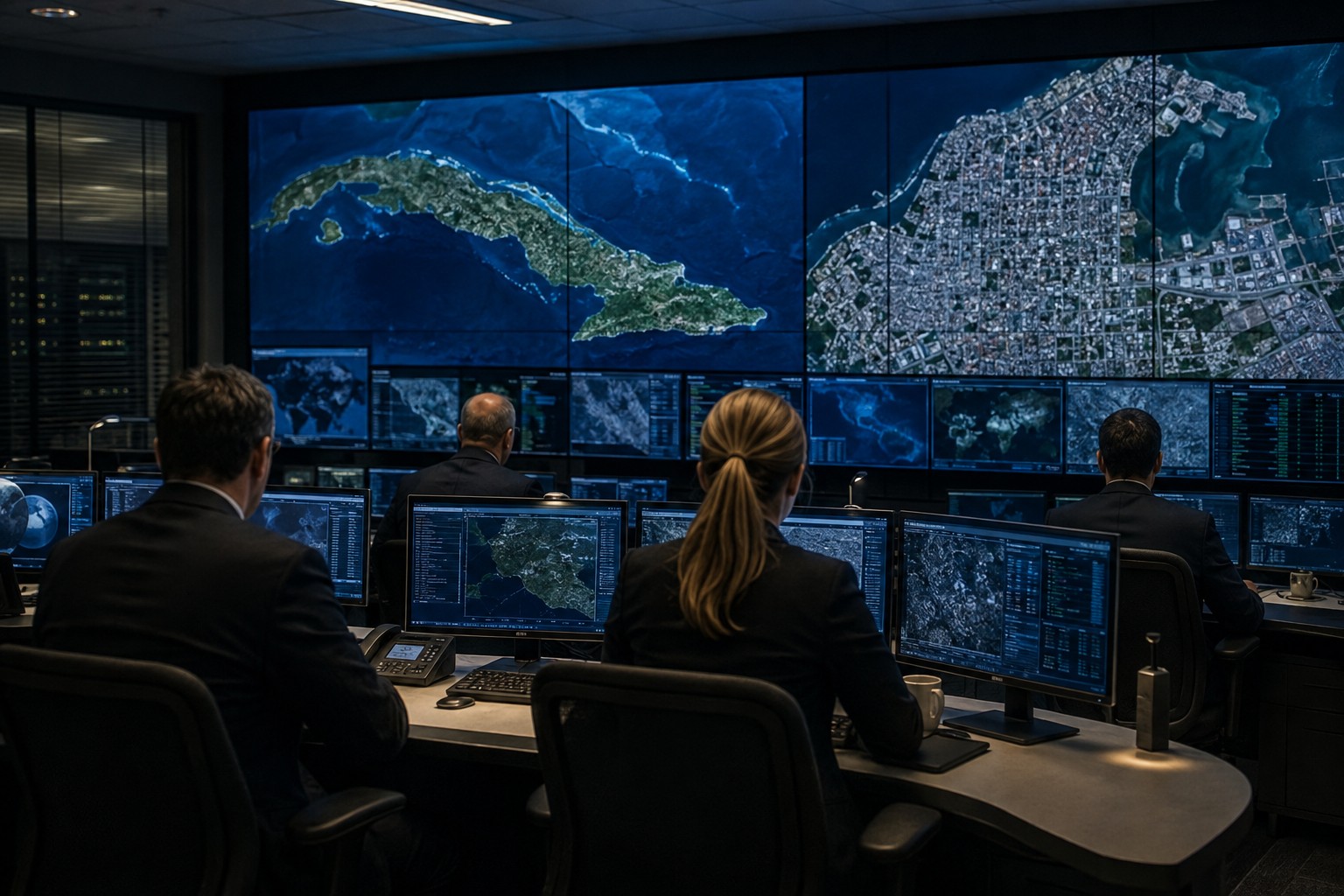
The Central Intelligence Agency has quietly assembled a secret task force focused on Cuba, marking one of Washington’s most aggressive moves against the island’s communist government in decades. The unit’s creation lands as President Donald Trump escalates a sweeping pressure campaign against Havana — and bluntly signals where he believes the confrontation is headed.
Asked about the island recently, Trump left little room for interpretation. “Cuba’s next,” he said. The remark, short as it was, captured a shift that has been building for months: after years of a frozen standoff, the United States is once again treating the Cuban government as a target for direct intelligence and diplomatic pressure.
A Task Force Built for Pressure
The new task force is not a routine analytical desk. Reporting indicates the CIA is expanding its intelligence footprint on and around the island, sharpening its focus on the inner workings of the communist regime. The goal, according to accounts of the effort, goes well beyond passive information gathering — it is part of a coordinated campaign designed to squeeze Havana on multiple fronts at once.
That campaign reportedly pairs the expanded intelligence work with tightened economic sanctions, broader covert operations, and even the possibility of a criminal indictment connected to figures tied to the island’s ruling establishment. CIA leadership has already met face to face with Cuban officials, a sign of just how directly Washington is now engaging.
Why Cuba, and Why Now
The United States and Cuba have been locked in a hostile relationship for more than six decades, dating back to the Cold War and the Castro era. Relations briefly thawed in the 2010s before freezing again, and Havana has remained a persistent irritant for American policymakers — accused of jailing dissidents, cracking down on protest movements, and lending support to governments Washington views as adversaries across Latin America.
For the Trump administration, the calculation appears to be that sustained, coordinated pressure can force change on the island in a way that decades of on-and-off sanctions never did. Standing up a dedicated task force concentrates resources and attention, giving the effort a structure that a scattered approach lacked.
Supporters and Critics Draw Battle Lines
Supporters of the crackdown argue that Havana’s government has spent decades suppressing its own people and backing hostile regimes across the region, and that Washington is finally applying leverage that could produce results. In their view, a firmer posture is long overdue.
Critics see something more familiar — and more dangerous. Secret task forces, covert operations, and talk of regime change, they warn, echo a Cold War playbook that has repeatedly backfired on the United States, entangling it in foreign conflicts with unpredictable consequences. They caution that pressure campaigns built in the shadows can spiral in ways their architects never intended.
What This Means for Americans
For ordinary Americans, a hardening standoff with Cuba carries real stakes. A more aggressive posture just 90 miles from Florida could reshape immigration flows, ripple through communities with deep ties to the island, and pull the United States into another prolonged foreign commitment at a moment when many voters are wary of overseas entanglements. How this pressure campaign unfolds could define a key piece of American foreign policy for years to come.
What is unmistakable is the message coming out of Washington: after years of quiet standoff, the United States is turning up the heat on Cuba — and doing much of it out of public view.
Stay informed on the stories that matter most. Follow Palmedia News on Facebook and bookmark palmedianews.com for breaking news and analysis.