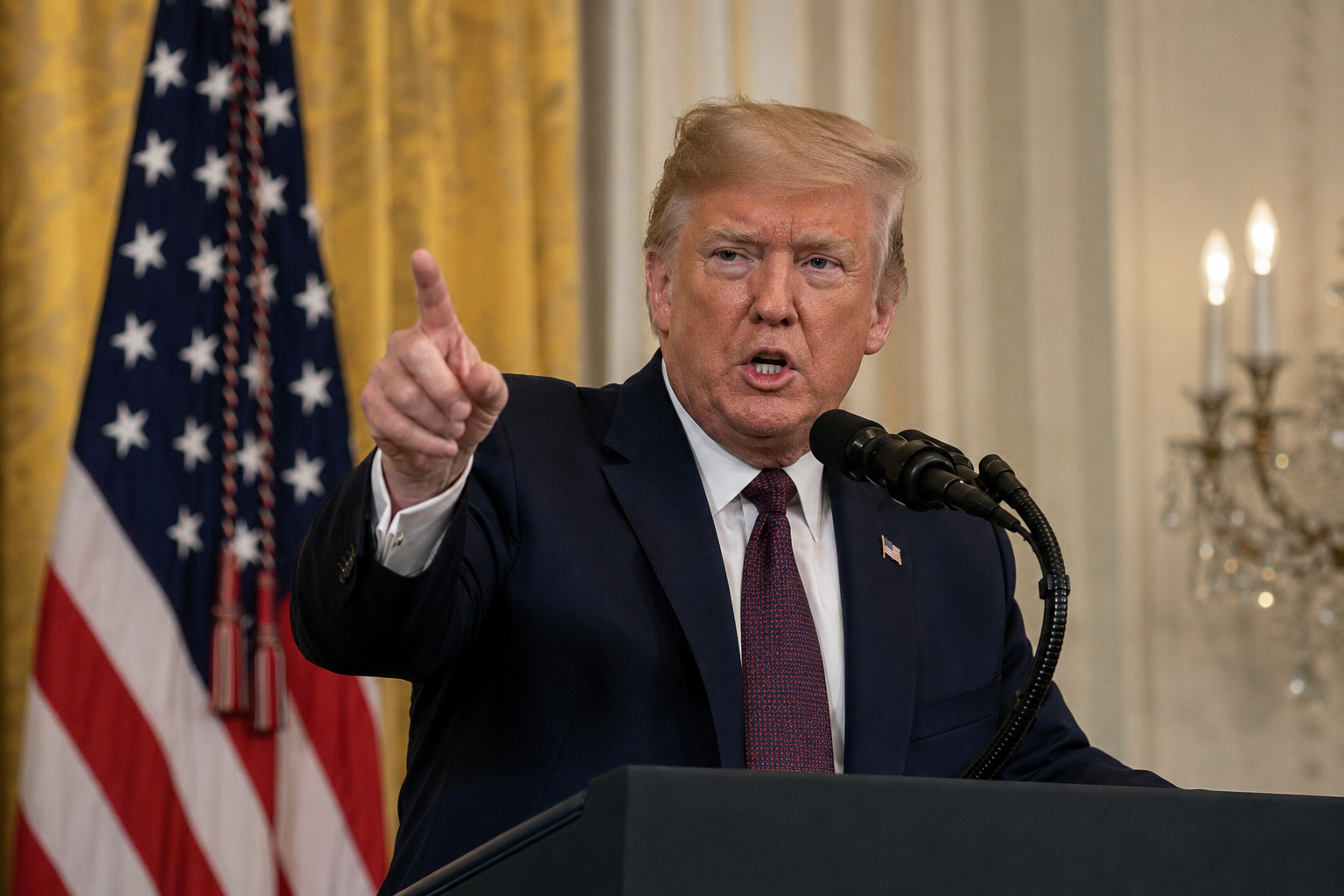
In one of the most striking moments in modern American broadcasting, CBS cut away from President Donald Trump as he stood before cameras and claimed the election had been stolen. Anchors broke into the live feed to tell viewers his assertions were unproven. Over on ABC and NBC, the remarks never aired live at all.
A Rare Line for Live Television
Cutting away from a sitting president mid-remarks is almost unheard of. For decades, presidents have enjoyed near-automatic live coverage from the major broadcast networks, whatever the subject. That is exactly what made this moment so extraordinary: three of the biggest names in American television each drew the same line at nearly the same time.
It unfolded in the tense days after the 2020 election, while votes were still being counted in several states. Trump insisted the process had been rigged, and the networks were forced to decide, in real time, whether to keep handing over uninterrupted airtime to claims they could not verify.
What Happened On Air
As Trump delivered his statements, CBS anchors interrupted the broadcast to note that his claims of widespread fraud were unsubstantiated. ABC and NBC took a different route entirely, declining to carry the remarks live and instead summarizing them for viewers with added context and fact-checks.
The decision rippled across the television landscape. Several cable and broadcast outlets flagged the allegations as unproven the moment they were made, an unusually aggressive posture toward a president speaking from an official setting.
The Claims at the Center
Trump alleged that the vote had been tainted, but he did not present evidence that held up to scrutiny. In the weeks that followed, dozens of legal challenges were filed and repeatedly dismissed, many for lack of proof. Election officials from both parties, including Republican administrators who oversaw the count in key states, said they found no fraud widespread enough to change the outcome.
Federal cybersecurity officials described the election as one of the most secure in the nation’s history. Courts across the country reached the same conclusion the networks did that day: the claims were not backed by verifiable proof.
A Divisive Call
Supporters of the networks’ decision argued that broadcasting unverified claims about a national election in real time could mislead millions of viewers and chip away at public confidence in the vote. In their view, adding context was responsible journalism, not obstruction.
Critics saw it very differently. To them, it looked like the press deciding what a sitting president is allowed to say on air, and they warned that networks acting as gatekeepers set a precedent that could cut in any political direction. Media analysts noted the episode marked a turning point in how outlets handle live presidential remarks.
Why It Still Matters
The clash sits at the heart of an argument that never really goes away: where is the line between fact-checking a leader and silencing one? For everyday viewers, it raises a practical question. When a public figure makes a claim that cannot be verified, should a network keep the cameras rolling, cut away, or stay on the air and add context in the moment?
There is no easy answer, and the debate has only intensified in the years since. What is clear is that the moment CBS cut away, and ABC and NBC declined to air the remarks live, became a defining example of the modern tension between a president’s platform and the press’s role.
Stay informed on the stories that matter most. Follow Palmedia News on Facebook and bookmark palmedianews.com for breaking news and analysis.