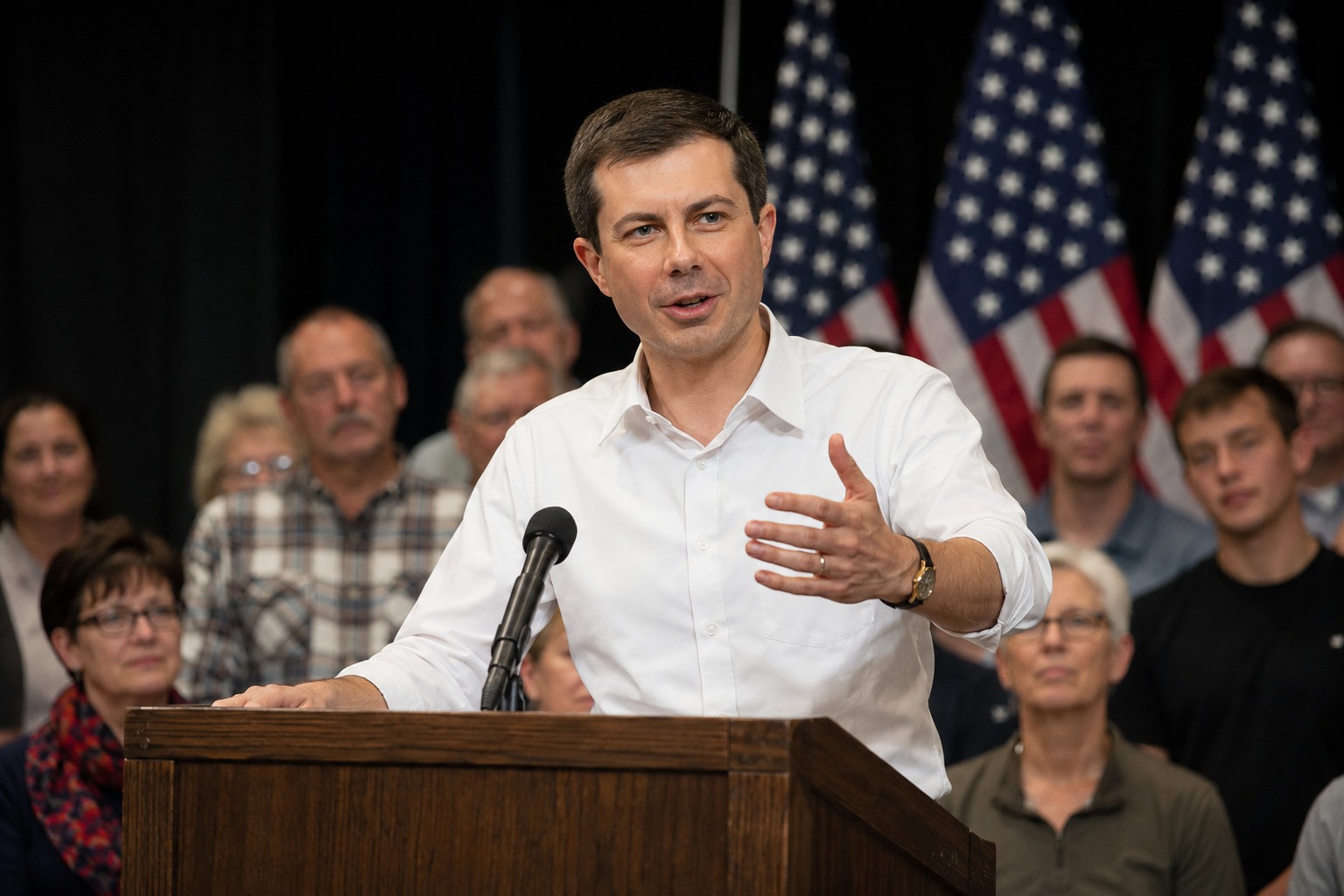
Pete Buttigieg is taking direct aim at one of the oldest institutions in American government. The former U.S. Transportation Secretary has called for abolishing the Electoral College and electing the president by a national popular vote — a system in which whichever candidate wins the most votes nationwide wins the White House, no exceptions.
Buttigieg framed the idea as one of the “big swings” he believes the country should be willing to take. His argument is blunt: the person who earns the most votes from the American people should be the one who takes office. It is a challenge to the machinery that has decided every presidential election since the founding of the republic.
How the Electoral College Works
Under the current system, Americans do not vote directly for president. They vote to award their state’s slate of electors, and it takes 270 of the 538 available electoral votes to win. Nearly every state hands all of its electors to whoever wins that state, which means a candidate can lose the national popular vote and still capture the presidency by stringing together the right combination of states.
That scenario is not hypothetical. It has happened multiple times in American history, and each occurrence reignites exactly the debate Buttigieg is now pushing back into the spotlight. Critics of the system say it allows a minority of voters, concentrated in a handful of swing states, to override the will of the larger national electorate. Defenders say that is precisely the point.
The Case For a Popular Vote
Supporters of a national popular vote make an argument rooted in simple fairness: every ballot would carry exactly the same weight, whether it is cast in a rural county or a dense city, in a solidly partisan state or a hotly contested one. No vote would be effectively discarded because it landed in a state already locked up by one party.
They also argue it would force candidates to campaign everywhere rather than pouring nearly all of their time and money into a small number of battleground states. Under a popular-vote system, a vote in a deep-red or deep-blue state would count just as much as a vote in a perennial toss-up.
The Case Against
Opponents push back hard. They contend the Electoral College forces candidates to build broad coalitions across many different regions rather than running up the score in a few population centers. Scrap it, they warn, and a small number of large metropolitan areas could decide the presidency while rural and less-populous states lose their voice.
There is also a steep practical obstacle. Abolishing the Electoral College outright would require a constitutional amendment — a process that demands two-thirds of both chambers of Congress and ratification by three-fourths of the states. That is one of the highest bars in American law, and it has doomed similar efforts before.
What It Means for Americans
At its core, this is a fight over a single question that touches every voter: should the president be the person who wins the most votes, or the person who wins the right combination of states? How that question is answered shapes how campaigns are run, where candidates spend their time, and how much any one person’s vote ultimately matters. With Buttigieg putting it back on the national stage heading into the midterms, the debate over how America chooses its leaders is once again front and center.
Stay informed on the stories that matter most. Follow Palmedia News on Facebook and bookmark palmedianews.com for breaking news and analysis.