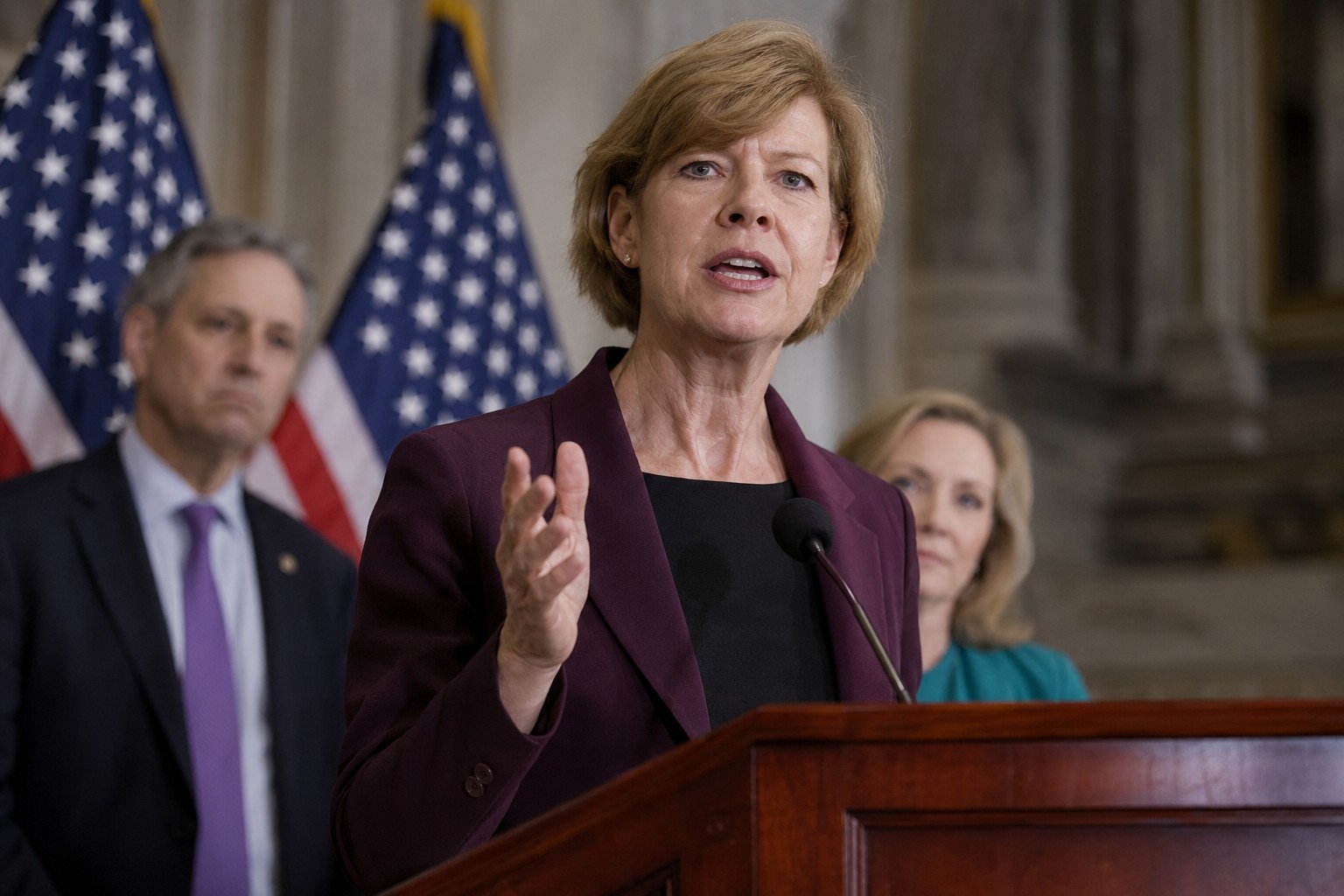
Wisconsin Senator Tammy Baldwin has joined a group of Senate Democrats in introducing the Protect Our Polls Act, a bill that would block any president from deploying troops or armed federal agents to polling places without the approval of Congress. The legislation, unveiled in June, lands just months before November’s midterm elections — and it takes direct aim at the possibility of federal law enforcement showing up at the ballot box.
Why the Bill Exists
The push began after President Trump publicly floated the idea of sending Immigration and Customs Enforcement and other federal agents to local polling locations. That suggestion set off alarms among election officials and lawmakers who argue that armed federal personnel at voting sites — whatever the stated reason — would intimidate voters and upend an election system that has always been run by state and local governments.
Michigan Senator Elissa Slotkin is leading the bill, with Baldwin, California Senator Alex Padilla, and Arizona Senator Ruben Gallego signing on as original co-sponsors. All four represent states where election security debates have been front and center since 2020.
What the Protect Our Polls Act Would Do
The bill’s core provision is simple: before any president could send the military or federal law enforcement to election sites, Congress would have to pass a Joint Resolution of Approval. That flips the current arrangement, which supporters of the bill describe as a loophole — today, there is no explicit requirement that Congress sign off before federal forces appear at polling places.
The legislation also builds in a 48-hour rule. Before any deployment, the White House would have to hand Congress the intelligence behind the decision, the legal justification for it, and evidence that state and local officials cannot handle the threat on their own.
And the bill goes beyond the polls themselves. It would prohibit military personnel and federal agencies from accessing or seizing election records that are protected under federal law — a category that includes ballots. That provision responds directly to fears that federal agents could be used to take custody of election materials during or after a contested vote.
The Political Fight Ahead
Supporters frame the bill as a guardrail for a system that depends on voters feeling safe. Slotkin has pressed Homeland Security officials directly on whether ICE could be sent to the polls, and the bill’s sponsors say the answer should never depend on who sits in the Oval Office.
The measure faces an uphill climb in a divided Senate, where most legislation needs 60 votes to advance. Republicans have not rallied behind the proposal, and the White House has given no indication it would sign a bill limiting its own authority over federal deployments. Even so, the introduction forces every senator to stake out a position on federal forces at polling places before voters head to the polls in November.
What This Means for Americans
For ordinary voters, the debate comes down to what Election Day looks like. If the bill became law, the polling place experience would stay in the hands of local poll workers and state officials unless Congress explicitly approved something different. Without it, the question of whether federal agents can appear at voting sites remains legally murky — and that uncertainty itself is now part of the midterm story.
Stay informed on the stories that matter most. Follow Palmedia News on Facebook and bookmark palmedianews.com for breaking news and analysis.