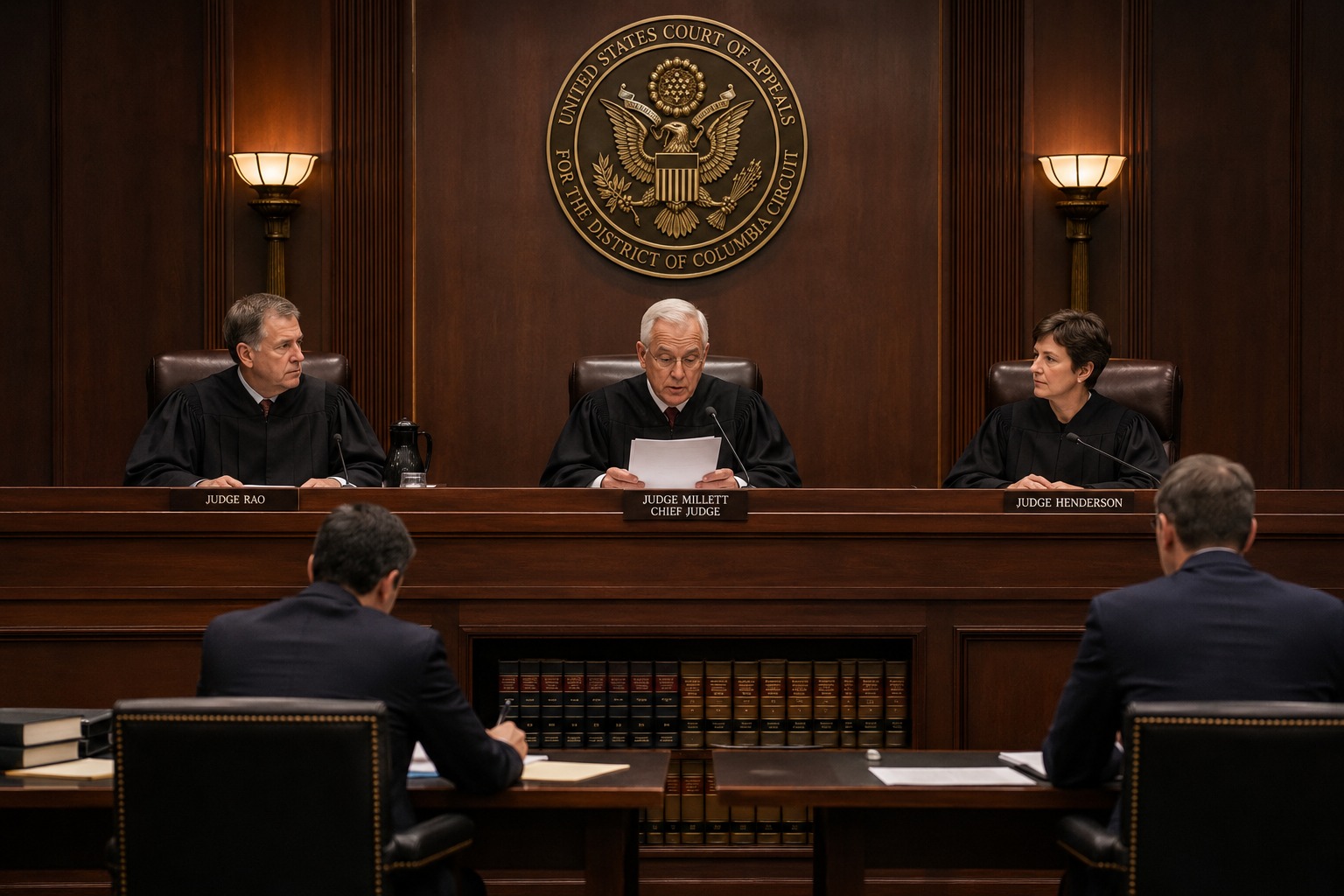
A federal appeals court has ruled that the woman running the U.S. Attorney’s Office in Nevada was never lawfully installed in the job. On Monday, a three-judge panel of the Ninth U.S. Circuit Court of Appeals affirmed a lower court order disqualifying Sigal Chattah as acting U.S. attorney for the District of Nevada, finding that the maneuver used to keep her in the post violated federal law.
Why This Case Matters
U.S. attorneys are the chief federal prosecutors in their districts. They decide which cases get charged, which get declined, and how the federal government uses its power in a given state. The Constitution routes those appointments through Senate confirmation, and Congress built narrow, time-limited exceptions for filling the job temporarily.
The exception at the center of this case is the Federal Vacancies Reform Act, passed in 1998. The FVRA spells out who may temporarily run a federal office when a Senate-confirmed post sits empty, and for how long. It exists precisely to stop indefinite acting appointments from becoming a workaround for the confirmation process.
What the Court Found
Chattah was originally installed as interim U.S. attorney for Nevada, a role capped by statute at 120 days. When that clock ran out, Attorney General Pam Bondi designated her the office’s “first assistant.” Under the FVRA, a first assistant can step into the acting role automatically when a vacancy occurs.
The panel found that path does not work here. The automatic succession rule only applies if the person already held the first assistant position at the moment the vacancy arose. Chattah did not. She was named to that role months after the office came open, which means the designation could not retroactively make her the acting U.S. attorney.
The court also rejected the Justice Department’s fallback argument: that even if Chattah could not formally hold the acting title, the attorney general could simply delegate the powers of the office to her anyway. The panel declined to read the statute that way, concluding it would let the executive branch bypass the very limits Congress wrote.
A Unanimous Panel
The opinion was unanimous, and it was written by Judge Eric Miller, a Trump appointee. He was joined by Judge Sidney Thomas, appointed by President Bill Clinton, and Judge Stanley Blumenfeld, another Trump appointee sitting by designation from the district court. The composition matters because it undercuts any suggestion the ruling broke along familiar lines.
Nevada Is Not the Only Case
Late last year, the Third Circuit reached a similar conclusion about Alina Habba, the administration’s pick to lead the U.S. Attorney’s Office in New Jersey. That court affirmed her disqualification after finding her appointment ran afoul of the same statute, and Habba stepped down from the post days later.
Two federal appeals courts have now examined the same basic workaround and landed in the same place. That convergence is what elevates this from a single personnel dispute into a broader question about how far any administration can go to keep a prosecutor in place without a Senate vote.
What Happens Next
The Justice Department has signaled it intends to take the fight to the Supreme Court. Until then, the ruling stands, and the disqualification is in effect. Defense attorneys in pending Nevada cases are expected to keep pressing the issue, though the lower court in this dispute declined to dismiss the underlying criminal charges when it first ruled the appointment unlawful.
What This Means for Americans
For most people, the identity of a U.S. attorney is background noise until it is not. These are the officials who decide whether a fraud case moves forward, whether a public corruption investigation gets resources, and how aggressively federal drug and immigration laws are enforced in a given district. When courts rule that someone was holding that authority without legal footing, it raises real questions about the cases handled on their watch and about the guardrails Congress built around the office in the first place.
Stay informed on the stories that matter most. Follow Palmedia News on Facebook and bookmark palmedianews.com for breaking news and analysis.