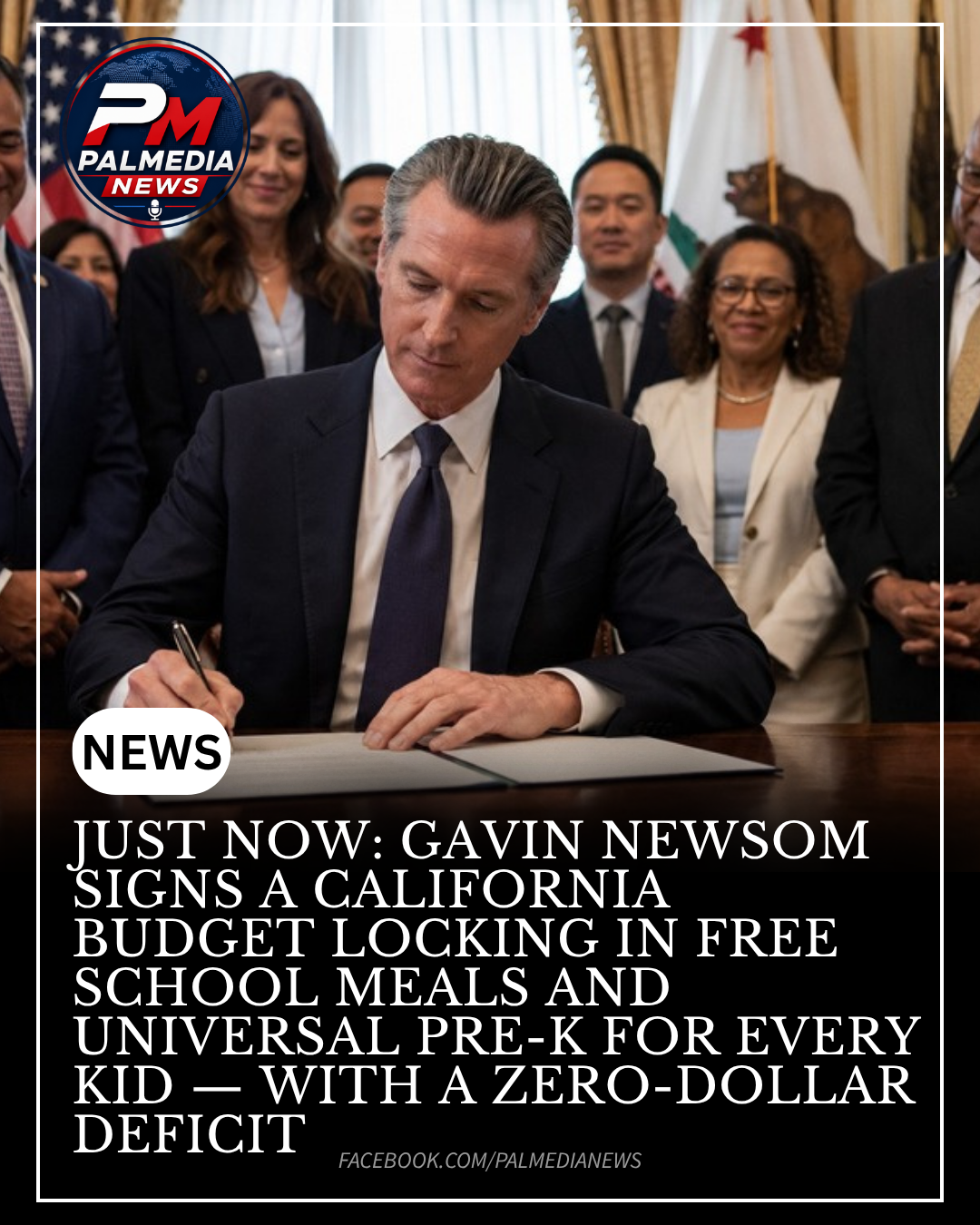
California just signed a state budget that guarantees free school meals and universal pre-K for every student in the state — and it did so without opening a deficit. Governor Gavin Newsom put his signature on the 2026-27 spending plan after reaching a final agreement with the state’s top legislative leaders, locking in a package the administration is calling one of the most sweeping guarantees for children ever written into a state budget.
What the Budget Locks In
At the center of the deal are two programs that touch millions of families. The first is universal school meals: every K-12 student in a California public school can eat breakfast and lunch at no cost, regardless of household income. There is no application, no income test, and no waitlist. The second is universal transitional kindergarten, which extends a free pre-K classroom seat to every four-year-old in the state.
The budget also funds free summer school and expands the number of subsidized childcare slots available to working parents. Taken together, the administration frames it as a continuous pre-K-through-12 support system — one that starts before a child ever enters kindergarten and follows them through high school.
The Zero-Deficit Claim
The headline number attached to this budget is zero. State leaders say the plan is balanced this year and next, closing what had been a projected shortfall while keeping roughly $36 billion in reserves and cutting the state’s longer-term structural deficit in half.
Getting to that zero was not simple. The agreement leans on projected revenue growth, a set of new taxes the governor championed, and a decision to delay certain healthcare cuts until 2027. In other words, some of the hardest fiscal decisions were postponed rather than erased — a point supporters and critics interpret very differently.
Supporters and Critics
Supporters argue the budget proves that a state can guarantee food and early education for every child without blowing a hole in its finances. They point to the universal design as its strength: no stigma, no paperwork, no family left to prove it qualifies. Every child fed at school, every four-year-old with a classroom seat.
Critics focus on sustainability. If the balance relies on revenue that has yet to materialize and on cuts pushed into future years, they ask, how long can the state keep the promise once those delayed bills come due? The answer will play out over the next two budget cycles, when the deferred decisions return to the table.
What This Means for Families
For a California parent, the practical effect is straightforward: your child eats at school for free, and your four-year-old has access to a pre-K seat, no matter what you earn. For a state watching the country debate the cost of universal programs, California has now put a working example on the books — and staked its balanced budget on being able to pay for it.
Stay informed on the stories that matter most. Follow Palmedia News on Facebook and bookmark palmedianews.com for breaking news and analysis.