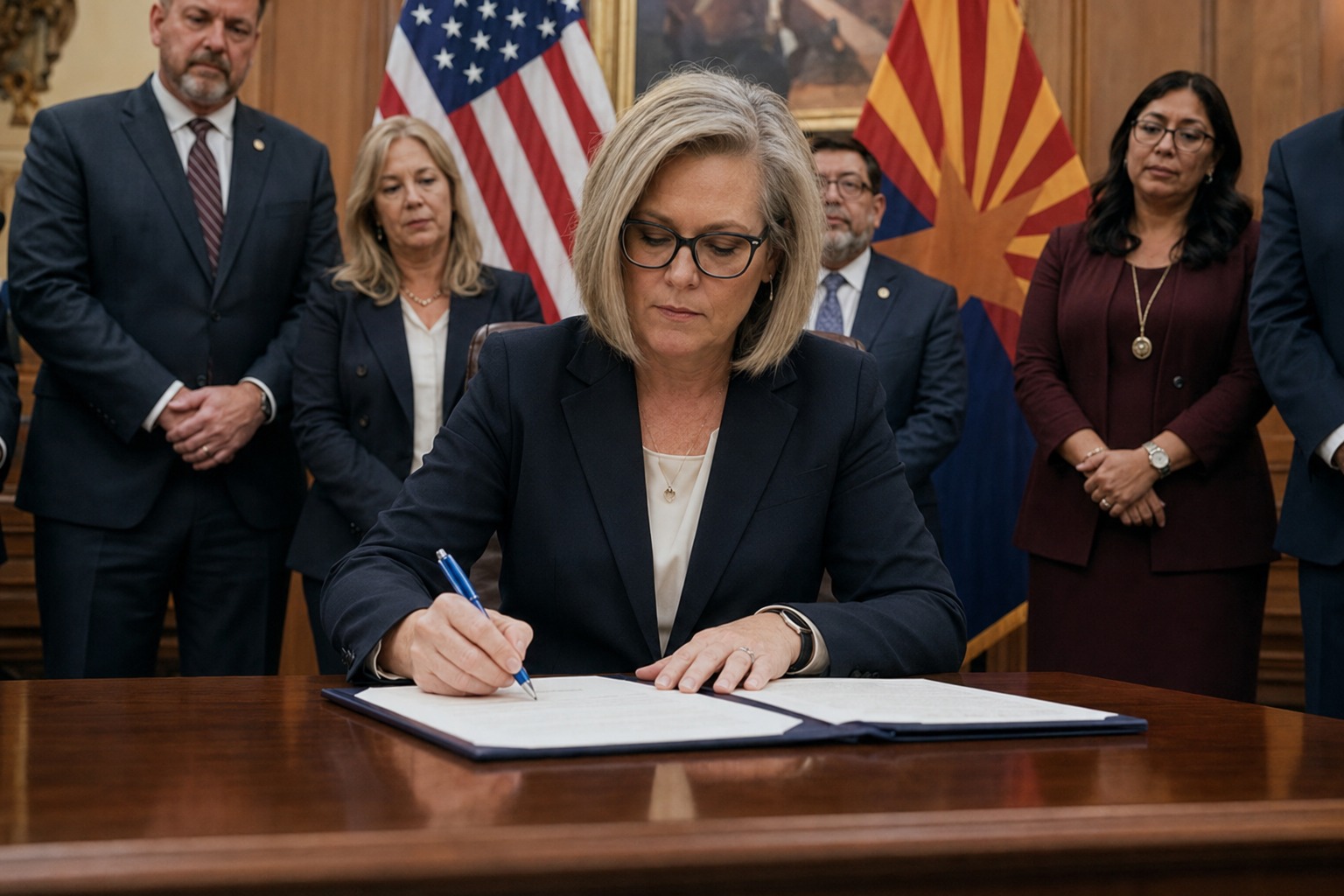
Arizona has just enacted the most aggressive pause on data-center tax incentives in the country. Governor Katie Hobbs signed a state budget that freezes all new tax breaks for data centers for three full years — a moratorium that runs from July 1, 2026 through June 30, 2029 and stands as the longest such halt any state has put in place.
The freeze was folded into an $18.3 billion budget deal that Hobbs negotiated with Republican lawmakers. For the duration of the pause, no new data-center project in Arizona will be able to claim the state’s long-standing sales-tax exemption on the enormous volumes of servers, cooling systems, and electrical equipment these facilities require.
Why Arizona Is Pulling Back
The tax exemption at the center of the fight dates back to 2013, when Arizona — like dozens of other states — moved to lure data-center investment with generous incentives. At the time, landing a hyperscale server campus was seen as a straightforward economic win. More than a decade later, the calculus has shifted.
The break costs the state roughly $38 million a year in forgone revenue. Hobbs originally pushed to scrap the exemption entirely, arguing that sprawling server farms consume vast amounts of water and electricity while creating relatively few permanent jobs once construction wraps. The three-year freeze was the compromise she ultimately landed after negotiations with the legislature.
The Details of the Freeze
The moratorium applies only to new projects. That distinction is the single most important detail in the entire deal. Dozens of data centers that were already approved for the exemption before the freeze took effect get to keep their incentives untouched for the full three years. In other words, the deals Arizona has already handed out remain in place — only future projects lose access to the break.
That structure means the immediate fiscal impact is modest, but the long-term signal is significant. Any company weighing a new Arizona server campus between now and mid-2029 will have to build its financial model without the sales-tax exemption that made the state attractive in the first place. For an industry where equipment costs run into the hundreds of millions of dollars per facility, the loss of that exemption is not a rounding error.
Arizona’s move is also notable for its length. Several states have trimmed or reviewed their data-center incentives in 2026, but a three-year hard freeze on new breaks is the most sweeping pause enacted anywhere in the nation to date.
Reactions and Implications
Supporters of the freeze argue that taxpayers should not be subsidizing facilities that strain the electrical grid and draw heavily on a water supply already stretched thin across the arid Southwest. They point to the surge in data-center construction driven by the artificial-intelligence boom, which has sent demand for computing power — and the power and water to run it — soaring.
Critics counter that the pause could push billions of dollars in potential investment across state lines to neighboring states still offering full incentives. They warn that Arizona risks ceding ground in a national race for tech infrastructure at the very moment demand is peaking.
What This Means for Americans
The debate playing out in Arizona is a preview of a fight brewing in statehouses across the country. As AI-driven data centers multiply, residents everywhere are increasingly asking whether the tax breaks that attract them are worth the strain on local power and water — and who ultimately pays the bill. Arizona’s three-year freeze puts that question front and center, and other states are watching closely to see how it plays out.
Stay informed on the stories that matter most. Follow Palmedia News on Facebook and bookmark palmedianews.com for breaking news and analysis.