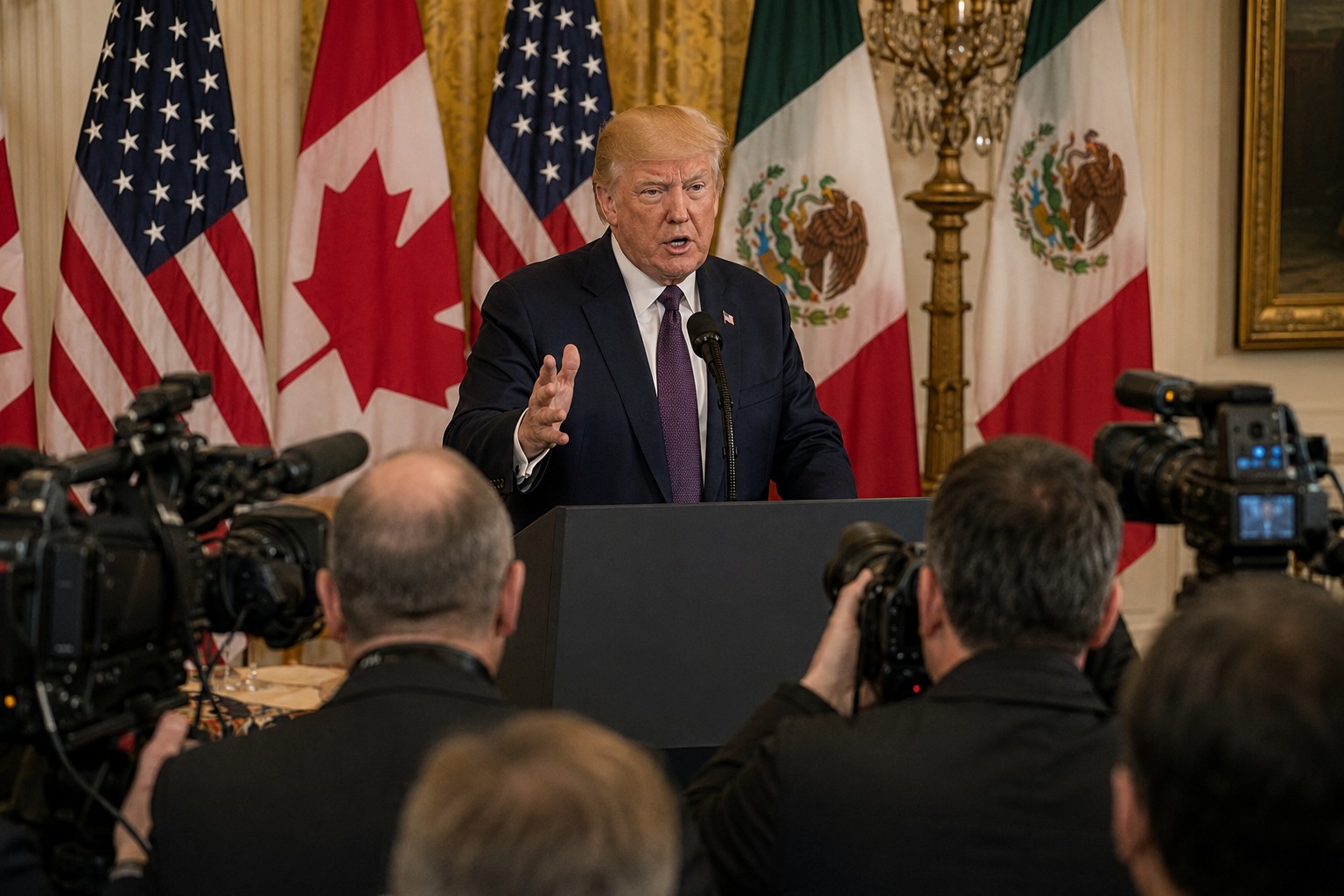
For the first time, the United States has declined to renew the sweeping trade agreement that binds the economies of North America together. On July 1, 2026 — the deadline for the three partners to decide whether to lock the pact in for another 16 years — Washington walked away from a long-term renewal of the United States-Mexico-Canada Agreement, choosing instead to put the deal through annual reviews until its term runs out in 2036.
The move does not tear up the agreement. It keeps it alive for roughly another decade. But by trading a stable 16-year renewal for a year-by-year review process, the decision cracks the door wide open to repeated renegotiation of the rules that govern nearly $2 trillion in annual trade across the continent.
A Deal Trump Once Called His Own
The irony is hard to miss. The USMCA is the same agreement President Donald Trump negotiated and signed during his first term, replacing the decades-old North American Free Trade Agreement. At the time, he held it up as one of his signature achievements — proof that he could tear up an old deal he disliked and replace it with something better for American workers.
Years later, that enthusiasm has cooled. Trump has soured on the very pact he championed, and his chief complaint centers on America’s persistent trade deficits with both Canada and Mexico. Rather than renew the agreement outright, his administration is using the built-in review mechanism to keep the terms open for constant re-examination.
What the Decision Actually Does
Under the agreement’s rules, the three countries faced a choice at the six-year mark: renew the deal for a fresh 16-year term, or let it slide into a series of annual reviews leading up to its 2036 expiration. By refusing the long renewal, the United States triggered the second path.
In practical terms, the agreement stays in force. Goods will keep crossing borders, and the existing rules remain in place for now. Unless one of the three members formally withdraws, the pact survives into the mid-2030s. What changes is the certainty. Every year, the terms are back on the table — and that means the rules governing cars, auto parts, farm goods, and factories spread across the continent could be rewritten again and again.
For businesses that plan investments years in advance, that uncertainty is the story. A factory owner deciding whether to build in Ohio, Ontario, or Monterrey now has to weigh the possibility that the trade rules could shift with each passing review cycle.
Talks Moving With Mexico, Stalled With Canada
The two neighbors are not in the same position. Conversations with Mexico are already underway, with a third round of talks scheduled to begin July 20 in Mexico City. Both sides appear willing to keep negotiating within the new framework.
Canada is a different matter. Talks with Ottawa have not even started. Relations have been strained by U.S. tariffs and by Trump’s repeated jabs about making Canada the country’s “51st state” — rhetoric that has soured the diplomatic mood and left one of America’s closest partners on the sidelines while Mexico moves ahead.
What This Means for Americans
North American trade touches almost everything Americans buy and build — the vehicles in driveways, the produce in grocery stores, the parts that keep factories running. When the rules governing that trade become a moving target, the effects ripple down to prices, jobs, and the stability of entire industries. A deal that was meant to last a generation is now up for review every single year, and the next chapter of North American trade is anyone’s guess.
Stay informed on the stories that matter most. Follow Palmedia News on Facebook and bookmark palmedianews.com for breaking news and analysis.