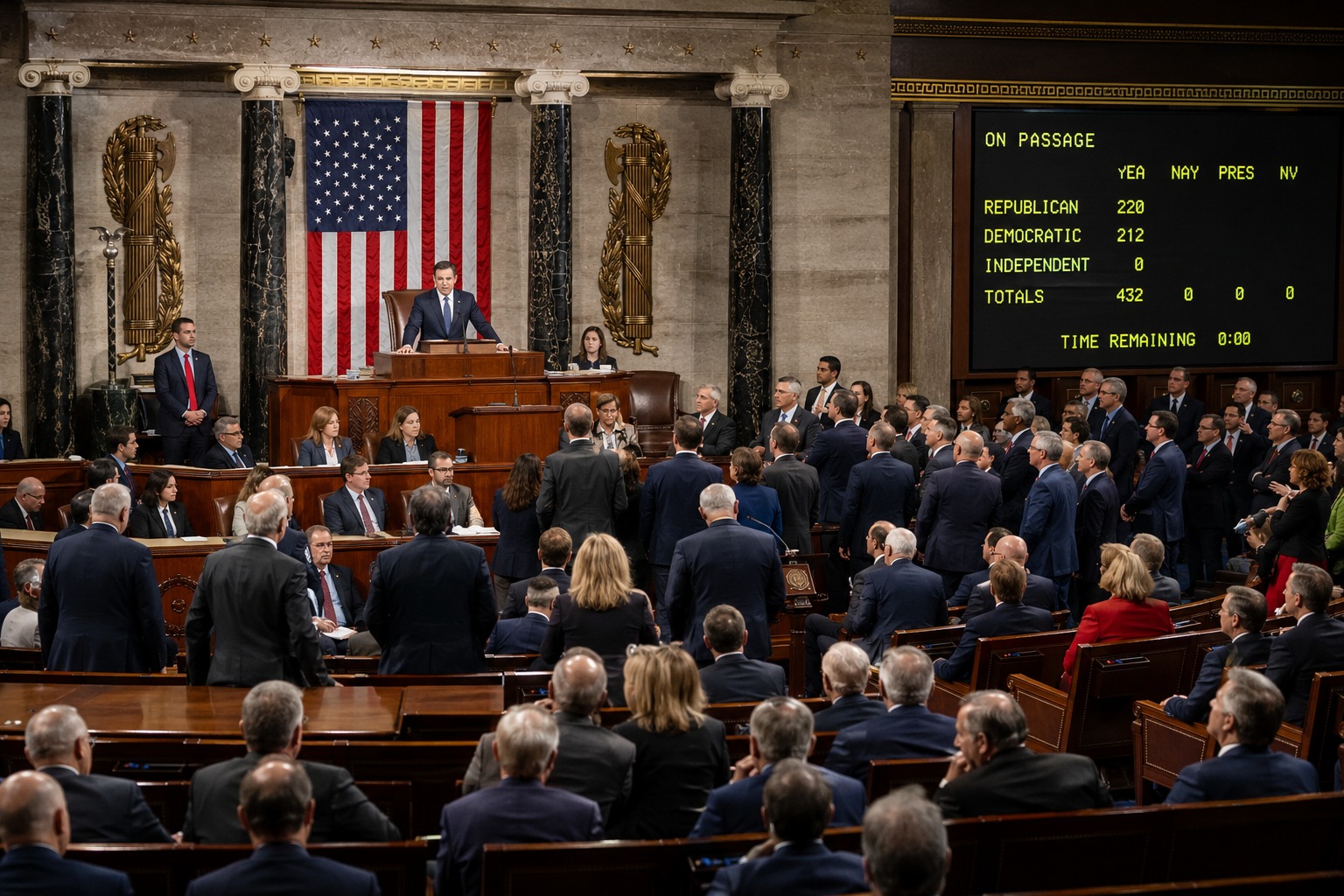
The House of Representatives just did something Washington almost never does: it agreed on something, unanimously. In a rare 420-0 vote, the chamber approved a resolution forcing the public release of the name of every sitting lawmaker who used taxpayer money to quietly settle sexual misconduct claims. Not a single member voted against it.
The measure was pushed by Representative Thomas Massie, and it takes direct aim at one of Congress’s most closely guarded secrets: which members have had misconduct complaints resolved with public funds, and how much of the public’s money paid for them.
What the Resolution Actually Does
The resolution orders two bodies — the House Ethics Committee and the Office of Congressional Workplace Rights — to compile a single, consolidated public list. For every member, delegate, or resident commissioner on that list, the disclosure must include two things: the lawmaker’s name, and the total dollar amount of taxpayer money spent settling the claims tied to them.
Both offices have 60 days from the resolution’s adoption to make all of it public. That means within roughly two months, Americans could finally see exactly who has been shielded and how much of their own money was used to make the complaints go away.
Why the Secrecy Existed in the First Place
For years, settlements involving members of Congress have flowed through a system that kept the identities of the accused hidden. Complaints could be resolved, payments made, and the public left completely in the dark about who was involved. Critics have long argued that this setup effectively let lawmakers use public money as a shield, resolving allegations without ever facing public accountability.
Records that already surfaced this year show the federal government has spent well over 300,000 dollars settling sexual harassment claims tied to Congress since the early 2000s. But those figures came without names attached — the individual lawmakers stayed anonymous behind closed doors. This resolution is designed to finally close that gap.
The Lone Holdout
The final tally was 420-0, but it was not quite unanimous in spirit. One member, Representative Nancy Mace, voted “present” rather than yes. She dismissed the effort as political theater, pointing to the fact that she had already released settlement figures earlier in the year. Even so, no lawmaker stood on the House floor to argue against the measure, and none cast a vote opposing it.
What This Means for Americans
At its core, this is a story about whose money is being spent and whether the people footing the bill get to know how. Every dollar used to settle these claims came from taxpayers. For years, those same taxpayers had no way of knowing which of their elected representatives benefited from that arrangement. If the disclosure happens on schedule, that changes — and voters will head into future elections with information they never had before.
The clock is now running. In 60 days, the list is due. Whether it reshapes careers or simply confirms long-held suspicions, the era of anonymous, taxpayer-funded settlements in Congress may finally be ending.
Stay informed on the stories that matter most. Follow Palmedia News on Facebook and bookmark palmedianews.com for breaking news and analysis.