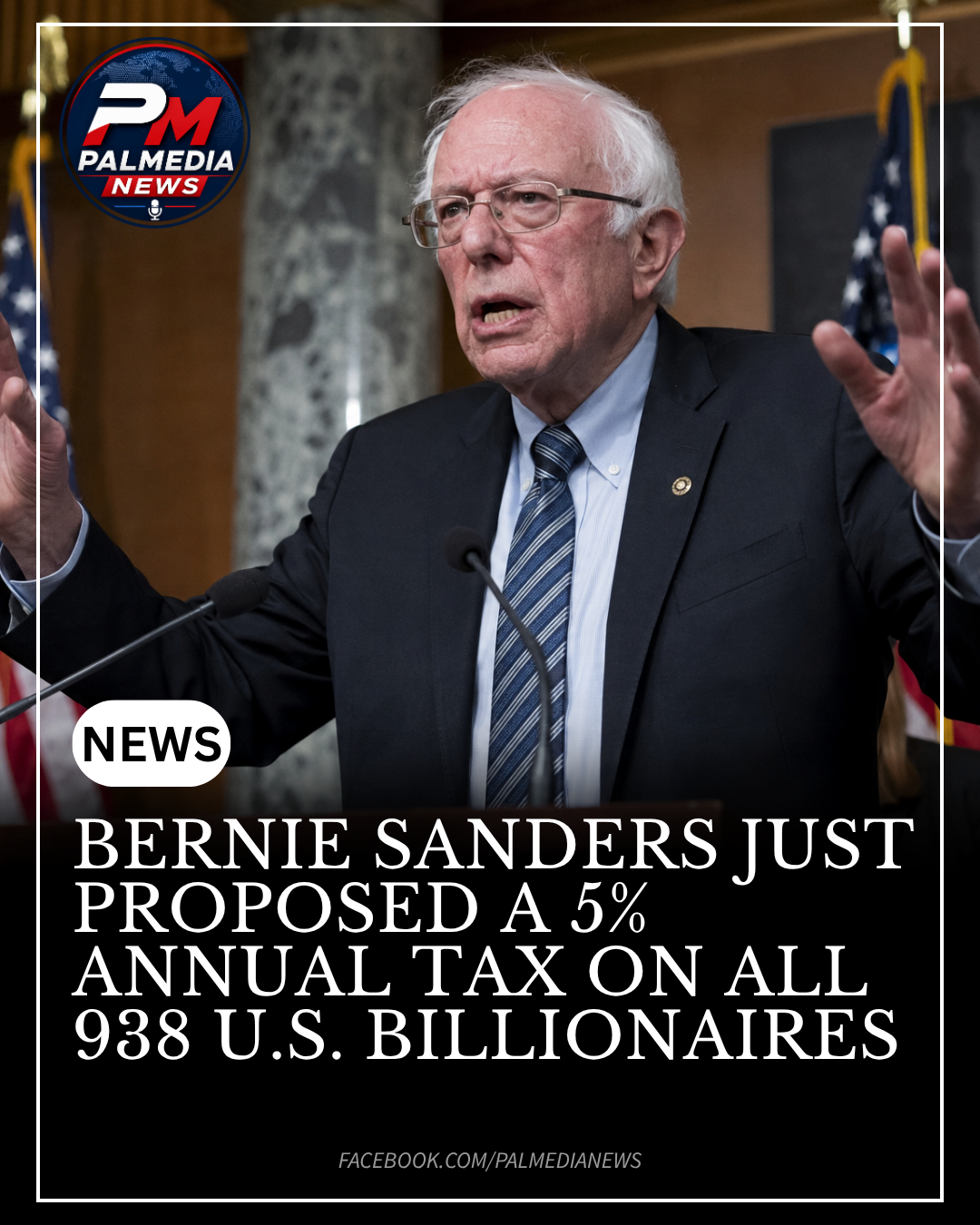
938 people own a combined $8.2 trillion. Bernie Sanders just proposed a plan to start taxing them for it.
Sanders and Rep. Ro Khanna introduced the Make Billionaires Pay Their Fair Share Act this week — a bill that would impose a 5% annual wealth tax on every American whose net worth exceeds $1 billion. No one making less than $1 billion pays a single extra dollar. The tax only hits the 938 people at the very top of the wealth pyramid.
The money doesn’t disappear into the federal budget — it comes back out in the form of direct payments. In its first year, the bill would send a $3,000 direct payment to every man, woman, and child living in a household making $150,000 or less. That’s $12,000 for a family of four, delivered directly to working and middle-class Americans who have watched the billionaire class accumulate wealth at a pace that has no historical parallel.
The broader revenue numbers are significant. An independent economic analysis by University of California economists Emmanuel Saez and Gabriel Zucman projects the legislation would raise $4.4 trillion over the next decade. That’s a number large enough to accomplish several things at once: reversing $1.1 trillion in Medicaid and Affordable Care Act cuts that have been proposed elsewhere in Washington, expanding Medicare to cover dental, vision, and hearing for millions of seniors who currently pay out of pocket, and building or rehabilitating more than seven million affordable housing units nationwide.
The mechanics of the wealth tax are straightforward. The 938 billionaires collectively hold $8.2 trillion in net worth. A 5% annual levy on that wealth generates revenue without touching wages, income, or assets held by anyone below the billionaire threshold. The bill is explicitly designed so that its burden falls entirely on people for whom the tax would not cause financial hardship — the question Sanders and Khanna are raising is whether society should tolerate that concentration of wealth going untaxed while public programs face cuts.
The bill has virtually no chance of passing a Republican-controlled Congress. But Sanders and Khanna are framing the legislation as a direct contrast to the budget priorities being pursued elsewhere in Washington — a reminder that the money to fund public programs exists, it just currently lives in the portfolios of fewer than a thousand people. Whether or not the bill advances, the numbers it puts on paper have a way of reshaping the political conversation about what is and isn’t affordable.