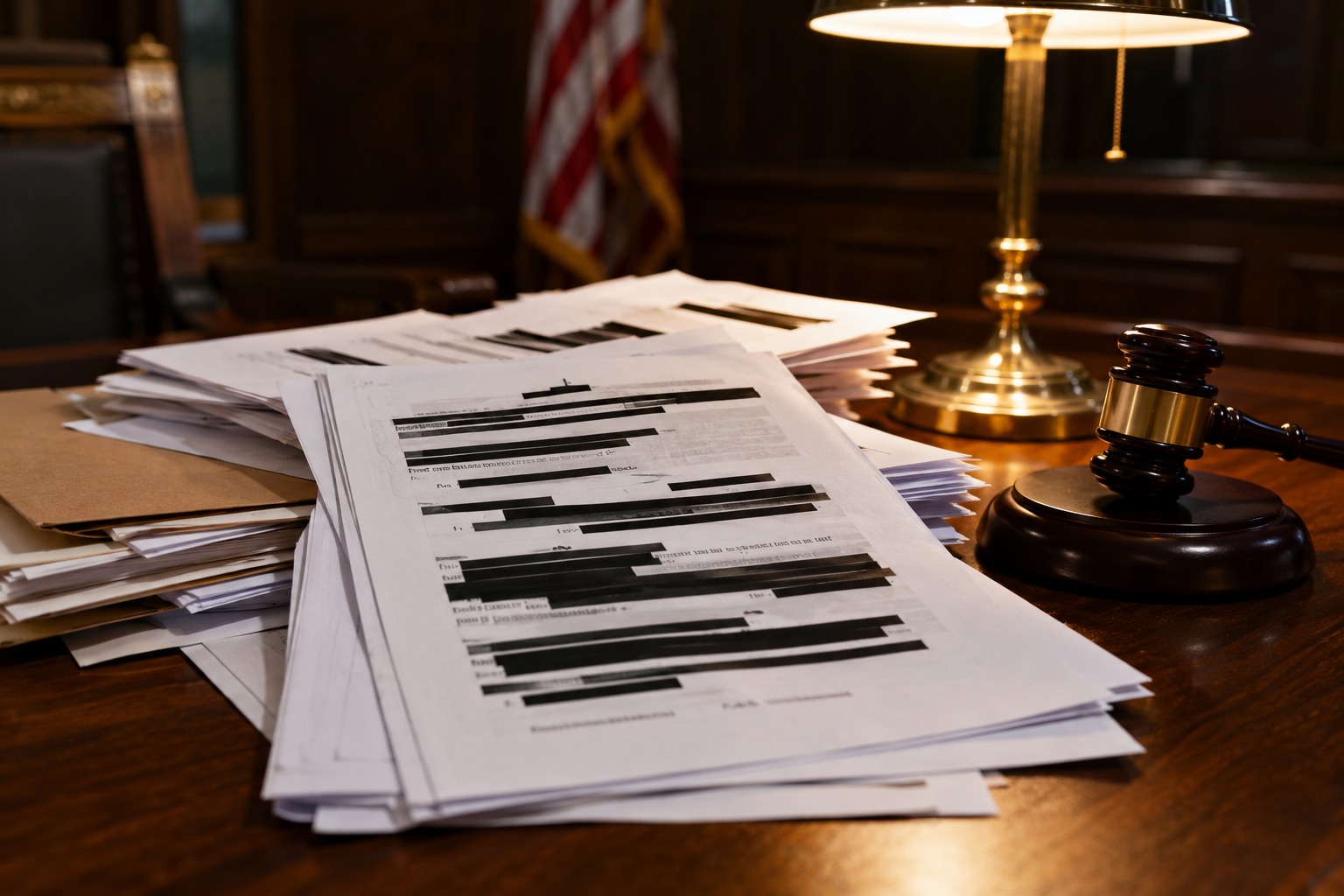
A federal judge has ordered the U.S. Department of Justice to either hand over unredacted versions of several key files connected to Jeffrey Epstein or explain, in court, exactly why those records must remain blacked out. The ruling sets a hard deadline of July 2 and reopens one of the most closely watched document fights in the country.
U.S. District Judge Emmet Sullivan issued the directive in a 48-page opinion, siding with a journalist who sued over what she called improper and unlawful redactions. The decision means the government can no longer simply black out names and hand over the rest without justification.
Why This Case Matters
The Epstein files have been a flashpoint for years. The late financier’s case touched powerful people across politics, finance, and entertainment, and the public has repeatedly demanded full transparency about who appears in the records. Federal law now requires the release of the Epstein files, but the fight has shifted from whether documents come out to how much of them stays hidden behind redaction bars.
That distinction is the heart of this ruling. A redaction can protect a genuinely sensitive detail, or it can shield a name the public has a legal right to see. Judge Sullivan’s order forces the Justice Department to defend each blackout rather than apply them quietly and without explanation.
What the Judge Ordered
The documents at the center of the dispute are the ones observers have wanted for years. They include eight emails in which either the sender or the recipient was blacked out, a draft indictment of Epstein with the names of potential co-conspirators obscured, and a 2019 email that references several co-conspirators whose names were also redacted.
Sullivan gave the government until July 2 to either release unredacted versions of those files or formally explain why each redaction must stay in place. He went a step further as well, ordering the Justice Department to publish a complete log listing every single redaction it has made to the Epstein files released so far. That log requirement is significant, because it makes the scope of the blackouts visible for the first time.
The Lawsuit Behind the Ruling
The order grew out of a lawsuit filed in April by independent journalist and legal commentator Katie Phang. She argued that the redactions amounted to a “brazen, shocking, and ongoing violation” of the federal law mandating the release of the Epstein files. In his opinion, Sullivan concluded that Phang had the legal standing to sue over the unreleased material and that she was likely to prevail on the merits of her claim.
That finding — that the plaintiff is likely to win — is an early signal of how the judge views the strength of the government’s position. It does not settle the case, but it raises the pressure on the Justice Department to justify every blackout or release the names.
What Comes Next
The government now has two options before the deadline: produce the documents with the redactions lifted, or appear in court and make a detailed, line-by-line case for keeping them hidden. Either path moves the long-running standoff forward. If the names come out, the public gets its first look at material that has been fought over for years. If the Justice Department defends the redactions instead, the reasoning becomes part of the public record for the first time.
What This Means for Americans
At its core, this is a transparency case. It tests whether a federal agency can decide on its own which names stay secret in records the law says must be released, or whether it has to answer to a court. For anyone who has followed the Epstein saga and wondered why so much remains blacked out, the coming weeks will deliver a clear answer — either the documents, or the government’s reasons for withholding them.
Stay informed on the stories that matter most. Follow Palmedia News on Facebook and bookmark palmedianews.com for breaking news and analysis.