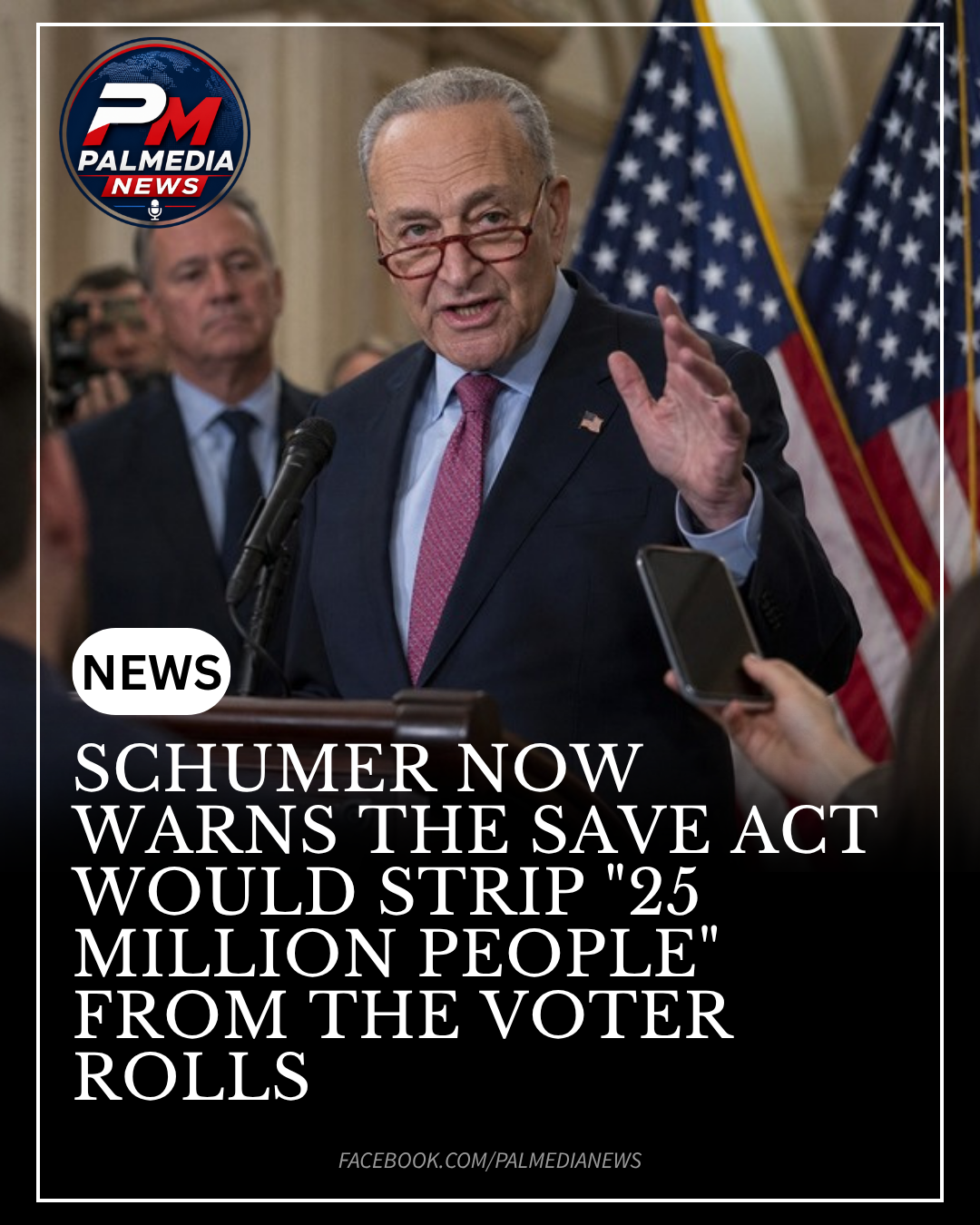
Senate Democratic Leader Chuck Schumer has issued a stark warning about a Republican-backed elections bill, claiming the measure would remove tens of millions of Americans from the nation’s voter rolls. Speaking out against the Safeguard American Voter Eligibility Act — widely known as the SAVE Act — Schumer said the legislation would “remove 25 million people” from voter registration lists, calling it one of the most dangerous proposals he has seen.
What the SAVE Act Would Do
At its core, the SAVE Act would require Americans to provide documentary proof of U.S. citizenship — such as a passport or birth certificate — when registering to vote in federal elections. Supporters describe it as a common-sense safeguard that ensures only eligible citizens are added to the rolls and closes what they see as a loophole that could allow non-citizens to register, whether by error or intent.
The bill has become one of the most heated election-law fights of the year, drawing sharp lines between those who view it as a basic election-integrity measure and those who fear it could create real obstacles for lawful voters. The debate touches on a fundamental question: how to balance election security with broad, easy access to the ballot.
Schumer’s Warning — and the Shifting Numbers
In his remarks, Schumer warned that the documentation requirement could strip “25 million people” from voter registration lists. Notably, the figure he cited shifted during the same exchange, ranging from 20 million at one point to as high as 30 million at another. Schumer did not lay out a specific mechanism for how a citizenship-verification rule would remove that many people from the rolls.
Schumer did not hold back in his characterization of the bill, calling it “one of the worst, most anti-democracy things that’s ever been proposed.” His comments reflect the intensity of the fight on Capitol Hill, where election-law measures have become flashpoints in the broader battle over how American elections are run.
The Case For and Against
Critics of the SAVE Act, including Schumer, argue that requiring documentary proof of citizenship would create hurdles for millions of eligible Americans who may not have easy access to those papers. They point in particular to married women whose current legal names may not match the names on their birth certificates, as well as voters who lack a passport or readily available documentation.
Supporters counter that proof-of-citizenship requirements are reasonable and widely supported, noting that the law targets registration eligibility rather than removing already-registered lawful voters. They argue the measure would strengthen public confidence in election results and that documentation can be obtained by anyone who needs it. The two sides remain far apart, and the bill’s fate is likely to hinge on which framing voters find more persuasive.
What This Means for Americans
For everyday voters, the outcome of this fight could shape exactly what is required the next time they register to vote in a federal election. If the SAVE Act becomes law, registering could mean digging up a birth certificate or passport. If it fails, the current registration process would remain in place. Either way, the dispute underscores how decisions made in Washington can land directly on the kitchen table — affecting the simple act of signing up to cast a ballot.
Stay informed on the stories that matter most. Follow Palmedia News on Facebook and bookmark palmedianews.com for breaking news and analysis.