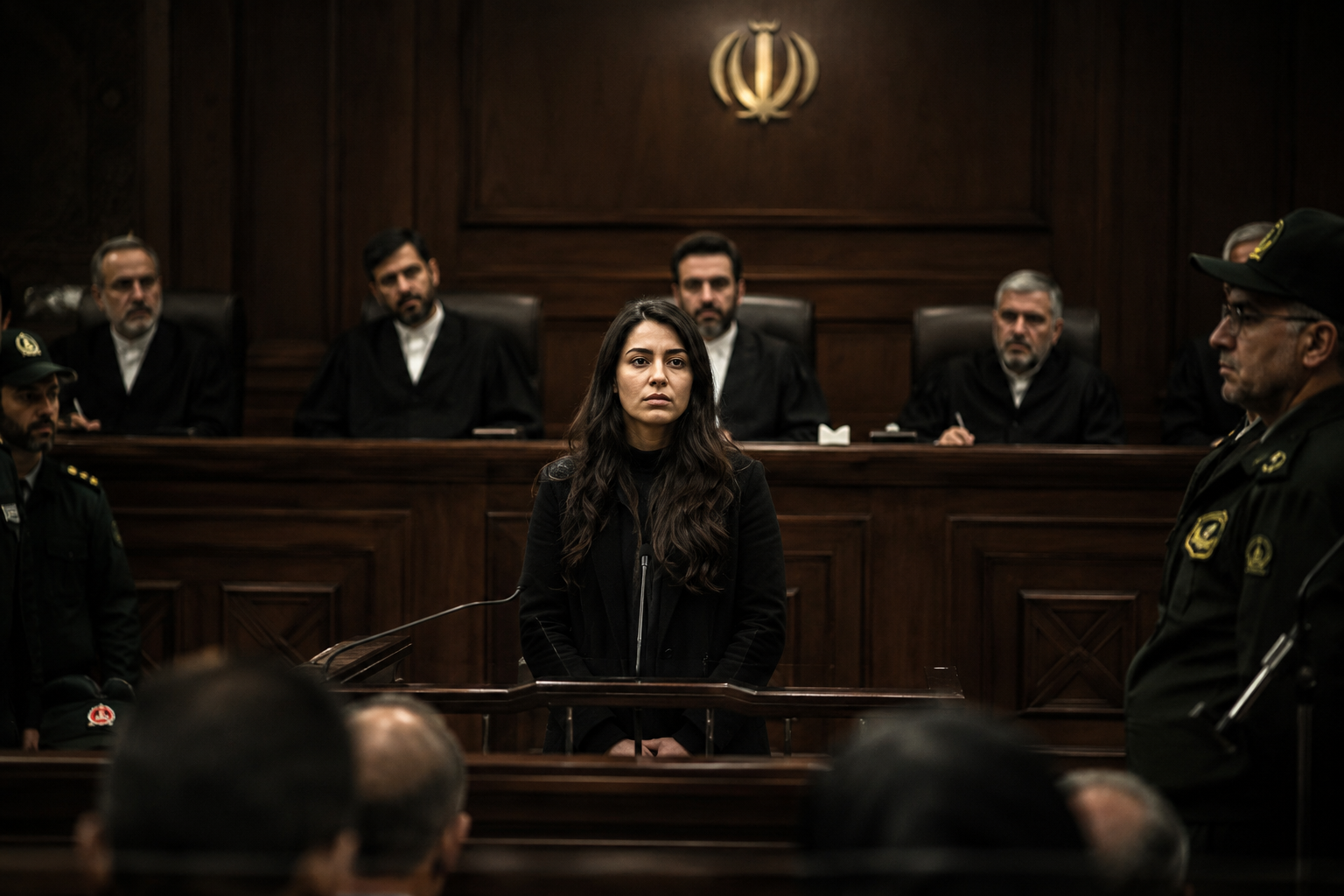
An Iranian court has sentenced singer Parastoo Ahmadi to 74 lashes for performing in public without a hijab, a punishment that has reignited a global firestorm over the limits Iran places on women and on artistic expression. She is not facing the sentence alone — several members of her band and production crew were handed the same penalty.
How a Livestreamed Concert Led to a Court Sentence
The case traces back to a concert Ahmadi livestreamed on YouTube. Performing on a dimly lit stage in a flowing long gown, she sang without the head covering that Iranian law requires of women in public. In Iran, women are also banned from singing solo in public at all — a rule that has stood for decades and that Ahmadi’s performance openly defied.
The video struck a nerve. It has since been viewed more than three million times, turning a single intimate performance into a symbol of resistance for many and an act of defiance in the eyes of the authorities. Within days of the stream, in December 2024, Ahmadi and members of her team were detained.
The Sentence Handed Down
The Qom Provincial Criminal Court has now delivered its ruling. Ahmadi and several of her bandmates and crew were each sentenced to 74 lashes. On top of the corporal punishment, the court imposed a two-year ban on leaving the country and a two-year ban on any artistic activity.
The charge, according to the court, was hurting public decency by producing and publishing what it described as immoral content online. In other words, the very act of recording and sharing the concert — the performance that drew millions of viewers — was treated as the crime itself.
For the musicians, the dual bans may sting as much as the lashes. A two-year prohibition on artistic activity cuts directly at their livelihood and their identity as performers, while the travel ban closes off the option of continuing their careers abroad.
A Debate That Crosses Borders
The sentence has reignited a debate that stretches far beyond Iran’s borders. Supporters around the world have rallied behind Ahmadi, casting her as a symbol of artistic freedom standing up to a system that has long silenced women. To them, the punishment is proof of how far authorities will go to enforce dress codes and gender rules.
Others take a different view, arguing that the law in Iran is well known and long-standing, and that Ahmadi understood the risk she was taking when she chose to stream the performance. That tension — between defiance as principle and defiance as personal choice — is at the heart of why the story has resonated so widely.
Why It Matters Beyond Iran
For readers far from Tehran, the case is a reminder of how differently basic freedoms — what to wear, what to sing, what to post online — are treated around the world. A performance that would be unremarkable in much of the globe carried a sentence of corporal punishment and career-ending bans in Iran. It puts into sharp focus the freedoms many take for granted every day.
Stay informed on the stories that matter most. Follow Palmedia News on Facebook and bookmark palmedianews.com for breaking news and analysis.