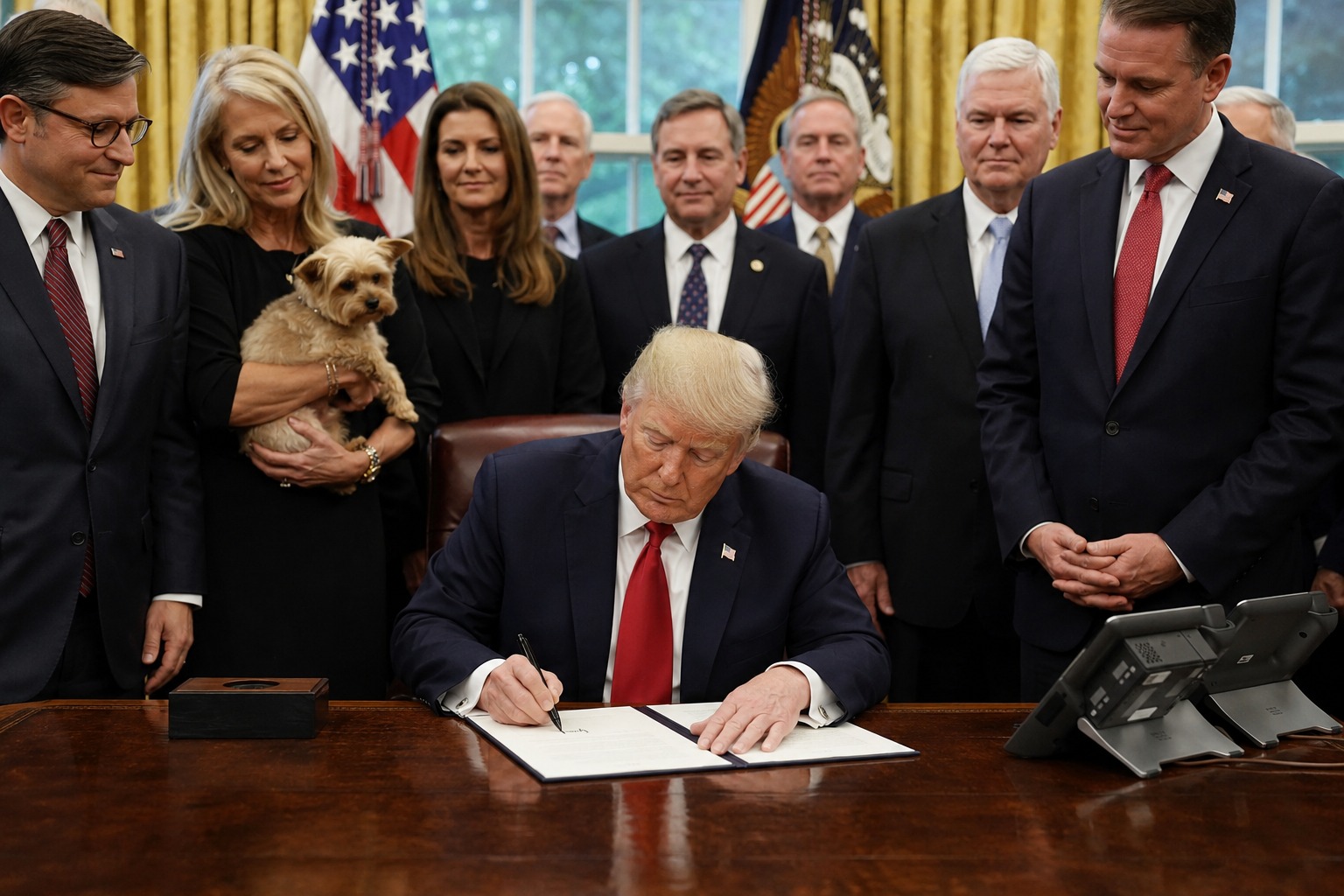
For the first time in American history, intentionally torturing an animal is a federal crime — and the people who commit those acts can now be pursued by the FBI in every state.
President Donald Trump signed the Preventing Animal Cruelty and Torture Act, known as the PACT Act, into law on November 25, 2019. The measure passed the U.S. Senate unanimously and cleared the House of Representatives overwhelmingly before reaching his desk — a rare display of total bipartisan agreement in an otherwise divided Washington.
What the PACT Act Actually Does
The law makes it a federal felony to intentionally crush, burn, drown, suffocate, or impale live animals. It also bans the creation, sale, and distribution of so-called “animal crush videos” — recordings produced for people who seek out footage of animals being tortured. Anyone convicted faces felony charges, substantial fines, and up to seven years in federal prison.
The PACT Act builds on the 2010 Animal Crush Video Prohibition Act, which outlawed the production and distribution of crush videos but stopped short of criminalizing the underlying acts of cruelty themselves. Lawmakers spent years trying to close that gap. The bill was introduced in the House by Representatives Ted Deutch of Florida and Vern Buchanan of Florida, a Democrat and a Republican working together — a detail supporters point to as proof that protecting animals is an issue that crosses party lines.
Why It Mattered
Before the PACT Act, animal cruelty was prosecuted almost entirely at the state level. All 50 states had some form of anti-cruelty law on the books, but the rules varied widely and there was no consistent federal standard. That left meaningful gaps — particularly in cases that crossed state lines or involved interstate commerce, where state prosecutors often lacked jurisdiction.
The new law hands the FBI and federal prosecutors clear authority to pursue the most serious offenders regardless of which state they operate in. Animal welfare organizations, including the Humane Society and the ASPCA, championed the bill for years, arguing that a federal felony statute was long overdue. Law enforcement groups also backed it, noting a well-documented link between animal cruelty and other violent crimes.
Reactions and Debate
Supporters describe the PACT Act as one of the most significant animal protection laws ever enacted in the United States, calling it a milestone decades in the making. Animal advocacy groups celebrated the signing as a long-sought victory.
Critics, while generally supportive of protecting animals, have raised practical questions. Some argue that with limited federal resources, the law may be applied narrowly and that the bulk of enforcement will still fall to state and local authorities. Others have questioned how aggressively federal prosecutors will pursue these cases given competing priorities. The law does include exemptions for ordinary activities such as hunting, trapping, fishing, agriculture, and veterinary care.
What This Means for Americans
For most people, the practical effect is straightforward: there is now a federal backstop for the worst cases of animal abuse, especially those that slip through the cracks between state jurisdictions. It establishes a nationwide baseline that did not exist before and signals that malicious cruelty toward animals is treated as a serious crime everywhere in the country, not just in states with tough laws.
Stay informed on the stories that matter most. Follow Palmedia News on Facebook and bookmark palmedianews.com for breaking news and analysis.