A small Georgia town has stopped one of the largest immigration detention facilities ever proposed in the state. The Department of Homeland Security has abandoned its plan to convert a warehouse in Social Circle, Georgia, into an Immigration and Customs Enforcement detention center that would have housed up to 10,000 people — in a community of roughly 5,000 residents.
A Facility Far Too Big for the Town
The proposal centered on a sprawling warehouse on East Hightower Trail. Federal plans called for transforming the site into a detention facility with capacity for as many as 10,000 detainees and a workforce of about 2,500 employees. For a town of about 5,000 people, the numbers were staggering — the facility alone would have more than doubled the local population on any given day.
The warehouse was reportedly purchased for around $128 million earlier this year. From the start, the scale of the project alarmed local officials, who questioned whether Social Circle’s infrastructure could absorb a complex of that size.
The Fight from City Hall
City leaders pushed back for months, and notably, their central argument was not primarily about immigration policy. Instead, they focused on capacity. They warned that a 10,000-bed facility would overwhelm the town’s water and wastewater systems, strain its roads, crowd its schools, and stretch its public safety resources past the breaking point.
Officials repeatedly raised concerns about whether the town’s utilities could even support the daily demands of such a large operation. A community designed for 5,000 residents, they argued, was simply never built to handle the water, sewer, and emergency-service load that a facility of that magnitude would bring. That practical, infrastructure-first case became the backbone of the local opposition.
Warnock and Ossoff Weigh In
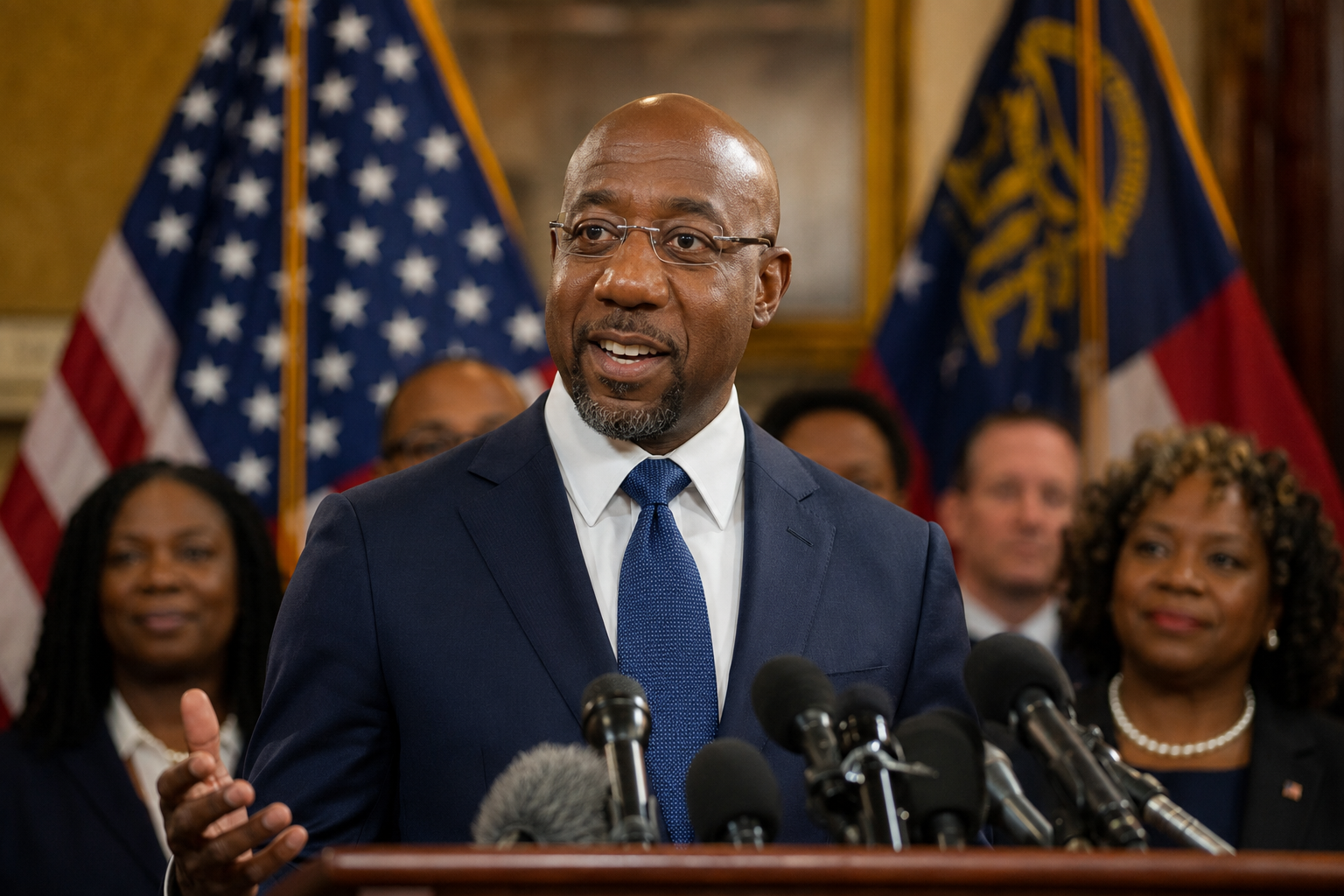
The dispute drew the attention of Georgia’s U.S. senators. Senator Raphael Warnock visited Social Circle, met with city officials and residents, and raised concerns about whether the community could realistically support a project of that scale. He toured the area and listened to the worries of people who lived nearby.
After DHS confirmed it was no longer pursuing the facility, Warnock called the reversal “a victory for the people of Georgia.” Senator Jon Ossoff also responded to the decision. For local leaders who had spent months organizing, the announcement marked the end of a long and uncertain fight.
What Happens to the Site Now
With the plan scrapped, DHS now says it intends to sell or otherwise dispose of the Social Circle warehouse, along with another property in Oakwood that had been considered for detention-related use. The future of both sites remains open.
The decision lands in the middle of a broader national debate over detention capacity. Supporters of expanding facilities argue the country needs more space to hold people in immigration proceedings. Opponents counter that placing a 10,000-bed complex in a town of 5,000 was never a sensible fit, regardless of where one stands on immigration itself.
What This Means for Americans
The Social Circle case is a reminder of how much weight local infrastructure and community voices can carry when a major federal project comes to town. For residents anywhere, it underscores a simple reality: decisions about water, roads, schools, and public safety capacity can shape whether a sprawling development moves forward — or gets shelved. The megacenter is off the table for now, but the questions it raised about siting large facilities in small towns are far from settled.
Stay informed on the stories that matter most. Follow Palmedia News on Facebook and bookmark palmedianews.com for breaking news and analysis.