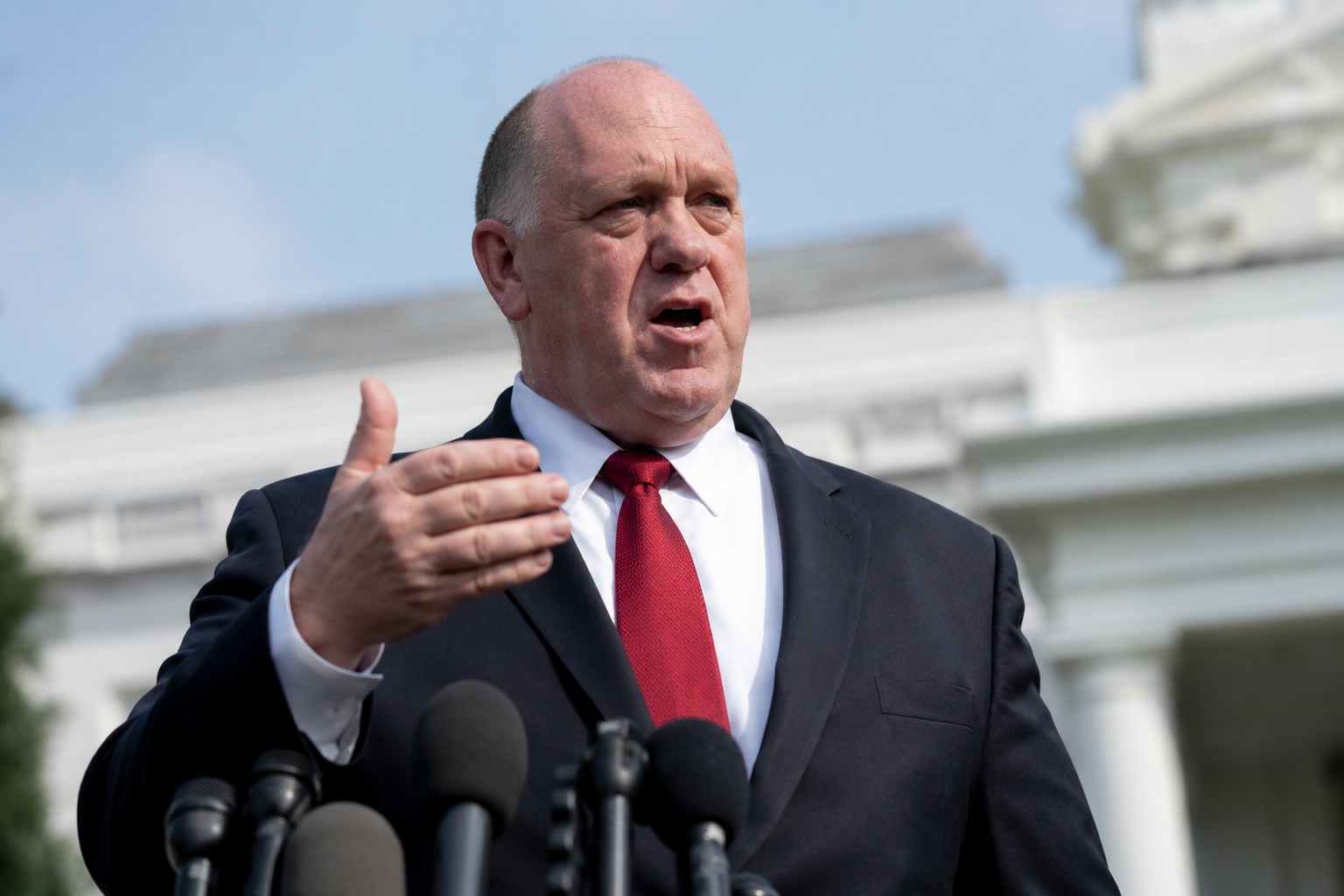
White House border czar Tom Homan says New York City is about to see a federal immigration presence unlike anything in its history, telling reporters the Trump administration will send “more ICE agents than you’ve ever seen” into all five boroughs.
The blunt warning, delivered outside the White House, instantly raised the temperature on one of the most divisive issues in American politics — and set up a direct confrontation between the federal government and the leadership of the nation’s largest city.
Why New York Became the Flashpoint
Homan did not frame the surge as a routine enforcement decision. He pinned it directly on New York Gov. Kathy Hochul, pointing to a package of provisions she approved in May that sharply limit how much state and local police can cooperate with federal immigration agents.
Those provisions effectively ended a set of arrangements that had allowed local law enforcement to perform certain immigration-related functions under federal oversight. With local agencies stepping back, Homan argued, Immigration and Customs Enforcement now has no choice but to flood the zone with its own officers to do work that was previously shared.
It is a familiar standoff playing out in a new arena. For years, so-called “sanctuary” policies have been a battleground between federal officials who want broad cooperation and local leaders who say their communities are safer when residents do not fear that calling the police could trigger deportation.
What Homan Actually Said
The phrase that grabbed headlines — “more ICE agents than you’ve ever seen” — was paired with a notable hedge. When reporters pressed Homan on exactly when the surge would begin, he would not give a date. He also declined to specify how many agents would be deployed or where they would concentrate first.
That left the timing, the scale, and the targets of the operation as open questions hanging over a city of more than eight million people. For supporters of stricter enforcement, the lack of specifics was a feature, not a flaw — a signal that the administration intends to keep New York guessing. For critics, the vagueness only deepened anxiety about how the operation would unfold on the ground.
Hochul Fires Back
Hochul did not wait long to respond. “We will not stand by if ICE floods our communities with agents, separates families and turns our neighborhoods into the backdrop for a campaign of fear,” she said, casting the threatened surge as an intimidation tactic rather than a public-safety measure.
Her statement framed the coming clash in starkly different terms than Homan’s. Where the border czar described a necessary response to a state that stopped cooperating, the governor described an out-of-state force descending on local neighborhoods. Both readings are now competing for the public’s attention, and both sides appear ready to dig in.
What This Means for Americans
Beyond the political theater, the dispute touches real questions for ordinary residents: how immigration enforcement is carried out, how much say cities have over what happens on their streets, and where the line falls between federal authority and local control. The outcome in New York could become a template — or a cautionary tale — for other cities watching closely.
For now, the country is split. One side sees a federal government finally enforcing the law in a city that refused to help. The other sees an escalation that could turn everyday neighborhoods into a flashpoint. Until agents actually arrive, the debate will be fought in statements, headlines, and the court of public opinion.
Stay informed on the stories that matter most. Follow Palmedia News on Facebook and bookmark palmedianews.com for breaking news and analysis.