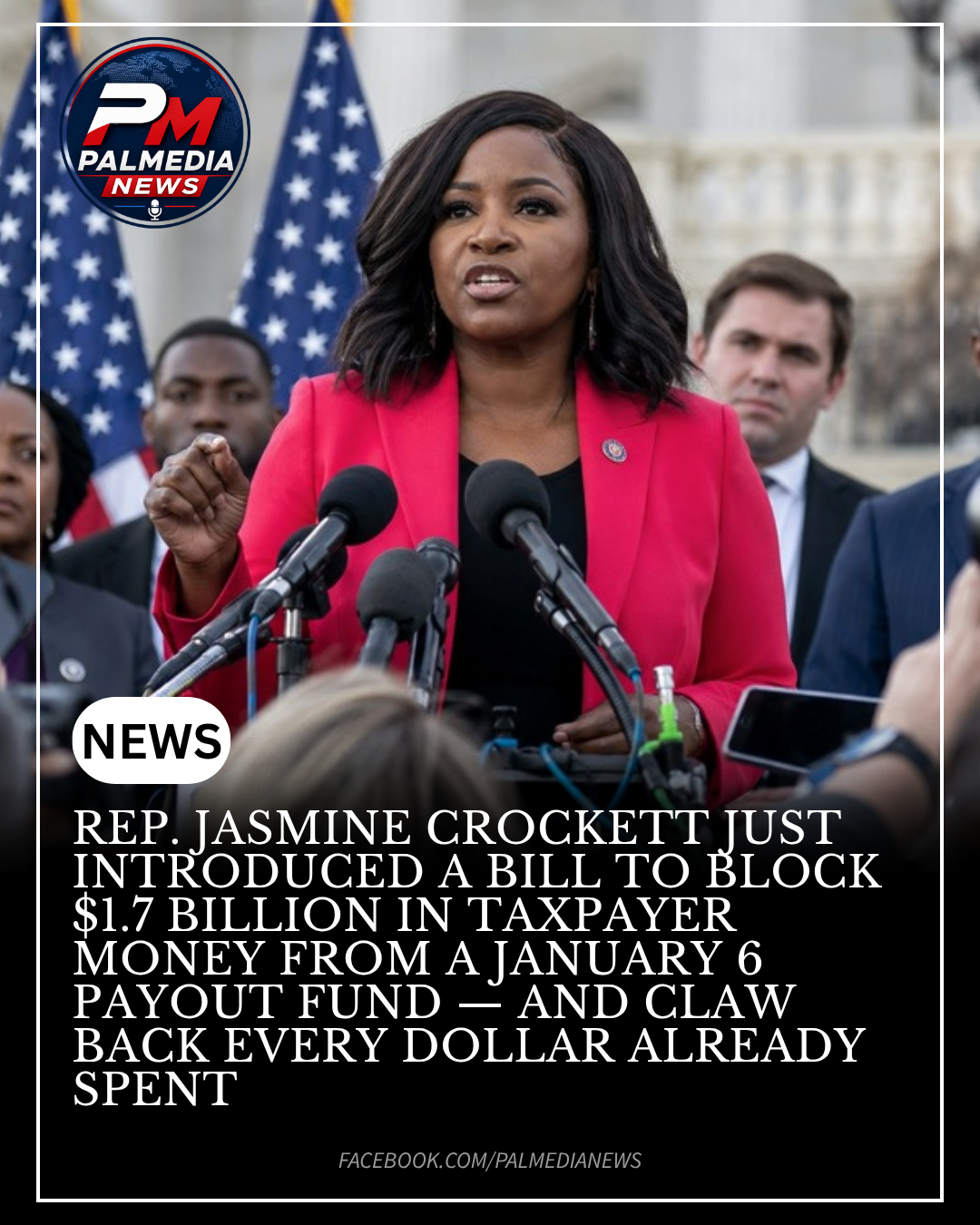
Rep. Jasmine Crockett of Texas has introduced legislation targeting one of the most contested federal spending decisions in recent memory: a roughly $1.776 billion fund set up to compensate people charged in connection with the January 6, 2021 breach of the U.S. Capitol. The bill would not only block the money going forward — it would attempt to recover every dollar already paid out.
What the Bill Is
The measure is formally titled the Stop Taxpayer funded Reimbursement for Unlawful Misconduct by Presidents Act. Crockett has given it a pointed nickname: the “STOP TRUMP Act.” Regardless of the branding, the legislation is built around a specific mechanism in the federal budget — the accounts the government uses to settle and pay legal claims.
The bill is a direct response to a Justice Department agreement to create a compensation fund for individuals charged in the Capitol breach. That arrangement was tied to a broader settlement involving claims of government “weaponization” — the idea that federal agencies were improperly used against certain individuals. Crockett’s legislation seeks to cut off the federal funding that would make such payouts possible.
How It Would Work
At its core, the bill would prohibit the use of federal money to settle or pay claims involving a defined group of people. That group includes the sitting president, immediate family members, affiliated entities, political appointees, and anyone specifically designated for compensation under a deal like the one at the center of this dispute.
One account features prominently: the federal Judgment Fund. This is a standing pool of money the government uses to pay certain court judgments and settlements without needing a separate appropriation from Congress each time. By naming the Judgment Fund directly, the bill aims to close what its supporters see as a path for large payouts to move forward with little public scrutiny.
The provision drawing the most attention, though, is the claw-back. The bill would not simply stop future payments. It would void payouts that have already been approved and require any money already distributed to be returned to the Treasury. That retroactive element — reaching back to recover funds that have already changed hands — is what separates this measure from a routine spending restriction.
The Debate
Supporters frame the bill as a guardrail. Their argument is straightforward: taxpayers should not be on the hook for a politically charged settlement, and a clear rule barring such payments would prevent future administrations from using public money this way.
Opponents are likely to raise both political and legal objections. Politically, they may argue the bill is aimed at a single, specific agreement rather than setting broad policy. Legally, the claw-back provision could face the steepest challenge. Recovering funds that have already been paid out raises complicated questions, and courts have historically been cautious about retroactive measures that unwind completed transactions.
What This Means for Americans
For most people, the immediate stakes come down to a basic question about public money: who decides how federal funds are used to settle legal claims, and what limits should apply. The Judgment Fund and similar accounts operate largely out of public view, so any fight over them tends to surface broader debates about transparency and accountability in federal spending — issues that cut across party lines.
For now, the bill is at the very start of the process. It heads into committee, where most legislation either stalls or is substantially reshaped. Its path forward is far from certain, and whether it advances will depend heavily on the makeup of the relevant committees and the broader political environment.
Stay informed on the stories that matter most. Follow Palmedia News on Facebook and bookmark palmedianews.com for breaking news and analysis.