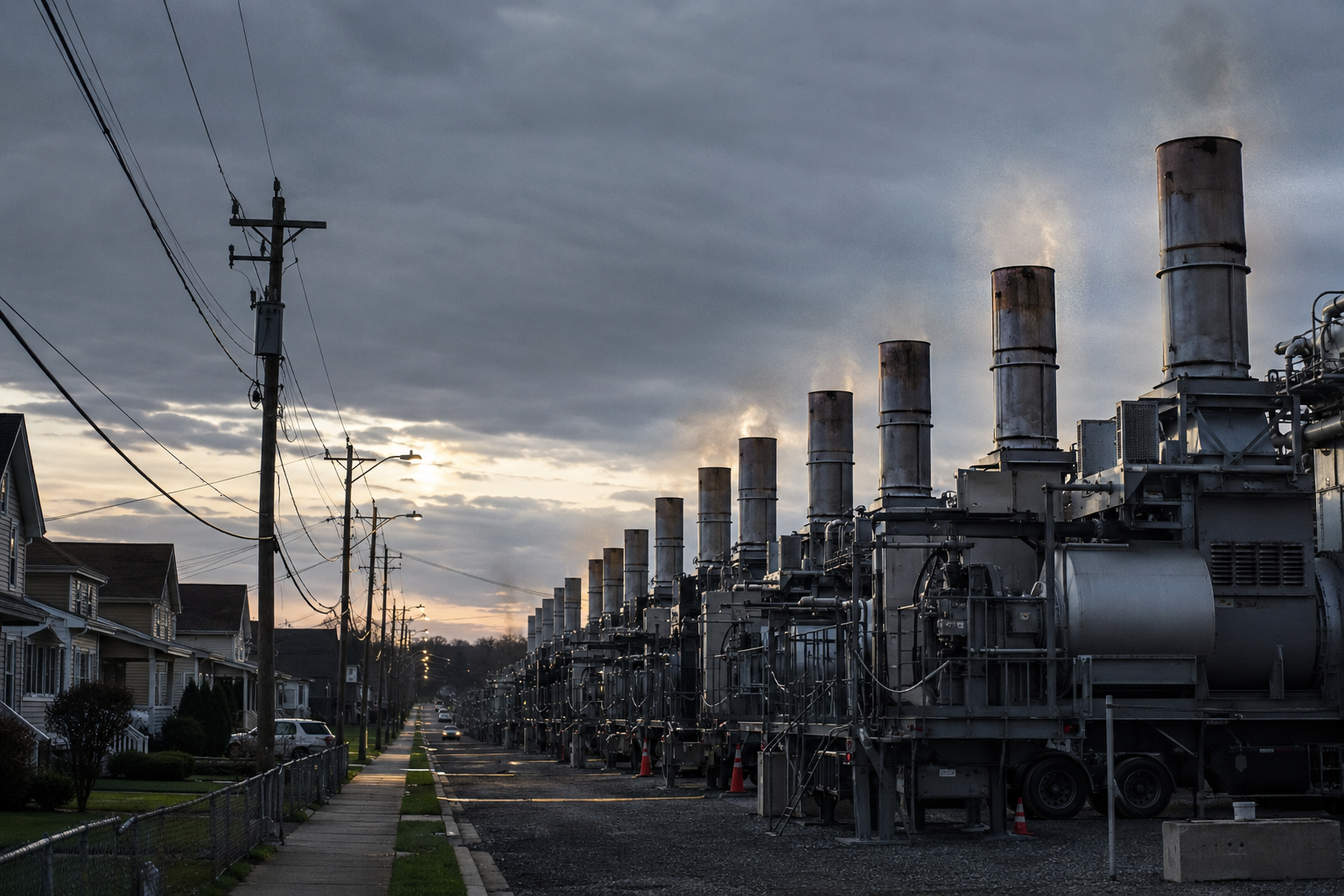
Residents living near Southaven, Mississippi say the roar never stops. Now they are taking Elon Musk to court over it. A lawsuit filed in the U.S. District Court for the Northern District of Mississippi accuses his artificial intelligence company, xAI, of running a cluster of natural gas turbines around the clock without the air permits required by federal law.
What the Lawsuit Claims
The suit, backed by the NAACP on behalf of nearby residents, targets xAI and its subsidiary over gas turbines installed to power the company’s massive “Colossus” data center operation near Memphis. According to the filing, the turbines were switched on without the proper air permits required under the Clean Air Act, and have been operating for months as the data center’s appetite for electricity outpaced the regional grid.
People who live near the site describe a sound like jet engines running day and night. The lawsuit says the turbines emit smog-forming pollutants and fine particulate matter, along with an unpleasant odor that drifts into surrounding neighborhoods. Many of those neighborhoods are predominantly Black communities that have protested the plant for more than a year.
Why It Matters
The dispute sits at the collision point of two of the biggest forces in American life right now: the explosive growth of artificial intelligence and the staggering amount of electricity it demands. Data centers like Colossus consume power on the scale of small cities, and companies racing to build the next generation of AI have turned to on-site gas generation to keep the lights on while permanent power sources are arranged.
For the families who live in the turbines’ shadow, that race has a cost measured in lost sleep, headaches, and worry about what they are breathing. The Clean Air Act exists precisely to require pollution controls and public review before large emission sources begin operating. The central question in the case is whether one of the most valuable companies in the world followed those rules — or built first and answered questions later.
The Relief Residents Are Seeking
The legal filing asks the court to force the company to stop operating the turbines until it obtains the required permits, to install pollution controls, and to pay civil penalties for each day of alleged violation. xAI has defended its operation as a critical piece of America’s AI buildout, framing the data center as essential infrastructure in a global technology competition.
Residents and their advocates counter that no company, however important its mission, should be exempt from the basic environmental protections that apply to everyone else — and that the burden of powering the AI boom should not fall hardest on the communities with the least power to push back.
A Local Fight Goes National
The conflict just got bigger. The Justice Department has now stepped in on the company’s side, asking the court to dismiss the case entirely. That intervention transforms what began as a local pollution complaint into a national battle over who answers for the power plants feeding the AI boom — and how far the federal government will go to keep that infrastructure running.
What This Means for Americans
As AI data centers spread across the country, more towns are likely to find heavy industrial power plants rising next to their homes, often with little warning. How this Mississippi case is decided could shape whether residents elsewhere have a real say over what gets built in their backyard — and whether the cost of the AI era is shared fairly or pushed onto a few neighborhoods at a time.
Stay informed on the stories that matter most. Follow Palmedia News on Facebook and bookmark palmedianews.com for breaking news and analysis.