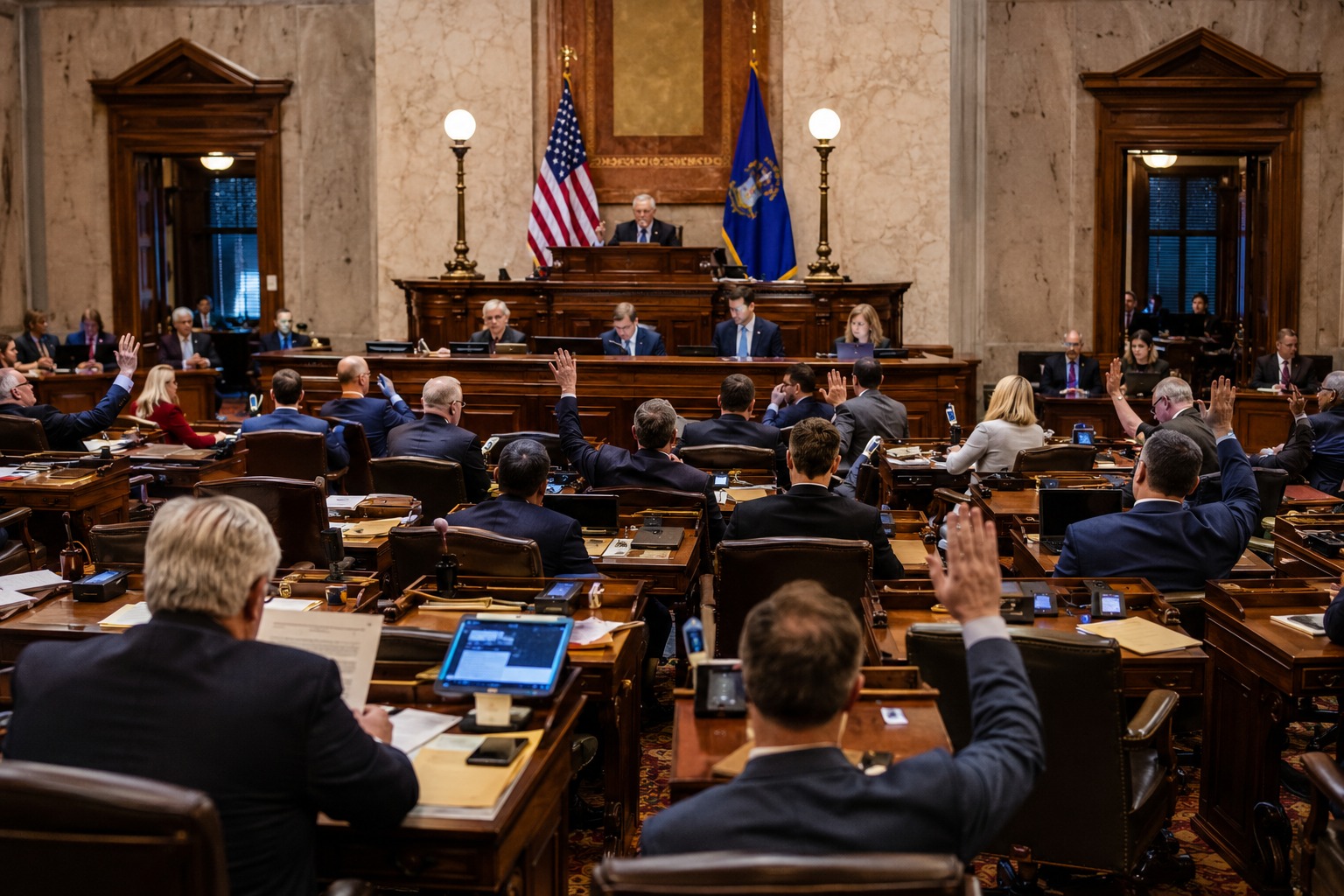
New Jersey’s state Senate has approved one of the most sweeping healthcare-access measures in the country, voting to create criminal penalties for anyone who blocks, threatens, or harms people seeking or providing abortion care and transgender healthcare. The bill cleared the chamber on a 23-12 vote that fell along party lines, and it now advances toward a final decision in the legislature.
What the Bill Would Do
The legislation builds on existing New Jersey laws that already protect abortion clinics, their staff, volunteers, and patients from violence and harassment. The new measure expands those protections to explicitly cover transgender medical services, folding them into the same legal framework that shields reproductive healthcare.
Under the bill, harassing, blocking, or threatening someone who is trying to access or provide that care would be classified as a fourth-degree crime. The penalties escalate sharply if the interference turns physical: if someone is injured, a violator could face as much as 10 years in prison and a fine of up to $150,000. Supporters say that tiered structure is designed to deter intimidation while reserving the harshest punishment for cases where people are actually hurt.
A First-in-the-Nation Move
If the measure ultimately becomes law, it would make New Jersey the first state in the nation to explicitly criminalize this specific kind of interference with abortion and transgender healthcare. That distinction has drawn national attention, with advocates on both sides watching closely to see whether other states might follow.
The vote comes amid a broader national debate over healthcare access that has intensified in recent years. As some states have moved to restrict abortion and gender-related care, others — New Jersey among them — have moved in the opposite direction, passing laws intended to safeguard access. This bill is part of that wider pattern, positioning the state as a place where lawmakers are actively building legal protections around these services.
Supporters and Critics Weigh In
Supporters argue the law is a necessary shield for patients and the doctors who treat them, pointing to incidents of intimidation and harassment that they say have made it harder for people to safely access or provide care. For them, the bill is about safety: ensuring that medical appointments and the people who staff them are not targets for threats or violence.
Critics raised concerns during the debate, including questions about the First Amendment. Some lawmakers and outside observers argued the bill’s language is broad enough that it could sweep in constitutionally protected protest and speech, not just genuine threats or physical interference. That tension — between protecting patients and preserving the right to demonstrate — emerged as one of the central points of contention as the measure moved through the Senate.
What Happens Next
It is important to be precise about where things stand: the bill has passed the Senate only. It has not been signed into law. Before any of its provisions take effect, the measure still needs to clear the General Assembly — the other chamber of New Jersey’s legislature — and then be signed by the governor. Any of those steps could change the bill’s language or stop it entirely.
For now, the debate moves to the Assembly, where lawmakers will take up the same questions that divided the Senate. The outcome there will determine whether New Jersey’s first-in-the-nation approach becomes reality or remains a proposal.
What This Means for Americans
Beyond New Jersey, the bill is a window into how differently states are approaching healthcare access right now. Where a person lives increasingly shapes what kind of medical care they can get and what legal protections surround it. Measures like this one — and the debates they spark over safety versus free speech — are likely to keep surfacing in statehouses across the country, making them worth watching no matter which state you call home.
Stay informed on the stories that matter most. Follow Palmedia News on Facebook and bookmark palmedianews.com for breaking news and analysis.