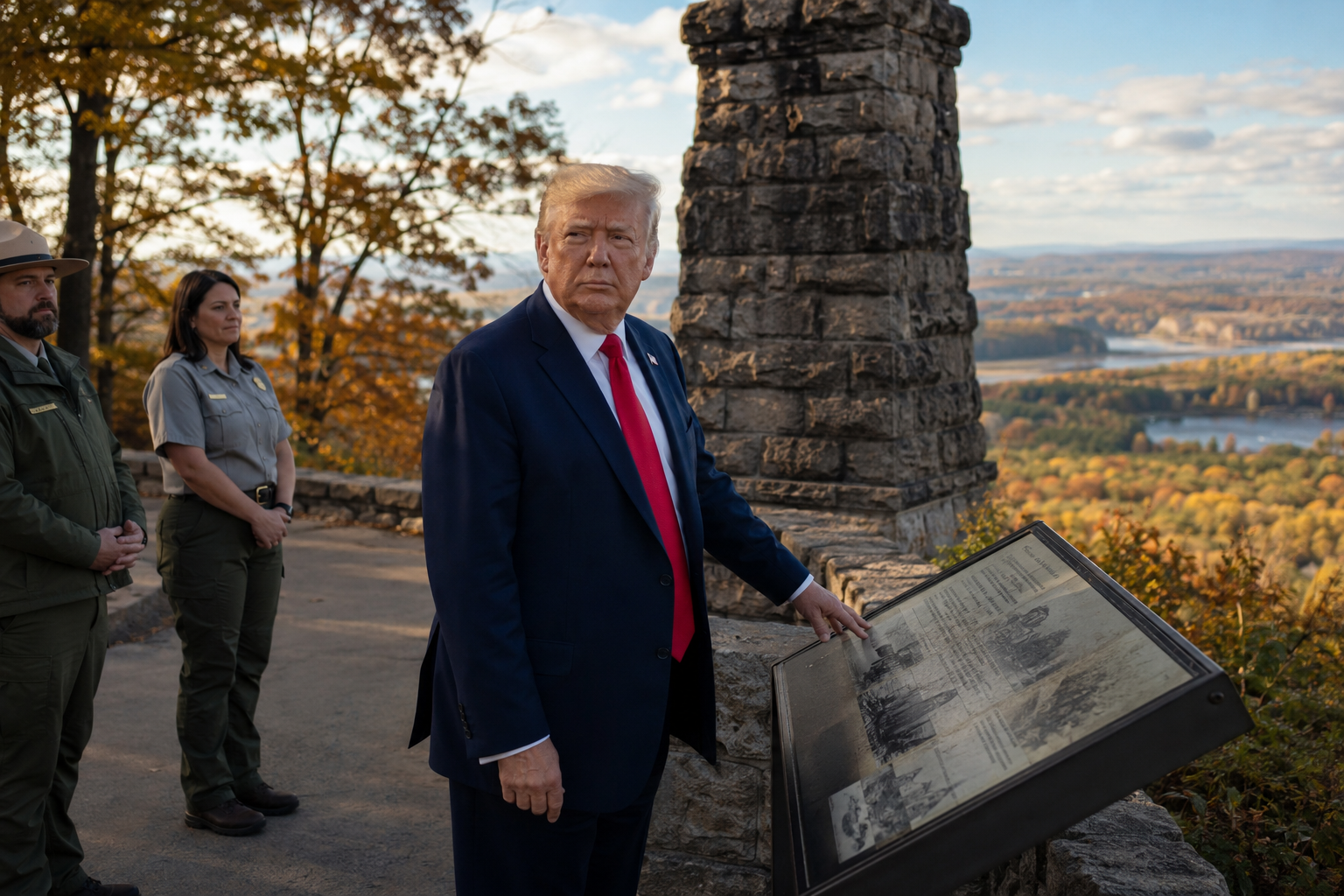
A federal judge has ordered the Trump administration to restore signs, exhibits and displays it removed from national parks and monuments across the country — including materials addressing slavery and climate change. U.S. District Judge Angel Kelley issued the ruling on Friday, granting a preliminary injunction and giving the Interior Department 21 days to put the materials back.
How the Removals Started
The dispute traces back to a March 2025 executive order. In it, President Trump directed the Interior Department to confront what he described as a “revisionist movement” and to strip out content he viewed as a “false revision of history.” The order tasked the department with reviewing parks, monuments and memorials and making changes accordingly.
According to the lawsuit, what followed was sweeping. The administration identified and began removing hundreds of signs and exhibits from sites managed by the National Park Service. Plaintiffs argued the process was carried out quietly, with the public given little notice that long-standing interpretive materials were disappearing from the places they were meant to explain.
What Was Taken Down
Two examples sit at the center of the case. At Philadelphia’s Independence National Historical Park — the birthplace of the nation — exhibits addressing slavery were among the materials pulled. At Fort Sumter in South Carolina, where the first shots of the Civil War were fired, signage detailing climate threats to the historic site was removed.
For the groups that sued — a coalition of historians, scientists and park conservationists — those removals were not minor housekeeping. They argued the public was being cut off from accurate history and science at the very sites built to preserve and explain them. The exhibits, they said, were grounded in established research, not political opinion.
The Judge’s Ruling
Judge Kelley sided with the plaintiffs. In granting the preliminary injunction, she ordered the administration to restore the signs and exhibits within 21 days. She framed the deadline around an upcoming milestone, writing that the materials should be back “by the 250th anniversary to properly honor the remarkable achievements of the United States.”
A preliminary injunction is not the final word in a case. It is a court order meant to preserve the status quo — here, the restored exhibits — while the underlying legal fight continues. But it carries immediate force, and it requires the administration to act now rather than wait for a full trial.
Reaction and What Comes Next
The Interior Department pushed back hard. Officials called Kelley a “liberal activist judge” and said the department is reviewing its options, including a possible appeal. That sets up a longer legal battle over how much control a president has to reshape what the nation’s parks tell visitors about their own history.
At its core, the case asks a simple but loaded question: who gets to decide which stories America’s public lands are allowed to tell? Supporters of the removals see the executive order as a correction to what they consider slanted framing. Critics see it as an effort to erase uncomfortable chapters of the past.
What This Means for Americans
For the millions of people who visit national parks and historic sites each year, the ruling means the exhibits they encounter may soon look as they did before. The signs that explain slavery at the nation’s founding sites, and the displays warning of climate risks to historic landmarks, are set to return — at least while the courts weigh the larger questions about who controls that narrative.
Stay informed on the stories that matter most. Follow Palmedia News on Facebook and bookmark palmedianews.com for breaking news and analysis.